
Our Services
Water Damage Restoration
From flooded basements to burst pipes, our IICRC-certified team responds within 60 minutes to extract water, dry your property, and prevent long-term damage.
All Water Damage Services
Available 24/7 across Fairfield County, CT and Westchester County, NY.
Emergency Water Removal
24/7 rapid water extraction using industrial-grade pumps and vacuums.
Learn moreFlooded Basement
Complete flooded basement cleanup, drying, and moisture remediation.
Learn moreFlood Damage
Storm flood cleanup and full structural drying for your home or business.
Learn moreSump Pump Failure
Emergency response to sump pump failures before water causes structural damage.
Learn moreSewage Cleanup
Safe biohazard-grade sewage removal, disinfection, and odor elimination.
Learn moreBurst & Leaking Pipes
Immediate water mitigation from burst or leaking pipes to prevent structural loss.
Learn morePlumbing Leaks
Detection and remediation of hidden plumbing leaks causing silent damage.
Learn moreCommercial Water Damage
Large-scale water restoration for offices, retail, and industrial properties.
Learn moreWater Damage by City — Fairfield County, CT & Westchester County, NY
We dispatch IICRC-certified water damage crews to all 67 cities and hamlets across our two-county service area, with a 60-minute response target. Find your city:
Water Damage Restoration in Fairfield County, CT & Westchester County, NY
Water damage is the most common, most time-sensitive, and most expensive property loss we respond to across Fairfield County, CT and Westchester County, NY. From a burst supply line in a Greenwich basement at 2 AM to a slow plumbing leak that has been soaking subflooring under a Stamford kitchen for weeks, water damage runs the full spectrum of severity. What every water loss has in common: the longer affected materials stay wet, the more expensive the restoration becomes, and the higher the probability you face a follow-on mold claim with its own coverage sublimit.
911 Storm is a locally owned, IICRC-certified water damage restoration company headquartered at 12 Livingston Pl C, Greenwich, CT 06830. We respond to water damage emergencies across all 21 Fairfield County towns and 45 Westchester County municipalities within 60 minutes of your call, 24 hours a day, seven days a week. Our crews are certified to the IICRC S500 Standard for Professional Water Damage Restoration — the published industry standard that insurance adjusters also reference when scoping your claim — and we document every job to the level of detail Chubb, AIG Private Client, PURE, State Farm, Allstate, Liberty Mutual, Travelers, and the other major carriers expect.
Whether you are dealing with a sudden catastrophic loss (burst pipe, sudden appliance failure, sewer backup, storm intrusion) or a gradual problem you just discovered (foundation seepage, hidden plumbing leak, ice-dam ceiling stain), the restoration process follows the same proven sequence: source control, extraction, structural drying, antimicrobial treatment, and reconstruction. The variables are scope and timeline, both of which depend on water category, affected square footage, materials involved, and how quickly mitigation begins. We bill your insurance carrier directly. You pay only your deductible.
Why Water Damage Mitigation Matters
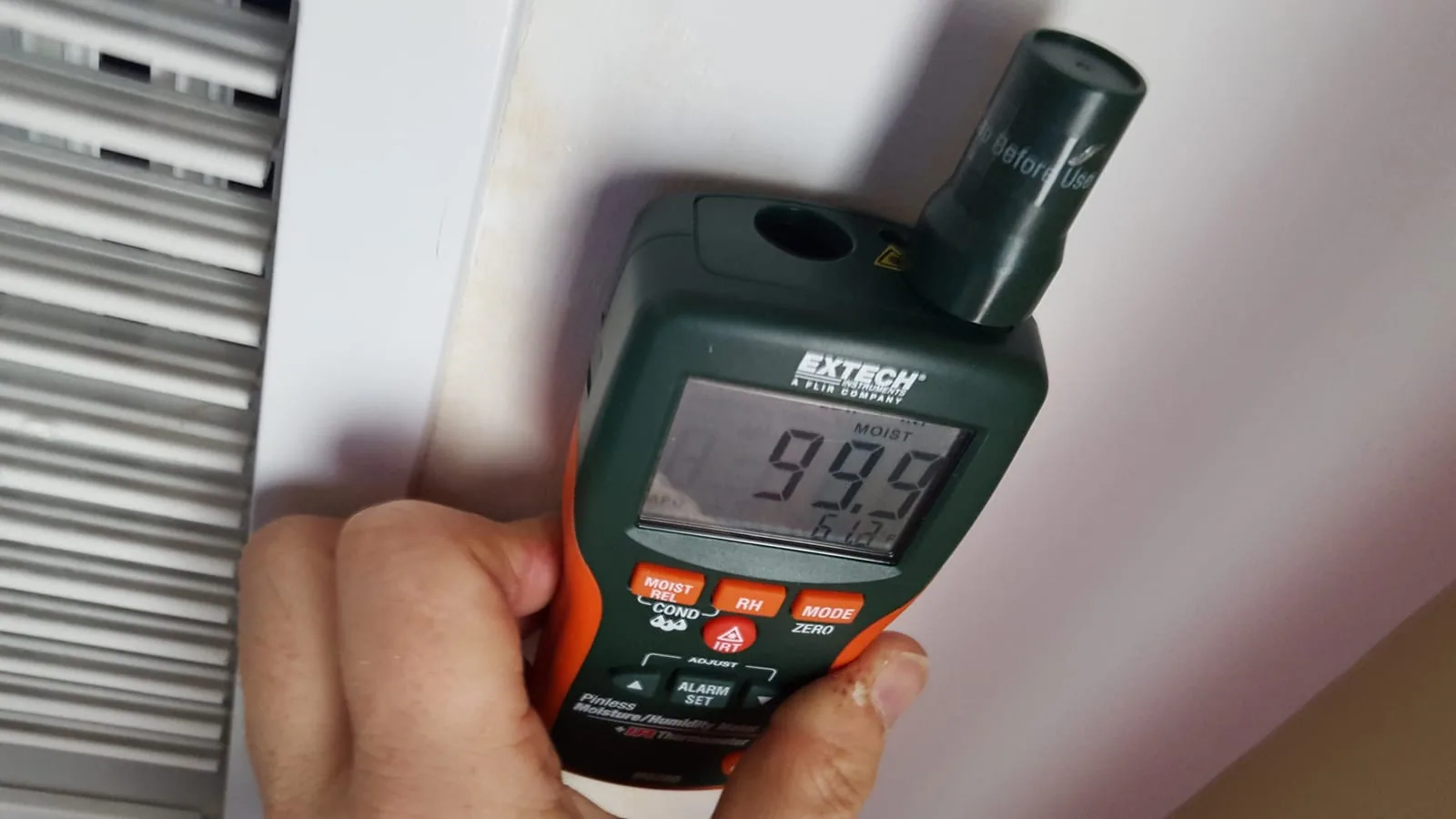
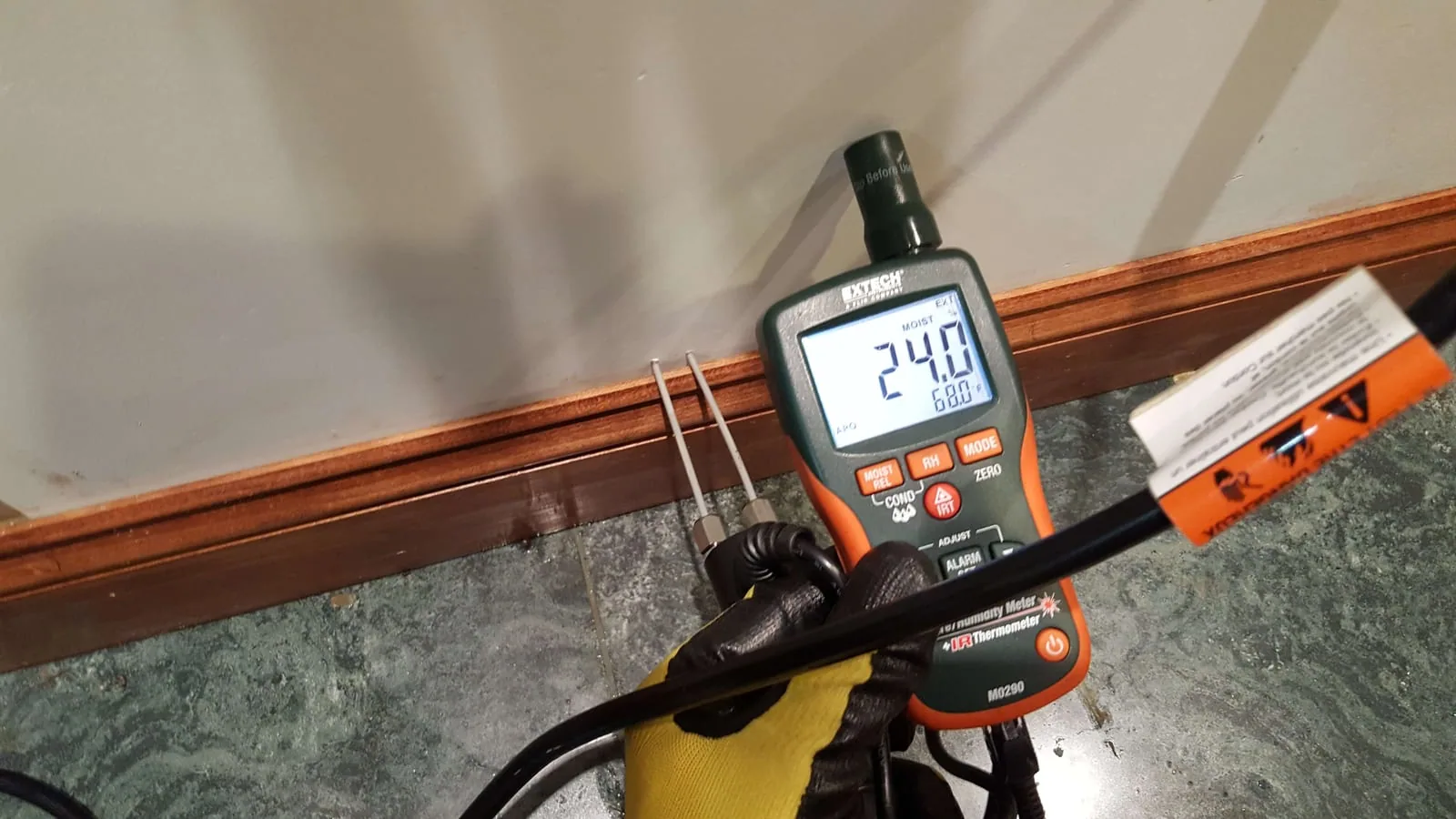
Visible damage is rarely the full picture. A water loss that looks contained to one room often involves moisture that has wicked into adjacent wall cavities, traveled down through subflooring to the room below, or migrated along the seam between hardwood floor and baseboard for ten or fifteen feet beyond the visible wet zone. Without proper moisture mapping — calibrated meters and FLIR thermal imaging at every test point — restoration "looks done" while the structure remains wet. Two to four weeks later, mold begins growing inside walls nobody can see.
The IICRC S500 standard exists specifically to prevent this outcome. It defines water categories (Cat 1 clean, Cat 2 gray, Cat 3 black), drying targets per material type (16% moisture content for framing lumber, 7-9% for hardwood flooring, baseline-comparison for drywall), equipment minimums per affected volume, and post-drying verification requirements. Properly executed S500 restoration is the difference between "the loss is closed" and "the loss is the start of a chronic mold problem."
Insurance carriers know this. Most carrier policies cap mold remediation between $5,000 and $25,000 — significantly less than the uncapped coverage available for the underlying water-loss restoration. If water mitigation is slow or incomplete and mold develops as a result, the homeowner often absorbs the difference between full mold scope and the sublimit. Fast, properly documented S500 mitigation keeps your loss inside the water-damage coverage and stops the chain reaction before it starts.
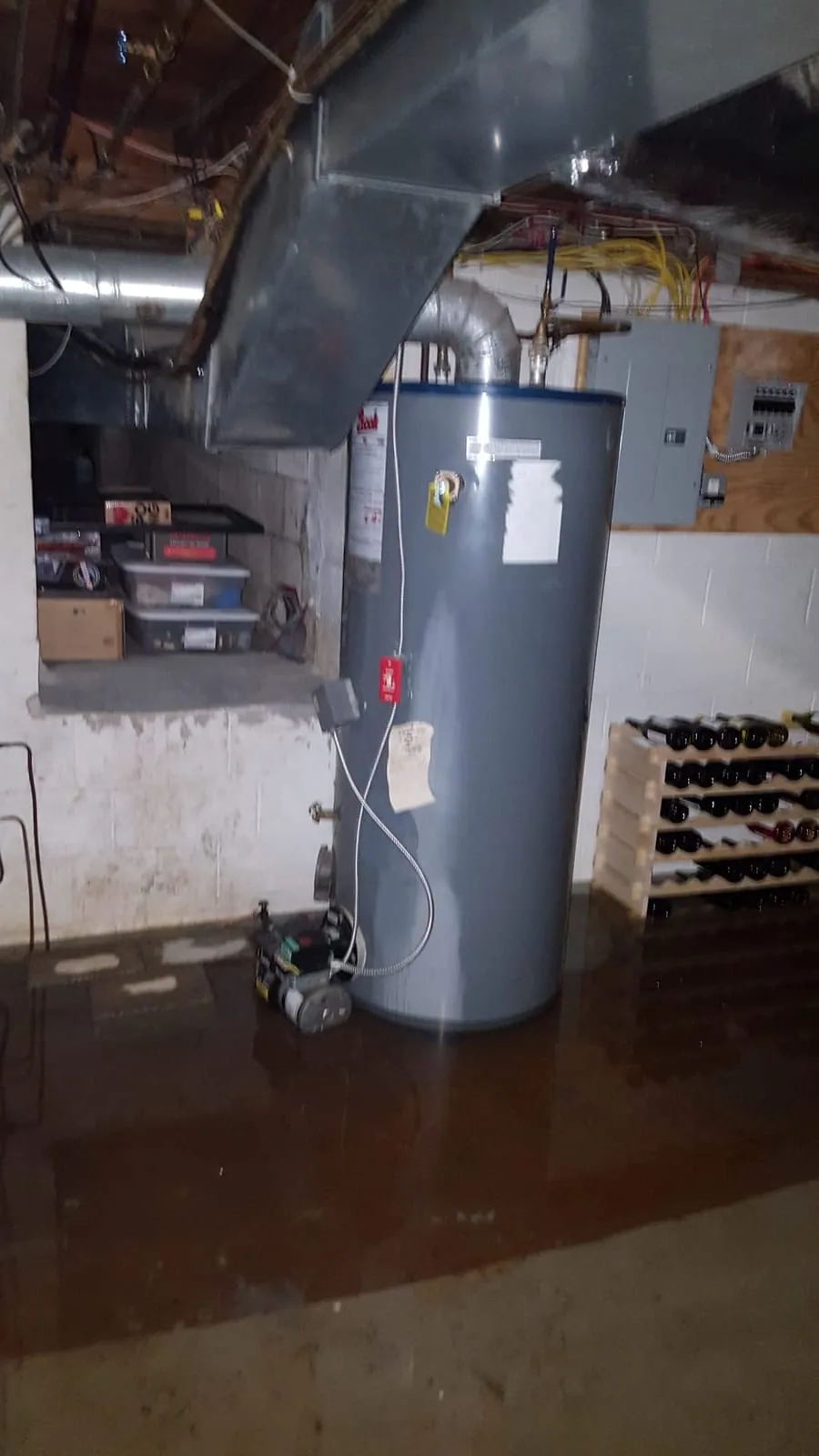
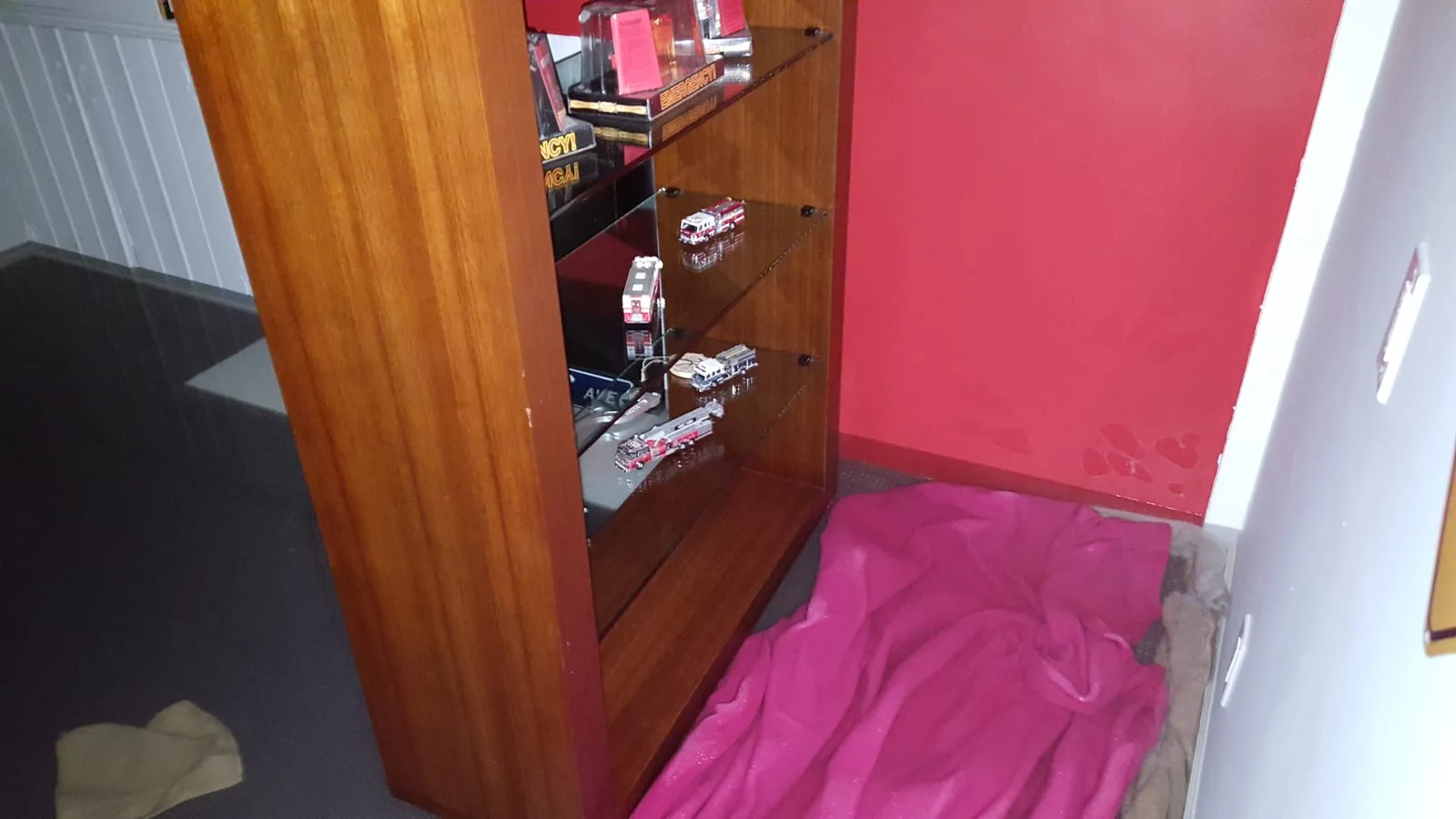
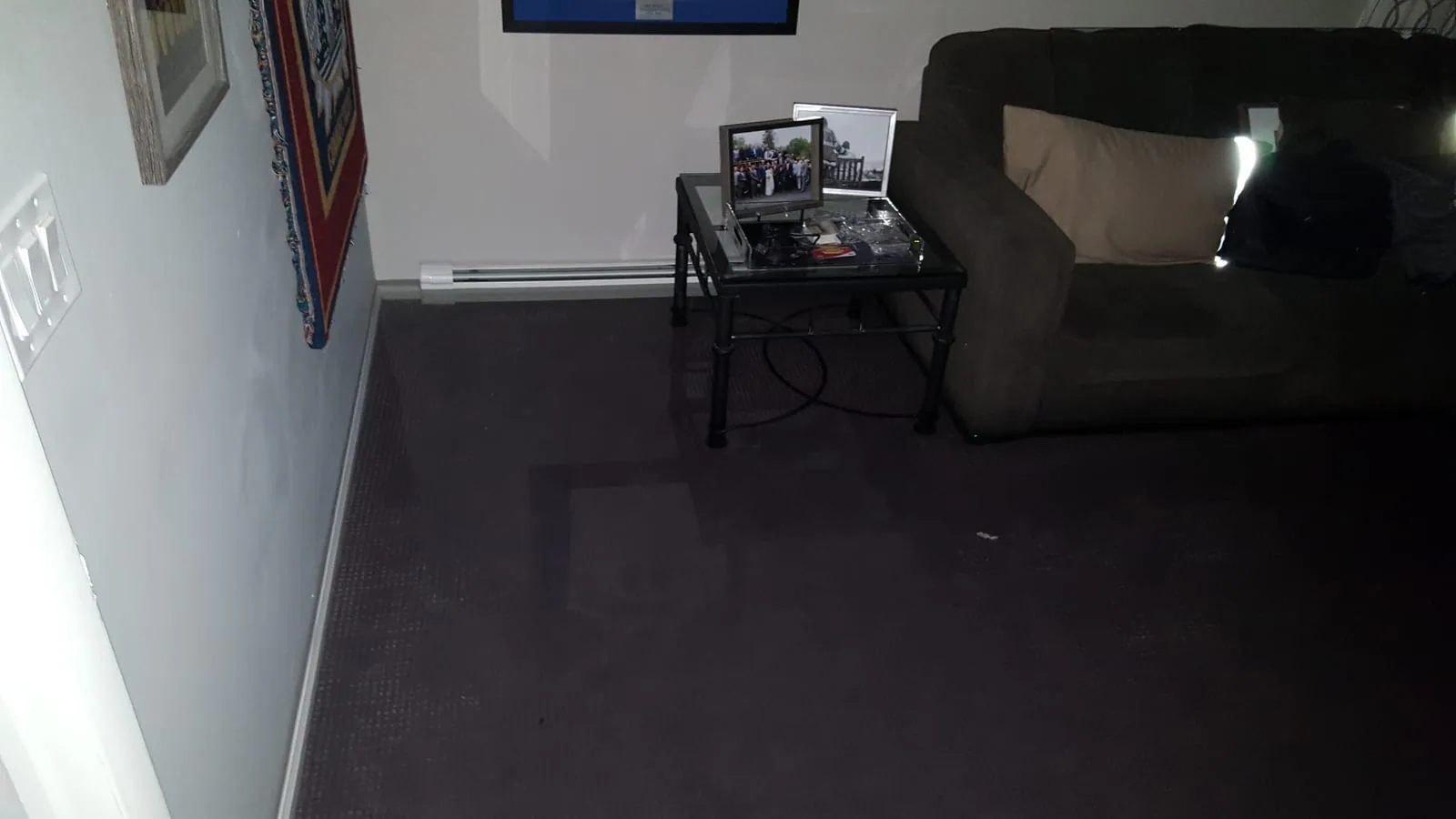
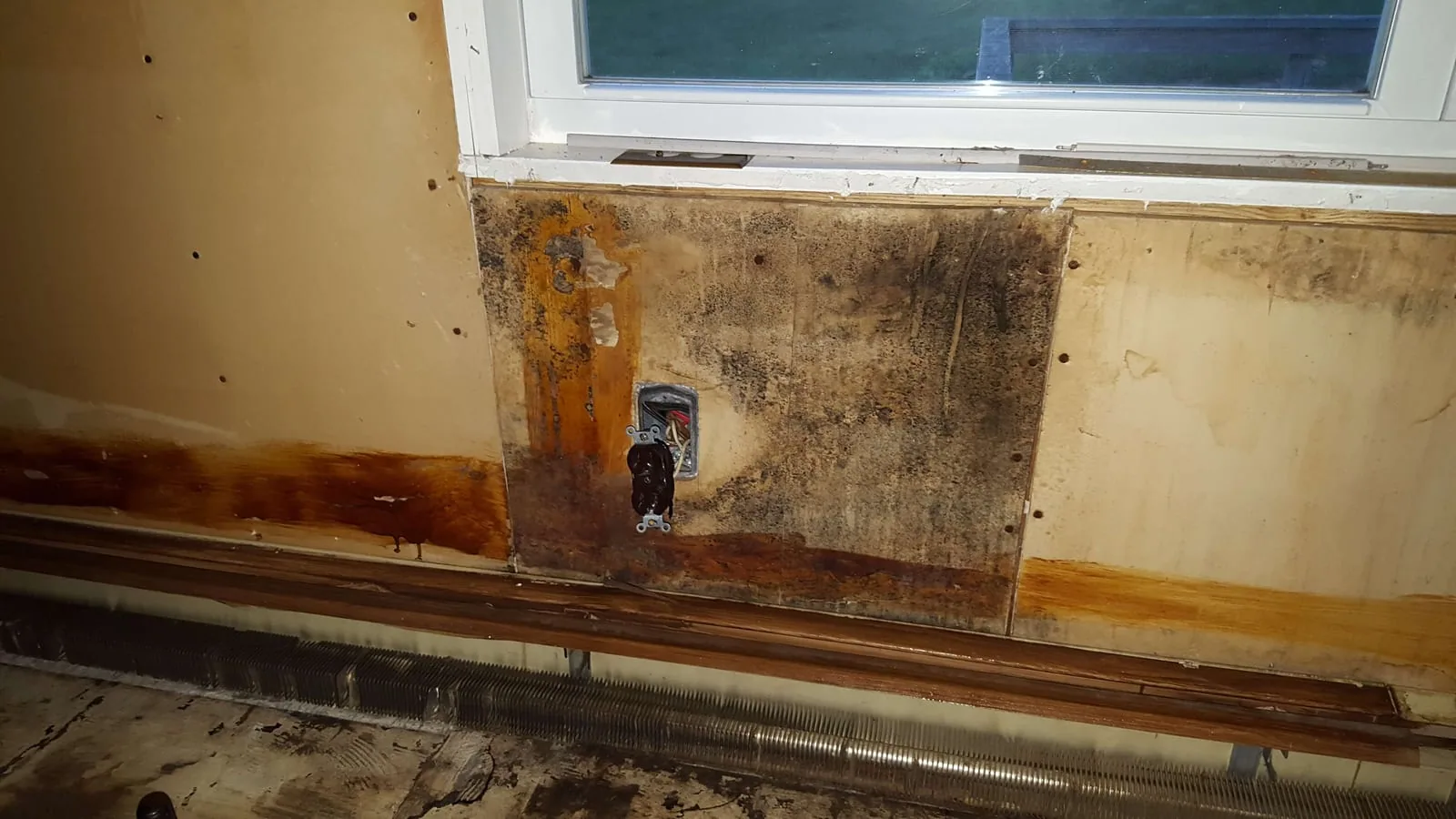
Real Water Damage Jobs from Greenwich, Stamford & Beyond
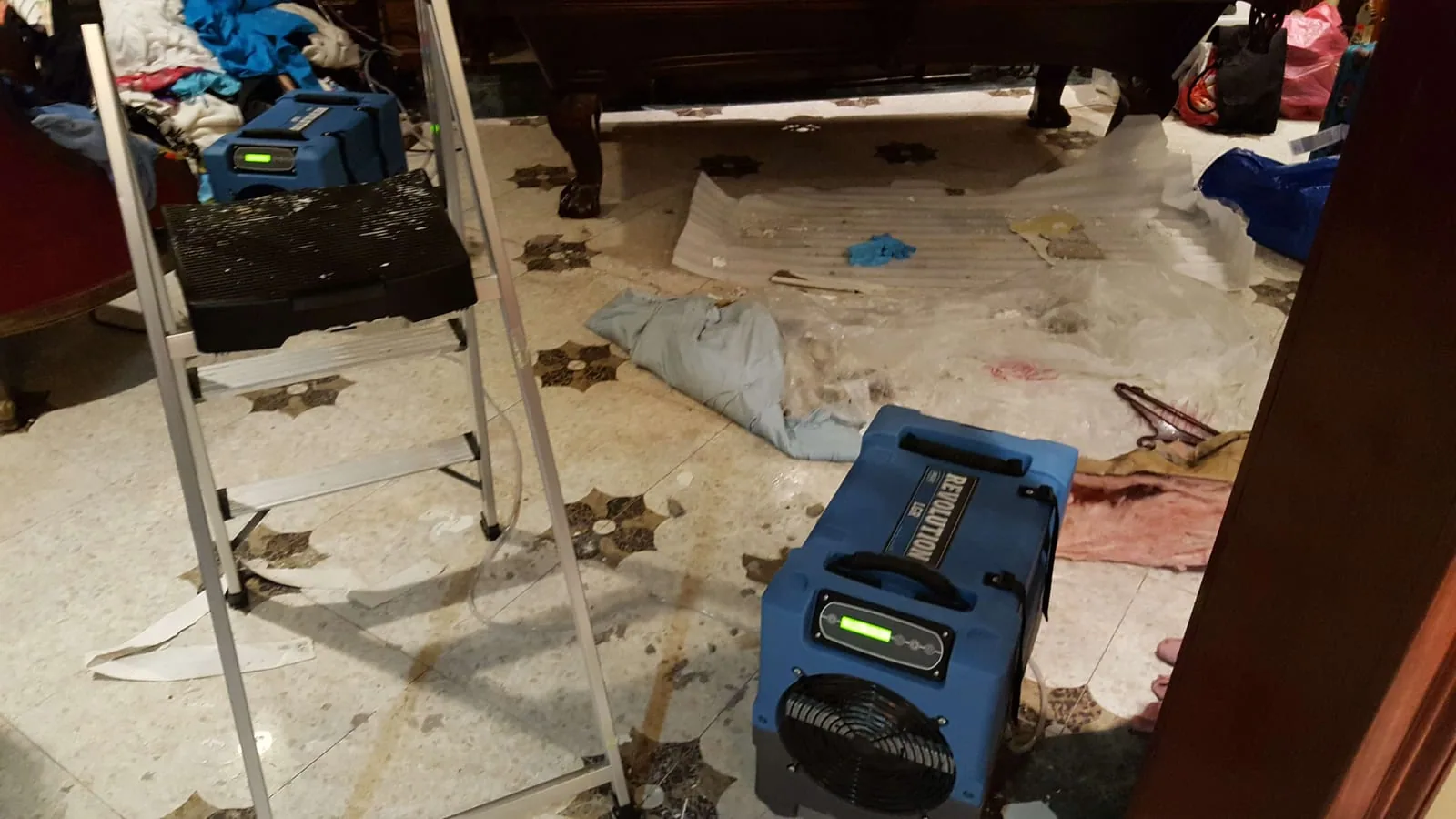
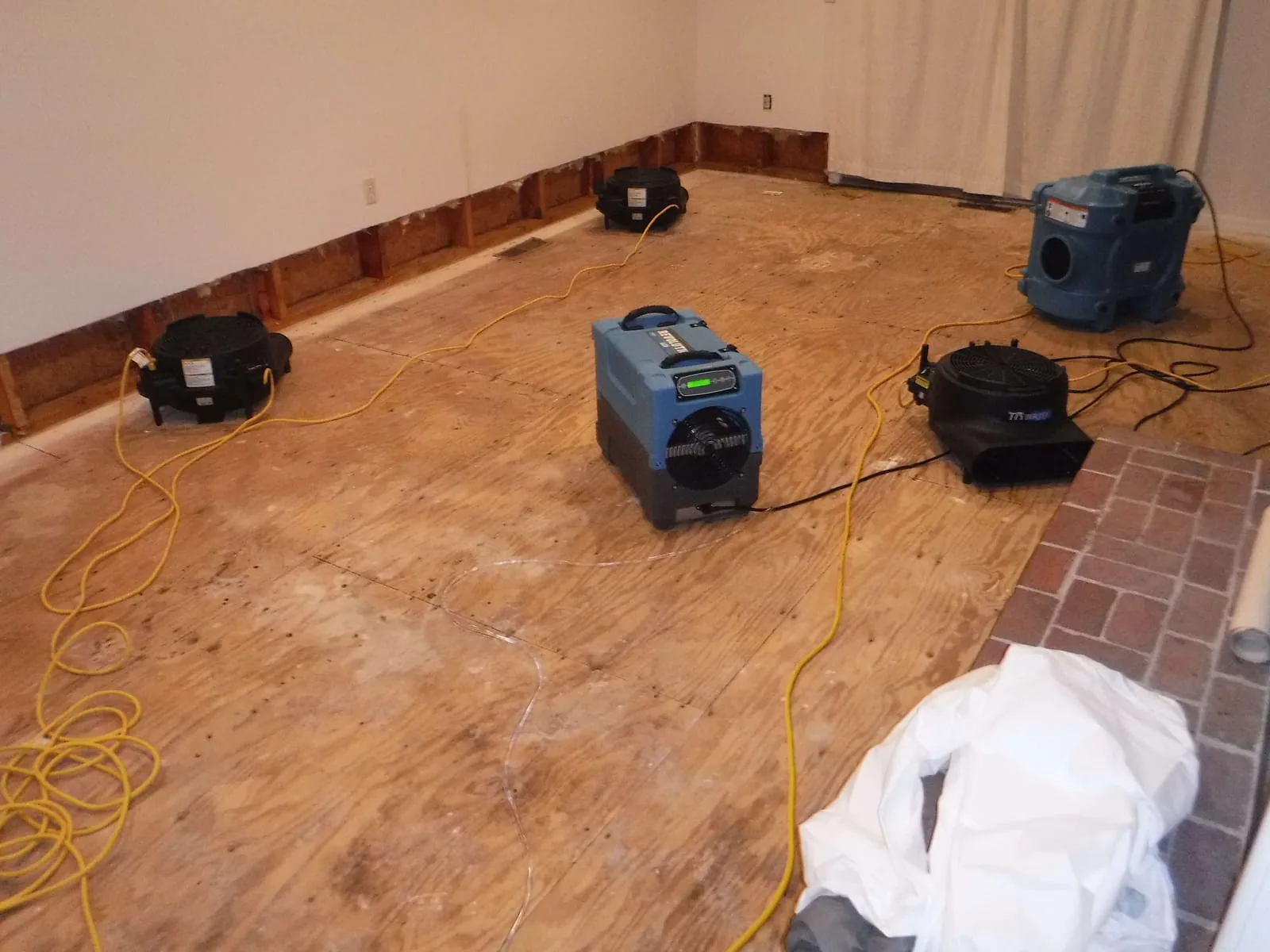
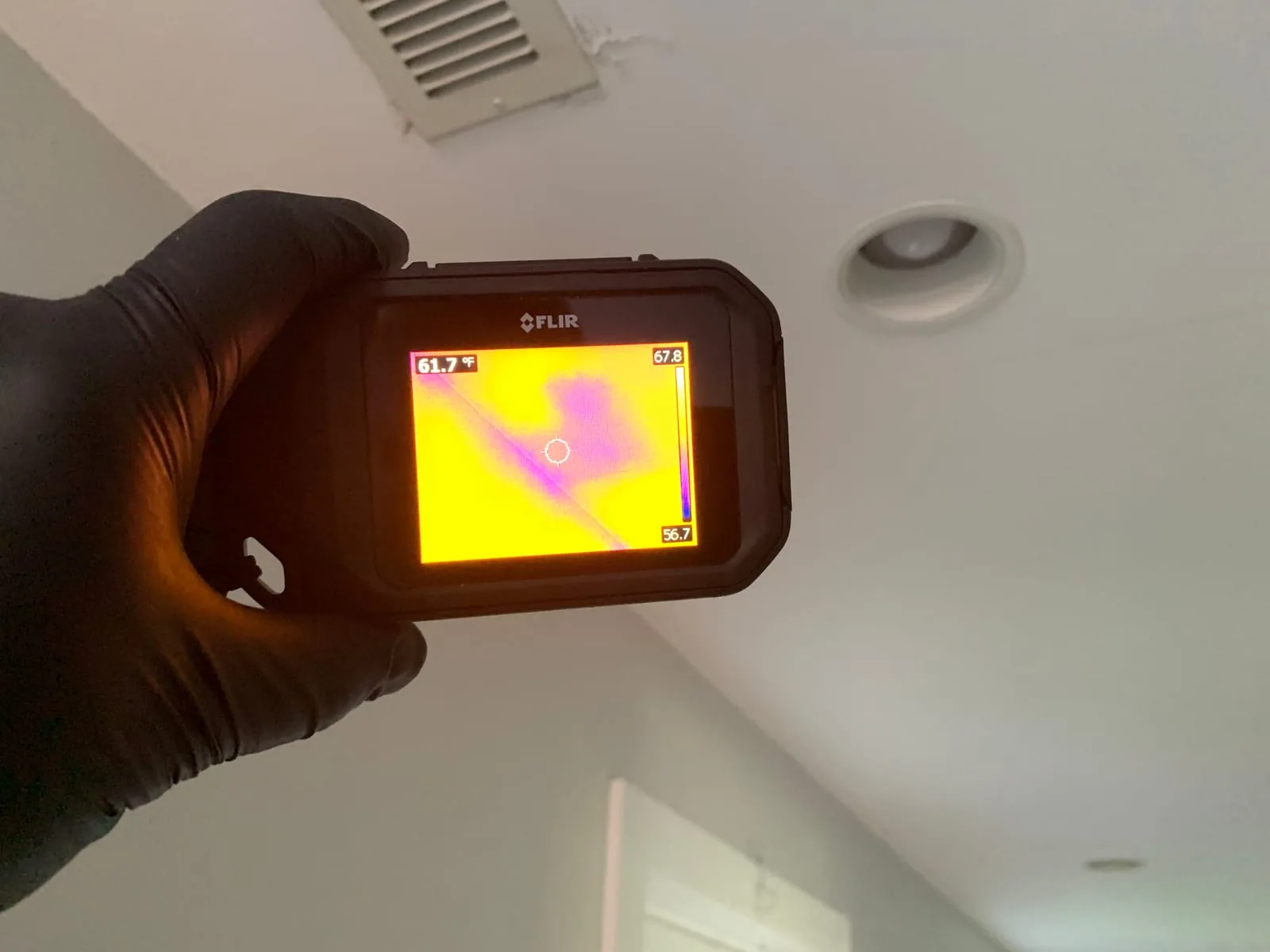
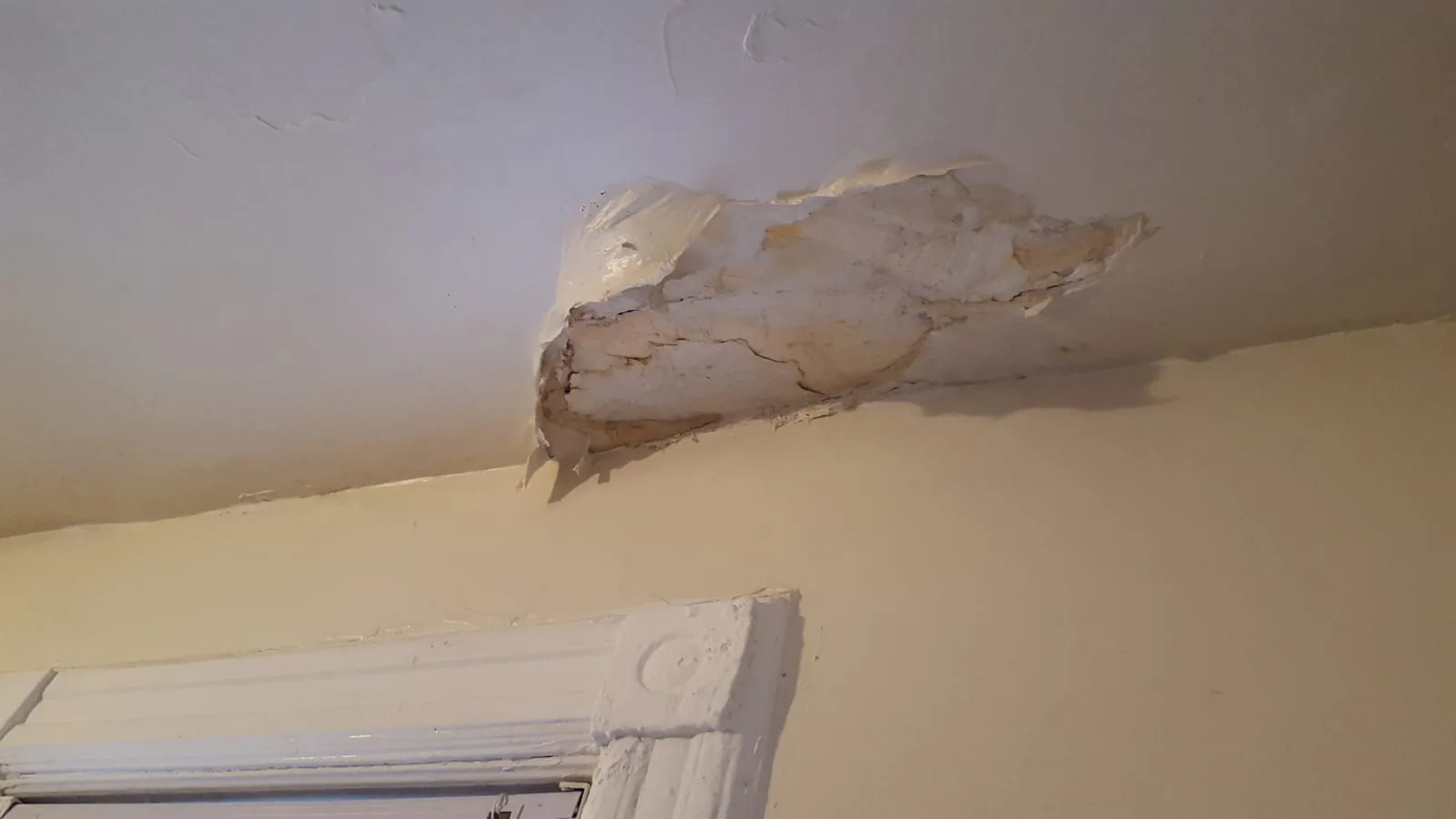
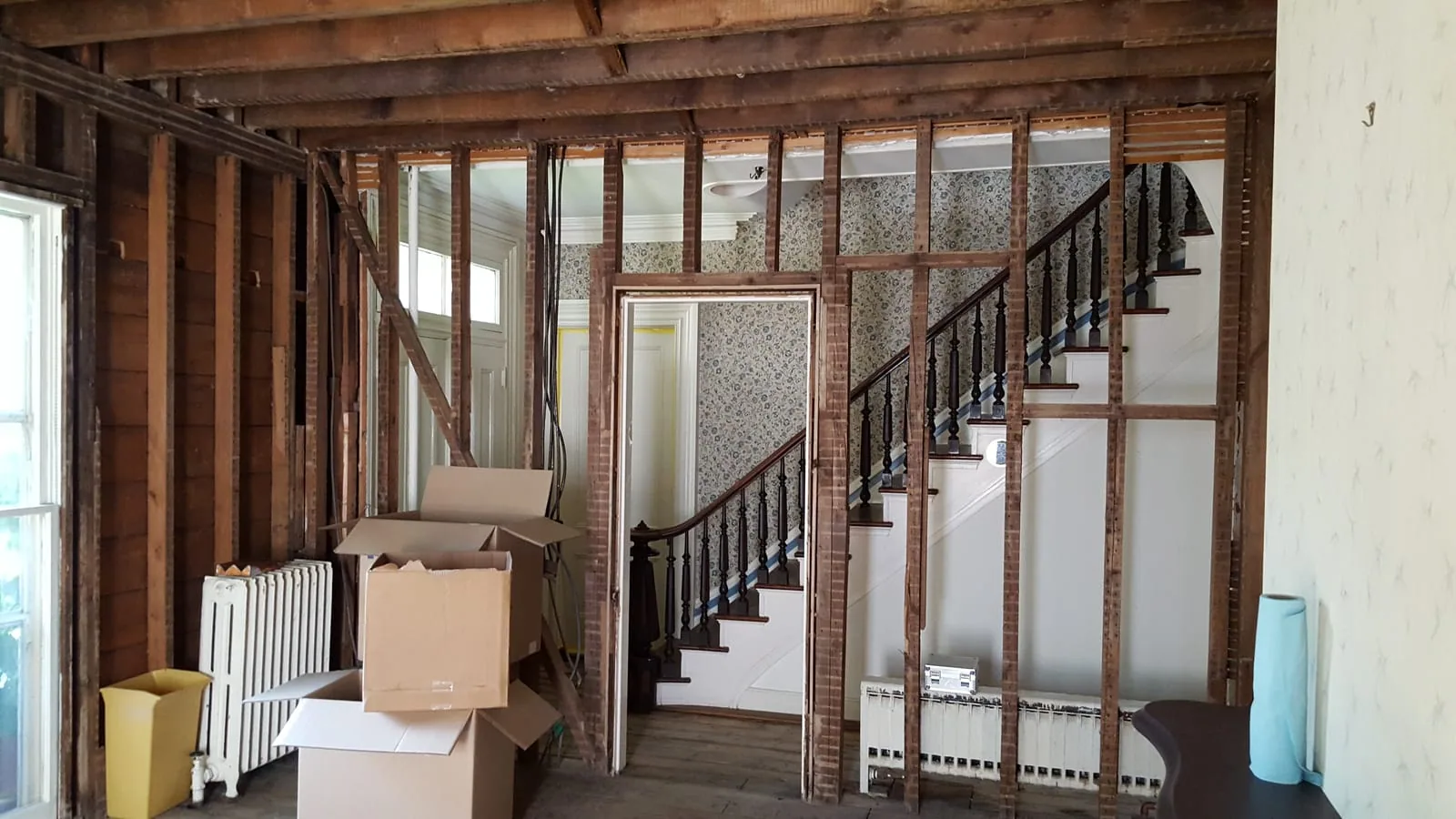
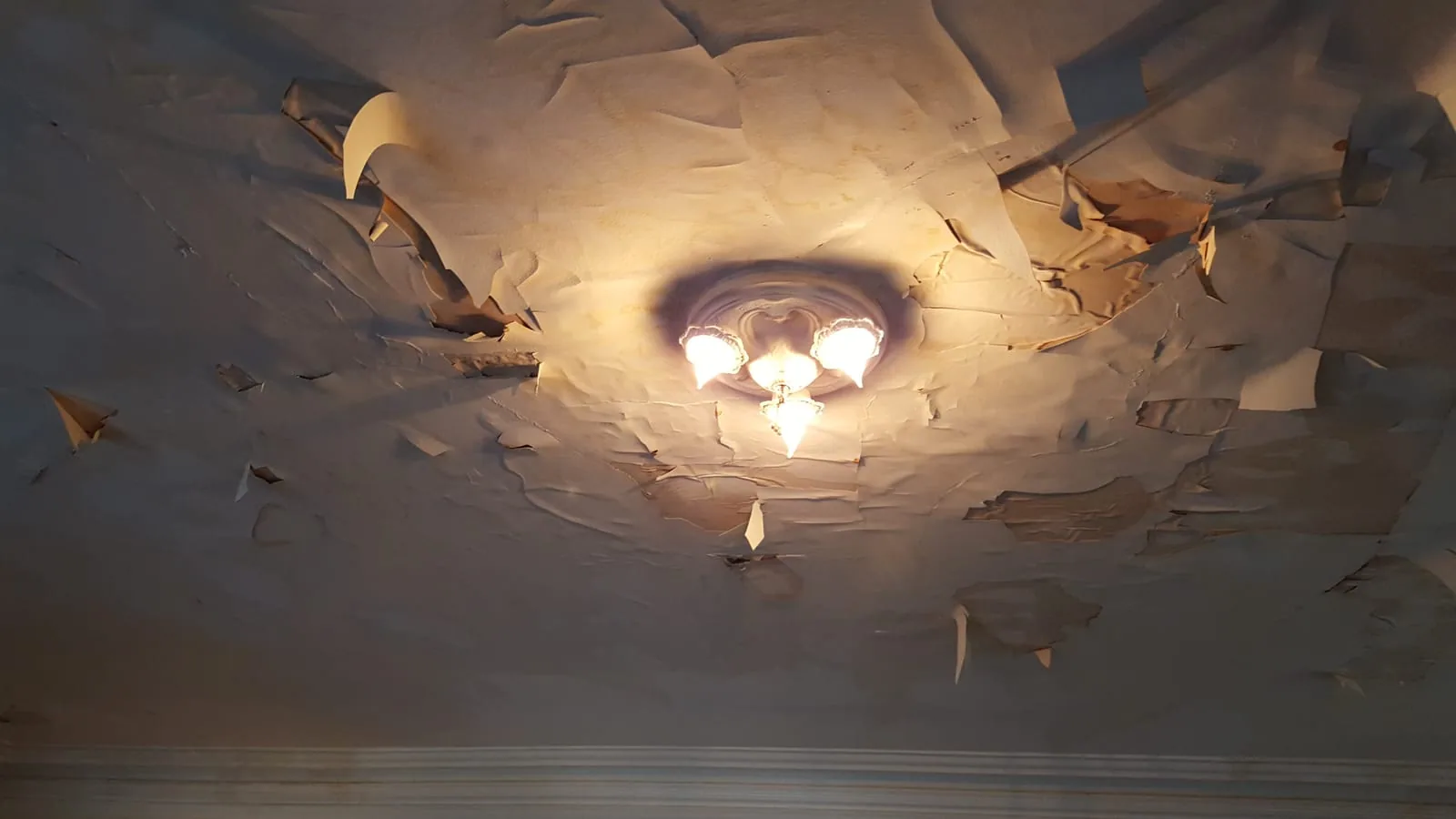
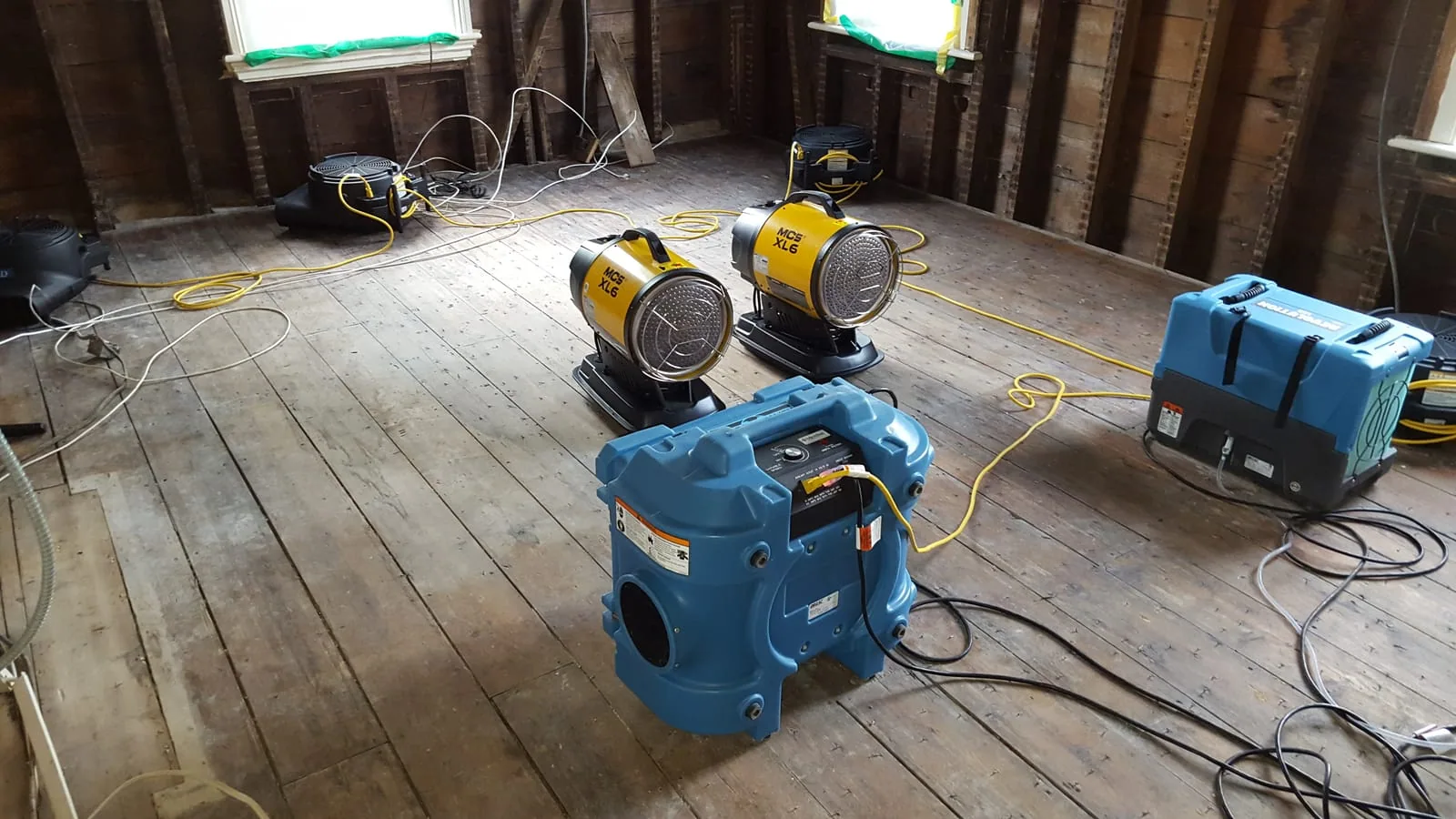
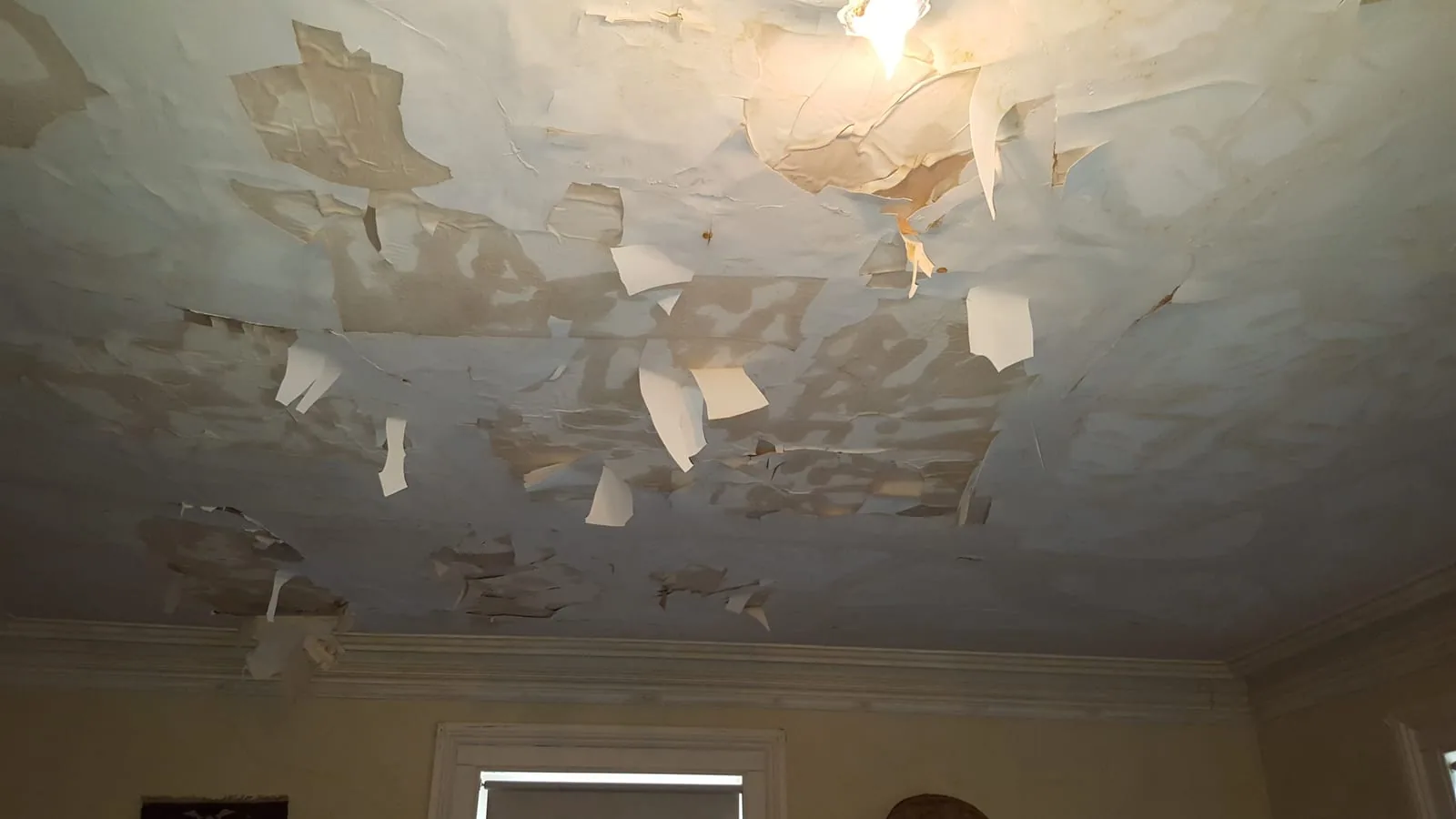
Selected photos from recent water damage restoration jobs across Fairfield County and Westchester County — from flooded basements and burst pipes to professional moisture mapping with FLIR thermal imaging.
Our Process
The IICRC-Aligned Water Damage Process
Every job documented to the published industry standard. The same framework your insurance adjuster references.
- 01
Emergency Response (within 60 minutes)
Source control plus initial photo documentation. We arrive with truck-mounted extractors, portable LGR (Low Grain Refrigerant) dehumidifiers, axial air movers, FLIR thermal imaging cameras, calibrated pin and pinless moisture meters, EPA-registered antimicrobials, and full PPE for Category 2 or 3 work. The first 60 minutes on site set the timeline of the rest of the job — fast mitigation compresses dry time, prevents mold growth, and contains the insurance scope.
- 02
Inspection & IICRC S500 Categorization
Water source identified and controlled. Category assigned per S500 framework (Cat 1 clean, Cat 2 gray, Cat 3 black). Affected zones mapped with FLIR thermal imaging — wet materials read several degrees cooler than dry surroundings due to evaporative cooling, so we can identify hidden saturation behind walls and under floors. Moisture readings recorded at marked test points with calibrated meters. Xactimate scope drafted in the same software your insurance adjuster uses and submitted to your carrier for approval.
- 03
Extraction
Standing water removed via truck-mounted extractors (500+ gallons per minute capacity) or specialty hardwood drying mats for solid wood floors that need rapid moisture extraction without demolition. Most standing water is gone within 90 minutes of arrival on a typical residential loss. Saturated absorbent materials that cannot be dried (carpet pad on Cat 2/3 losses, soaked particleboard, ruined drywall paper) are flood-cut and disposed per S500 protocol.
- 04
Structural Drying
LGR dehumidifiers and axial air movers deployed in proportion to affected square footage. Industry guideline: roughly one air mover per 50-70 sq ft of wet surface, plus one LGR dehumidifier per 800-1,200 cubic feet of contained volume. Equipment runs continuously 24/7. Daily moisture log: every test point read with calibrated meters, recorded, and charted against the IICRC S500 target. Antimicrobial application on Cat 2 and Cat 3 affected materials per S500 protocol.
- 05
Verification & Clearance
Every test point reaches the IICRC S500 drying target before equipment is removed. Final moisture log submitted to your carrier as proof of S500-compliant mitigation. Photo documentation closed into your claim file. If demolition was required (saturated drywall, ruined carpet, damaged flooring), the reconstruction phase begins as a separate scope billed to the same carrier file. Most residential water losses close in 7-14 days from first notice to final payment.
What Causes It
Common Causes of Water Damage in Our Service Area
What we see most often in Fairfield County and Westchester County homes.
Burst supply lines (winter freeze)
The single most common Fairfield County water loss, particularly during January and February freeze-thaw cycles. Copper supply lines, compression fittings on washing machine connections, and toilet supply lines fail without warning. A single hour of unattended flow can release 800+ gallons across multiple floors. Common in older Greenwich, Westport, and Old Greenwich homes with original plumbing.
Sump pump failure
Heavy spring rain combined with an aging primary sump pump, no battery backup, or a clogged discharge line. Result: two to four inches of standing water across a finished basement, typically discovered in the morning after an overnight storm. Most common in Round Hill, backcountry Greenwich, and inland Fairfield where clay-soil hydrostatic pressure drives chronic groundwater near the foundation.
Sudden appliance failure
Washing machine supply hose burst, water heater rupture, dishwasher overflow, refrigerator ice-maker line failure. These are sudden-and-accidental losses that homeowner insurance treats as covered events under standard policy language. Documentation matters — preserve the failed component so the adjuster can verify the sudden nature of the failure (not gradual leak).
Ice-dam interior water intrusion
Common in older Greenwich, Darien, New Canaan, and Westchester homes with slate, tile, or low-slope roofs and inadequate attic insulation. Ice dams on the roof edge force snowmelt back under shingles, through attic insulation, and into ceiling drywall below. Worst in late January and February after multiple freeze-thaw cycles.
Sewer backup
Municipal sewer overload during heavy rain, blocked sewer line, or failed backwater valve. Category 3 (black water) loss requiring full biohazard remediation per IICRC S500 and S520 protocols. Requires the water-backup endorsement on your homeowner policy to be covered. Common in Scarsdale, Bronxville, and other Westchester municipalities during heavy rain events.
Storm-driven water intrusion
Nor'easter wind-driven rain through compromised windows or roof breaches, hurricane water intrusion, coastal storm surge in low-elevation Belle Haven, Old Greenwich, Tokeneke, Shippan Point, Saugatuck, and Milton Point Rye. Different policy implications: hurricane deductible (typically 1-5% of dwelling value) may apply on coastal carriers' policies during officially declared hurricanes.
Hidden plumbing leak (slow / gradual)
Pinhole leaks in supply lines behind walls, failing slip joints under sinks, deteriorating shower pan seals, leaking toilet wax rings. Often discovered only when water reaches the ceiling below or when an unexpected utility bill spike triggers investigation. Coverage is mixed — sudden discovery is generally covered, but if the carrier argues gradual leak language, coverage can be denied. Documentation of discovery timing matters.
First-Hour Action Plan
What to Do in the First Hour
The five steps that determine the entire claim timeline.
- 01
Stop the water source
Shut the main valve, kill power to affected areas if water is anywhere near outlets, place buckets under active leaks. Do NOT attempt to repair the source before mitigation starts — any "fix" before documentation can become an argument the carrier uses to dispute coverage.
- 02
Document everything
Photo and video every affected area BEFORE mitigation begins. Save the failed component (broken pipe, ruined appliance, fallen tree branch, etc.). This is what the insurance adjuster will reference when scoping your claim. Time-stamp matters.
- 03
Call your insurance carrier
File First Notice of Loss (FNOL). Get a claim number assigned. Confirm your deductible and any applicable sublimits (mold, hurricane, sewer backup, code upgrade). Most carriers will tell you to start mitigation immediately rather than wait for an adjuster — delay is failure to mitigate and can void coverage on worsened damage.
- 04
Call 911 Storm
Sixty-minute response across Fairfield and Westchester. Our crew arrives with full S500 mitigation equipment, documents every step photographically and with calibrated moisture readings, and bills your carrier directly. You pay only your deductible. We coordinate with your adjuster throughout.
- 05
Do NOT use a wet-vac and assume the job is done
Consumer wet-vacs remove surface water only. Hidden moisture inside wall cavities and under flooring, if not properly mapped and dried to IICRC S500 targets, drives mold growth within 24-48 hours. Carriers generally do not accept undocumented DIY drying as proof of S500-compliant mitigation, which can complicate any follow-on mold claim.
Insurance
Direct Insurance Billing
We are direct-billed by 18 carriers active in the Fairfield County and Westchester County homeowner market — including all five major high-net-worth insurers (Chubb, AIG Private Client, PURE, Cincinnati Insurance, Vault), the national big six (State Farm, Allstate, Liberty Mutual, Travelers, USAA, Farmers, Nationwide), and major Northeast regionals (Plymouth Rock, Amica Mutual, The Hanover, Andover Companies, The Hartford, Encompass).
Standard homeowner policies cover sudden-and-accidental water losses such as burst pipes, sudden appliance failure, and sudden storm intrusion. Most exclude gradual leaks (those described as "has been leaking for months"), surface flood from rivers or rising groundwater (a separate NFIP or excess flood policy is required), and pre-existing damage. Sewer backup and sump-pump failure require the water-backup endorsement. Mold coverage triggered by a water loss is typically sublimited at $5,000-$25,000 depending on policy and carrier — speed of water mitigation is the single most reliable way to stay inside the uncapped water-loss coverage rather than burning the smaller mold sublimit. For full carrier-specific notes, mold sublimit details, and the eight most common denial reasons for CT and NY water damage claims, see our Connecticut Water Damage Insurance Claim Guide and the direct-billing carrier wall.
Why Choose 911 Storm for Water Damage?
- Certified water damage specialists serving CT & NY since 2003
- 60-minute emergency response — guaranteed
- Full insurance claim management from start to finish
- IICRC-certified equipment and techniques
- Written guarantee on all restoration work
Other Restoration Services
How Long Does Water Damage Take?
Every job is different, but here's a realistic timeline for most water damage projects.
Emergency Call
0 minCall our 24/7 dispatch — crew assigned immediately.
On-Site Arrival
~60 minIICRC-certified crew arrives, assesses, and presents plan.
Water Extraction
Day 1 (1-4 hrs)Truck-mounted extractors remove standing water, 500+ GPM.
Structural Drying
Day 2-7Air movers + LGR dehumidifiers, daily moisture verification.
Clearance + Rebuild
Day 7-14+Thermally verified dryness, then drywall, flooring, finish.
Timelines vary with scope, insurance adjuster response, and hidden damage discovered during work. Your detailed timeline is given after the on-site assessment.
Common Questions
Water Damage FAQ
How fast can 911 Storm arrive on a Fairfield County water emergency?
We dispatch from our Greenwich HQ at 12 Livingston Pl C within minutes of your call. Typical arrival times: Greenwich and Old Greenwich 15-25 min, Stamford and Cos Cob 20-30 min, Darien and Westport 30-45 min, Norwalk and New Canaan 30-50 min, broader Fairfield County 45-60 min. Westchester arrival times depend on traffic but generally 30-60 minutes from our HQ. During major storm events, response can be slower due to road conditions — we factor this into dispatch and give you a realistic estimate.
Will my insurance carrier cover water damage restoration?
Most homeowner policies cover sudden-and-accidental water damage as a standard peril. Common causes — burst pipes, appliance failures, sudden storm intrusion, ice-dam interior water — are covered. Gradual leaks, surface flood from rivers or rising groundwater, and pre-existing damage are typically excluded. We bill 18 carriers directly. See our insurance/direct-billing/ page for the complete carrier list and our CT Water Damage Insurance Claim Guide for the full claim process.
How long does water damage restoration take?
Category 1 (clean water) single-room loss: 3-5 days of drying. Category 1 multi-room or basement-scale: 5-7 days. Category 2 (gray water): 5-10 days including antimicrobial dwell time. Category 3 (black water / sewage): 10-21 days minimum with biohazard demolition, full IICRC S520 containment if mold is involved, and third-party clearance verification. Reconstruction phase (if demolition was required) is an additional 1-4 weeks depending on scope. Final claim payment typically lands within 7-14 days of scope approval.
Do I need to leave my home during water damage restoration?
For limited-area Category 1 losses confined to a basement or single room, no — you can remain in the home. For multi-room losses, Category 2 or Category 3 events, or losses combined with active fire or smoke restoration, displacement is often necessary. Your homeowner policy typically pays for temporary housing, restaurant meals, and other displacement costs under Additional Living Expense (ALE) coverage — keep all receipts. We help document ALE expenses for your claim.
What is the difference between Category 1, 2, and 3 water?
IICRC S500 classification of water by source and contamination. Category 1 (clean): water from a sanitary source — supply line, rain, refrigerator. Category 2 (gray): water containing significant contamination — washing machine discharge, dishwasher overflow, sump pump discharge. Category 3 (black): grossly contaminated water — sewage backup, toilet overflow, rising surface water from rivers or storm drains. Higher categories require more PPE, demolition of porous materials, antimicrobial treatment of all remaining surfaces, and biohazard disposal — significantly increasing scope and cost.
Can I do water damage cleanup myself?
For very small losses — a kitchen leak caught immediately, perhaps — homeowner DIY drying with rented consumer equipment is feasible. For anything multi-room, multi-day, or involving Category 2 or 3 water, the equipment and documentation requirements quickly exceed what consumer rentals deliver. The bigger issue: insurance carriers generally do not accept undocumented DIY drying as proof of S500-compliant mitigation, which can complicate or void coverage on any follow-on mold claim. If the loss is covered, professional restoration billed to your carrier is almost always the right path.
How do I know if I have hidden water damage?
Signs include: musty smell, peeling paint or wallpaper, ceiling stains, warped or cupping hardwood, soft drywall when pressed gently, elevated water bills suggesting an active leak, efflorescence (white powder) on basement walls indicating water moving through the foundation, condensation on water pipes, mold spotting on baseboards or behind furniture. We offer free on-site assessment using FLIR thermal imaging and calibrated moisture meters across Fairfield and Westchester to identify hidden moisture before it becomes a mold problem.
What does water damage restoration cost in Fairfield County or Westchester?
Highly variable based on water category, affected square footage, materials involved, and finish quality. Typical residential ranges: Category 1 single-room, $1,500-$4,000. Category 1 finished basement, $4,000-$12,000. Category 2 multi-room, $6,000-$18,000. Category 3 sewage backup, $15,000-$50,000+. High-end Greenwich, Darien, or Westport homes with premium finishes (plaster walls, custom hardwood, slate trim) restore at a 15-25% premium because the matching materials and craftsmanship cost more. Our cost calculator at /cost-calculator/ gives a localized estimate using Xactimate-style pricing.
Does 911 Storm handle the entire claim or just the mitigation?
We handle the full water damage restoration scope — mitigation, drying, antimicrobial treatment, demolition where required, and reconstruction back to pre-loss condition. We bill the entire scope directly to your carrier. For specialty trades outside our scope (plumbing repair of the originally failed pipe, electrical work, custom millwork on premium finishes), we coordinate with established Fairfield and Westchester trades and the scope is invoiced through your claim as a unified project.
Damage Doesn't Wait — Neither Do We
60-minute response. Free estimate. We handle your insurance claim.
IICRC Certified • Licensed & Insured • All Major Insurance Carriers