
Sewage Cleanup
Safe biohazard-grade sewage removal, disinfection, and odor elimination.
Our Sewage Cleanup Process
Emergency Call
Call our 24/7 line — crew dispatched immediately.
60-Min Arrival
We arrive, assess, and brief you on the plan.
Mitigation
Stop damage from spreading — fast.
Full Restoration
Certified restoration to pre-loss condition.
Sewage Cleanup in Fairfield County, CT & Westchester County, NY
Sewage cleanup is the most serious water-damage scenario we respond to. Category 3 black water — sewage backup through floor drains, toilet overflow, septic system failure, municipal sewer surcharge during heavy rain — is a biohazard requiring full PPE, specialty extraction, demolition of all porous materials the water touched, antimicrobial treatment of remaining surfaces, biohazard disposal, and post-remediation verification. Standard water cleanup methods are not appropriate for Cat 3 contamination and shortcuts here produce serious health risks plus mold problems weeks later.
911 Storm crews are IICRC S500 + S520 certified for biohazard water remediation across Fairfield County, CT and Westchester County, NY. We carry the PPE, antimicrobial chemistry, and disposal infrastructure required for safe Cat 3 cleanup. Sewage cleanup is covered under most homeowner policies when the water-backup endorsement is in place — verify your declarations before the event happens.
Why sewage requires fundamentally different cleanup
Sewage contains bacteria (E. coli, Salmonella, Shigella, Hepatitis A), viruses, parasites, fungi, organic waste, and chemical contamination. Direct skin contact causes infection risk; aerosolized droplets create respiratory and ingestion exposure paths. IICRC S500 Category 3 protocol exists specifically for this scenario and is non-negotiable: standard wet-vac extraction, surface cleaning, or DIY mop-up significantly increases exposure risk for both the cleanup crew and home occupants.
The contamination penetrates porous materials — drywall, carpet pad, ceiling tiles, insulation, particleboard, soft furniture — beyond what surface cleaning can address. S500 requires removal and biohazard disposal of these materials, not cleaning in place. Trying to save contaminated porous materials produces a home that smells faintly of sewage for years and grows mold reliably.
Our sewage cleanup protocol
Crew arrives in full PPE: Tyvek suits, full-face P100 respirators, boot covers, double gloves. HVAC system shut down immediately to prevent aerosol spread to unaffected areas of the home. Occupants evacuated from affected zones. Standing sewage extracted via pump-out (no walking through the water — slip and contamination risk). All equipment double-bagged on exit from the affected area.
Porous materials in the affected zone demolished and bagged for biohazard disposal: carpet, carpet pad, drywall to a minimum 12 inches above the high water line (often higher), batt insulation, lower trim, ruined particleboard. Hard remaining surfaces (concrete, sealed wood, metal, tile) HEPA-vacuumed then washed with EPA-registered antimicrobial with documented dwell time per S500 protocol. Air quality monitoring throughout.
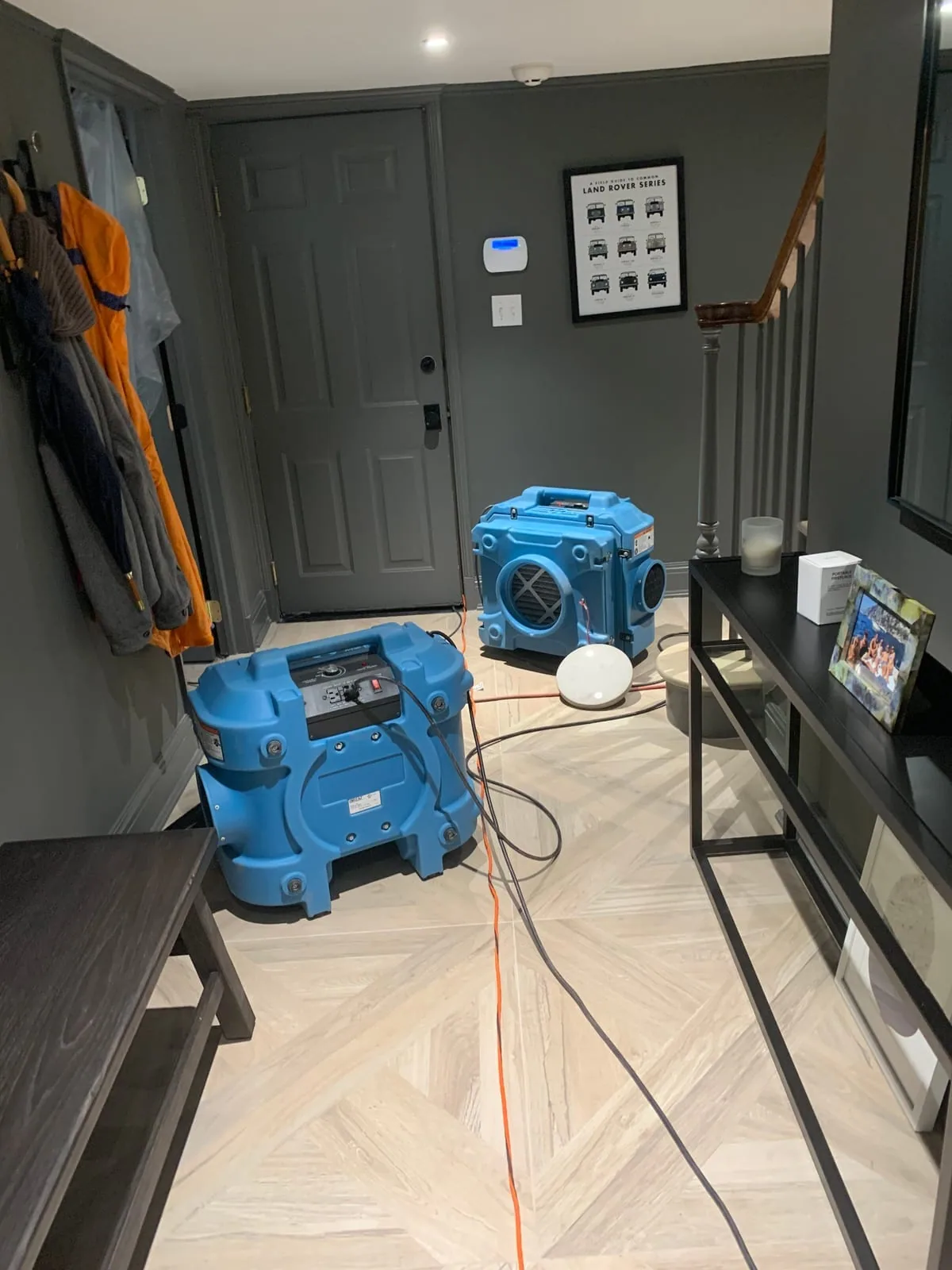
Structural drying with LGR dehumidifiers and HEPA air scrubbers running negative-pressure containment over 5-10 days. Post-mitigation air quality testing and visual clearance before the area is released back for reconstruction. Reconstruction (new drywall with vapor barrier, new flooring, new insulation, painted) follows as a separate billed scope.
Insurance coverage for sewage cleanup in CT and NY
Standard homeowner policies exclude sewer backup unless you have the water-backup endorsement (often called sewer-and-drain endorsement). Adding the endorsement is typically $100-$300 annual premium and covers both the mitigation cost and most reconstruction. Without the endorsement, sewage cleanup is paid out of pocket — usually $15,000-$50,000+ for a residential basement event.
On endorsed policies, coverage typically caps at $5,000-$25,000 on standard products, with higher caps available on HNW carrier endorsements. Real example from our work: a Scarsdale Cat 3 sewage backup in a finished basement was $31,200 total scope, billed in full by Chubb because the homeowner carried the water-backup endorsement at the higher coverage tier.
Related Water Damage Services
Sewage Cleanup Near You
Covered loss? We bill your insurance carrier directly — and our CT insurance claim guide walks the whole process. Estimate your scope with the cost calculator.
How Long Does Sewage Cleanup Take?
Every job is different, but here's a realistic timeline for most sewage cleanup projects.
Emergency Call
0 minCall our 24/7 dispatch — crew assigned immediately.
On-Site Arrival
~60 minIICRC-certified crew arrives, assesses, and presents plan.
Water Extraction
Day 1 (1-4 hrs)Truck-mounted extractors remove standing water, 500+ GPM.
Structural Drying
Day 2-7Air movers + LGR dehumidifiers, daily moisture verification.
Clearance + Rebuild
Day 7-14+Thermally verified dryness, then drywall, flooring, finish.
Timelines vary with scope, insurance adjuster response, and hidden damage discovered during work. Your detailed timeline is given after the on-site assessment.
Common Questions
Sewage Cleanup FAQ
Is sewage cleanup safe to do myself?
No. Category 3 black water contains bacteria, viruses, parasites, and chemical contamination that requires PPE (Tyvek, P100 respirator, double gloves, boot covers) and IICRC S500 biohazard protocol. DIY sewage cleanup significantly increases infection risk and almost always leaves contamination that produces mold weeks later. This is one scenario where DIY is genuinely not appropriate.
Will my insurance cover sewage backup?
Only if you have the water-backup endorsement (sometimes called sewer-and-drain endorsement) on your homeowner policy. The endorsement is typically inexpensive ($100-$300/year) and covers most cleanup scope. Without it, sewage cleanup is out of pocket. Check your declarations page now — adding the endorsement after a backup happens does not provide retroactive coverage.
How long does sewage cleanup take?
Typical residential Cat 3 sewage scope: 10-21 days for biohazard mitigation including PPE setup, evacuation, extraction, demolition, antimicrobial treatment, drying, and clearance verification. Plus 1-4 weeks for reconstruction (new drywall, vapor barrier, insulation, flooring, trim, paint). Total turnaround typically 4-8 weeks from event to fully restored.
Do I have to leave my home during sewage cleanup?
For affected zones, yes — occupants are evacuated during active demolition and cleaning of contaminated materials. For unaffected upper floors with separate HVAC zones and good containment, sometimes occupants can remain elsewhere in the home. For whole-home contamination or main-floor sewage, full displacement is typical. ALE (Additional Living Expense) coverage on your policy pays for temporary housing.
What about a backwater valve to prevent future backups?
A backwater valve installed on your main basement drain prevents municipal sewer surcharge from flowing back into your basement during heavy rain events. Installation cost varies ($500-$2,000 depending on plumbing access). For homes that have experienced one sewer backup, installing a backwater valve as part of the rebuild is strongly recommended and often coordinated with the plumber by us.
Damage Doesn't Wait — Neither Do We
60-minute response. Free estimate. We handle your insurance claim.
IICRC Certified • Licensed & Insured • All Major Insurance Carriers