
Burst & Leaking Pipes
Immediate water mitigation from burst or leaking pipes to prevent structural loss.
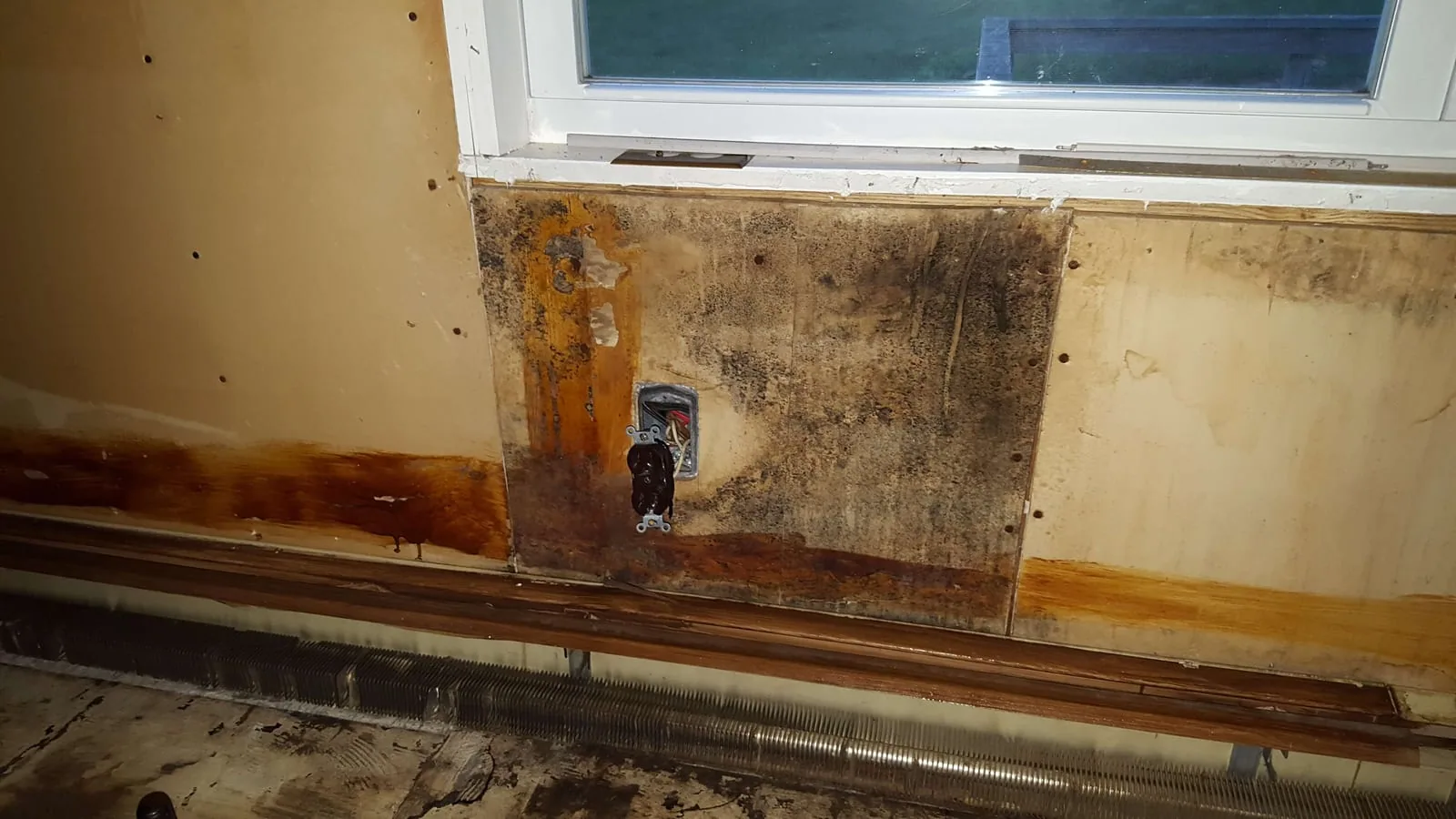
Our Burst & Leaking Pipes Process
Emergency Call
Call our 24/7 line — crew dispatched immediately.
60-Min Arrival
We arrive, assess, and brief you on the plan.
Mitigation
Stop damage from spreading — fast.
Full Restoration
Certified restoration to pre-loss condition.
Burst & Leaking Pipes in Fairfield County, CT & Westchester County, NY
Burst pipes are the single most common water-damage emergency we respond to across Fairfield County, CT and Westchester County, NY, particularly during the January and February freeze season. Copper supply lines fail at compression fittings, washing machine hoses rupture under pressure, water heater tanks split when sediment compromises the bottom, toilet supply lines fail without warning — each releases water at full house pressure (40-80 PSI) until someone shuts the main valve. Even an unattended 30 minutes can release 200-500 gallons across multiple floors.
911 Storm responds to burst pipe emergencies 24/7 from our Greenwich HQ. Our IICRC S500 crew arrives with full water extraction equipment, documents the loss for the insurance claim, mitigates the water damage, and coordinates with a plumber for the actual pipe repair (a separate trade we don't perform ourselves but bring in as needed). Sudden-and-accidental pipe failure is a covered peril on virtually every standard homeowner policy — we bill the mitigation scope directly to your carrier.
Why burst pipes do so much damage
Residential water supply runs at 40-80 PSI. A burst supply line releases water at the equivalent of a fire hose flow rate — 15-30 gallons per minute on a 1/2-inch supply line, more on larger lines. In 30 unattended minutes, that's 450-900 gallons. The water finds the path of least resistance: down through floor cavities, along baseboards, into adjacent rooms, eventually pooling on lower levels.
On a second-floor burst pipe in an unoccupied Greenwich home over a winter weekend, by the time the homeowner returns Monday morning the entire upper floor may be saturated, the first floor ceiling collapsed in several rooms, and the basement holding multiple inches of standing water. The scope grows nonlinearly with discovery delay.
Our burst pipe response
Source control is the first step — homeowner shuts the main valve before we arrive, or we shut it at the street if needed. Standing water extracted via truck-mounted extractors across all affected floors. FLIR thermal imaging maps the migration path of the water through wall cavities, ceiling assemblies, and floor systems — critical for identifying hidden saturation that surface inspection misses.
Wet drywall flood-cut where saturated, batt insulation removed and replaced, structural framing dried in place with LGR dehumidifiers and axial air movers running 24/7. Hardwood floors assessed for in-place drying (specialty hardwood drying mats) vs replacement — most hardwood saves if drying begins within hours. Daily moisture log to S500 targets. Coordination with a plumber for the actual pipe repair (the failed component itself).
Typical residential burst-pipe scope: $4,000-$15,000 for mitigation depending on water volume and affected area, plus reconstruction (drywall, paint, trim) of $5,000-$30,000 depending on finish quality and affected square footage. HNW Greenwich and Westport homes with premium finishes (plaster walls, custom hardwood) run higher.
Preventing the next burst pipe
Maintain interior temperature at 55°F minimum throughout the winter, including when traveling. Insulate exposed supply lines in attics, basements, and unheated garage spaces. Replace rubber washing machine supply hoses with braided stainless steel (5-7 year replacement cycle on rubber). Install smart leak detection sensors near washing machines, water heaters, and dishwashers — automated water shutoff valves can stop the flow within minutes of detected leakage. Schedule annual plumbing inspection on homes with original copper or galvanized supply lines.
Related Water Damage Services
Burst & Leaking Pipes Near You
Covered loss? We bill your insurance carrier directly — and our CT insurance claim guide walks the whole process. Estimate your scope with the cost calculator.
How Long Does Burst & Leaking Pipes Take?
Every job is different, but here's a realistic timeline for most burst & leaking pipes projects.
Emergency Call
0 minCall our 24/7 dispatch — crew assigned immediately.
On-Site Arrival
~60 minIICRC-certified crew arrives, assesses, and presents plan.
Water Extraction
Day 1 (1-4 hrs)Truck-mounted extractors remove standing water, 500+ GPM.
Structural Drying
Day 2-7Air movers + LGR dehumidifiers, daily moisture verification.
Clearance + Rebuild
Day 7-14+Thermally verified dryness, then drywall, flooring, finish.
Timelines vary with scope, insurance adjuster response, and hidden damage discovered during work. Your detailed timeline is given after the on-site assessment.
Common Questions
Burst & Leaking Pipes FAQ
Will my insurance cover a burst pipe?
Yes — sudden-and-accidental pipe failure is a covered peril on virtually every standard homeowner policy in our market. The water mitigation scope (extraction, drying, demolition, antimicrobial) is covered, plus reconstruction back to pre-loss condition. Disputes occasionally arise around premium finish matching (carrier wants builder-grade rebuild, homeowner had plaster walls) — we document the pre-loss finish to support like-kind-and-quality coverage.
Do you also fix the pipe itself?
No, plumbing repair is a separate trade. We handle the water damage scope (mitigation through reconstruction) and coordinate a quality plumber for the actual pipe repair — we have established relationships with plumbers across Fairfield and Westchester. The plumber's invoice can be included in your claim file as part of the total event scope.
How fast does a burst pipe need to be addressed?
Immediately — the longer water flows or pools, the more damage compounds. Shut the main valve as the first step (location: typically near the water meter in the basement or utility room). Call us next. From our Greenwich HQ we dispatch immediately and typical arrival is 15-45 minutes across Fairfield, 30-60 minutes Westchester. Every hour matters.
Can hardwood floors be saved after a burst pipe?
Often yes if drying begins within hours. We use specialty hardwood drying mats that pull moisture from solid wood floors without demolition. Cupping (concave deformation of boards) usually resolves as the wood dries back to baseline moisture content. Severe permanent damage (crowning, gapping, warping beyond restoration) occurs only when water sits for days. Real example from our work: 3-floor burst-pipe in Westport saved all hardwood with rapid drying intervention.
What is a smart leak detection system and is it worth installing?
Smart leak sensors monitor for moisture near washing machines, water heaters, dishwashers, and under sinks. When water is detected, an automated shutoff valve closes the main supply line within seconds, limiting damage to a few cups instead of hundreds of gallons. Cost: $500-$2,500 installed depending on system complexity. For most homes — especially those with finished basements or unoccupied periods during winter — yes, worth installing. Some HNW insurance carriers offer premium discounts for installation.
Damage Doesn't Wait — Neither Do We
60-minute response. Free estimate. We handle your insurance claim.
IICRC Certified • Licensed & Insured • All Major Insurance Carriers