
Flooded Basement
Complete flooded basement cleanup, drying, and moisture remediation.
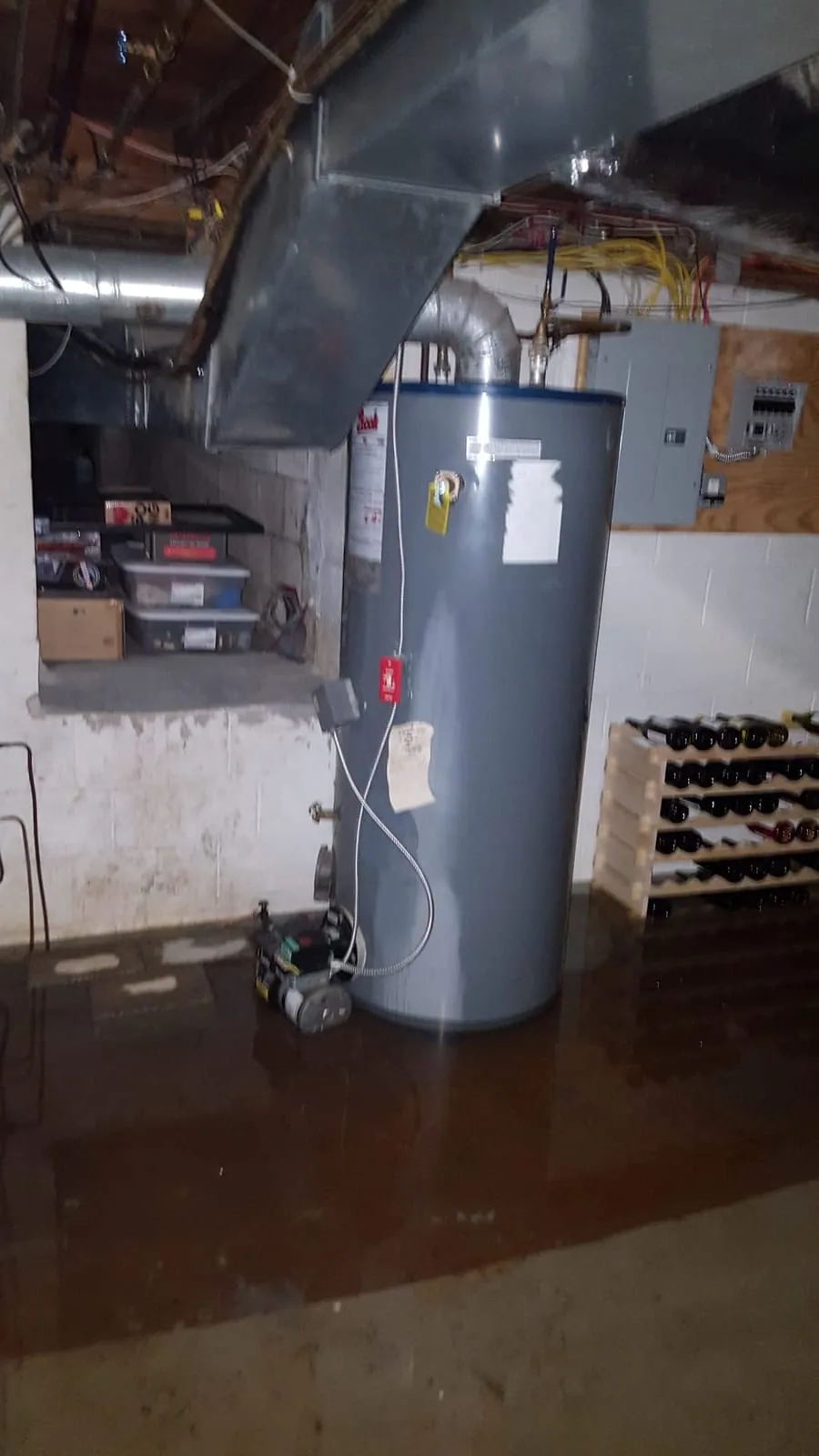
Our Flooded Basement Process
Emergency Call
Call our 24/7 line — crew dispatched immediately.
60-Min Arrival
We arrive, assess, and brief you on the plan.
Mitigation
Stop damage from spreading — fast.
Full Restoration
Certified restoration to pre-loss condition.
Flooded Basement in Fairfield County, CT & Westchester County, NY
A flooded basement is the single most common water damage scenario we respond to across Fairfield County, CT and Westchester County, NY. The cause varies — sump pump failure during heavy spring rain, burst supply line in winter, foundation seepage during snowmelt, sewer backup, storm surge in coastal Belle Haven and Old Greenwich, ice-dam meltwater migrating down through walls — but the immediate need is the same: rapid water extraction, structural drying of the basement envelope, antimicrobial treatment of porous materials, and verification before mold sets in.
911 Storm provides 24/7 flooded basement response across all 67 cities in our service area, with IICRC S500-certified crews and the equipment necessary to handle anything from a small inch-deep utility-room flood to a four-inch finished-basement inundation. We arrive within 60 minutes from our Greenwich HQ, document the loss for your insurance carrier, and bill all 18 major carriers in our market directly. You pay only your deductible.
Why basement flooding is especially destructive
Basements sit at the bottom of the building envelope, which means gravity pulls water there from any source above (burst supply line on the first floor, leaking water heater, sewer backup) plus any source from outside (hydrostatic groundwater pressure, surface water around the foundation, sewer surcharge during heavy rain). Basement materials are also typically the most moisture-vulnerable in the home: drywall on framing without vapor barriers, carpet pad on concrete, particleboard furniture stored in the corners, electrical and HVAC equipment that gets ruined fast.
On a finished basement, an inch of standing water across 800 square feet is roughly 500 gallons — saturating carpet pad, soaking the bottom 12-18 inches of drywall, wicking up into framing and baseboard. Without rapid intervention, mold begins colonizing the porous materials within 24-48 hours. By 72 hours visible spotting often appears on baseboard, behind furniture, and in HVAC vents. The window for full mitigation without triggering mold remediation is short.
Our IICRC S500 basement flooding response
Arrival within 60 minutes with full extraction and drying equipment. Source confirmed and controlled — if a sump pump failed we coordinate with a plumber for emergency replacement, if a pipe burst we shut the main, if foundation seepage we identify the entry point. Standing water extracted via truck-mounted extractor (most of the basement is dewatered within 90 minutes).
Affected materials assessed for salvage vs demolition. Carpet pad almost always removed (cannot be reliably dried in place). Drywall flood-cut at the IICRC recommended height (12 inches above the high water line, minimum 4 inches). Wet baseboard removed. Saturated insulation removed and replaced. Framing dried in place with LGR dehumidifiers and air movers running 24/7 over 5-7 days. Antimicrobial application on framing per S500 protocol for Cat 2/3 losses.
Daily moisture log records readings at marked test points until every test point hits the IICRC S500 target (16% moisture content for framing, baseline-comparison for any remaining drywall, target RH for concrete). Final clearance documented in your claim file. Reconstruction (new drywall, paint, trim, carpet, baseboard) follows as a separate billed scope.
Local Fairfield + Westchester basement-flood patterns
Coastal Greenwich (Belle Haven, Old Greenwich, Cos Cob) and Stamford (Shippan Point) — storm surge flooding during nor'easters and hurricanes. Backcountry Greenwich and Round Hill — clay-soil hydrostatic pressure driving chronic foundation seepage during spring snowmelt. Westport and Darien — mix of surge exposure on coastal homes and sump pump failures inland during heavy rain. Scarsdale and Bronxville — municipal sewer backup during heavy storm events combined with ground-water issues in older stone-foundation basements. Each pattern drives different mitigation considerations and different insurance coverage triggers (storm surge vs water-backup endorsement vs standard water damage).
Related Water Damage Services
Flooded Basement Near You
Covered loss? We bill your insurance carrier directly — and our CT insurance claim guide walks the whole process. Estimate your scope with the cost calculator.
How Long Does Flooded Basement Take?
Every job is different, but here's a realistic timeline for most flooded basement projects.
Emergency Call
0 minCall our 24/7 dispatch — crew assigned immediately.
On-Site Arrival
~60 minIICRC-certified crew arrives, assesses, and presents plan.
Water Extraction
Day 1 (1-4 hrs)Truck-mounted extractors remove standing water, 500+ GPM.
Structural Drying
Day 2-7Air movers + LGR dehumidifiers, daily moisture verification.
Clearance + Rebuild
Day 7-14+Thermally verified dryness, then drywall, flooring, finish.
Timelines vary with scope, insurance adjuster response, and hidden damage discovered during work. Your detailed timeline is given after the on-site assessment.
Common Questions
Flooded Basement FAQ
How fast can you respond to a flooded basement in Greenwich?
From our Greenwich HQ, typical Greenwich and Old Greenwich response is 15-25 minutes. Stamford and Cos Cob 20-30 min. Darien and Westport 30-45 min. New Canaan and Norwalk 30-50 min. Westchester arrival 30-60 minutes from Greenwich depending on traffic. We dispatch immediately when you call.
Will my insurance cover a flooded basement?
Depends on the cause. Burst pipe, sudden appliance failure, sudden roof leak — covered as standard water damage. Sewer backup or sump pump failure — covered if you have the water-backup endorsement on your policy (often inexpensive add-on). Surface flood (river overflow, storm surge below the structure) — excluded from standard property policy, requires separate NFIP or excess flood policy. Foundation seepage from gradual groundwater — generally excluded as gradual / maintenance. We help you read your policy before we file the scope.
How much carpet and drywall will need to be removed?
Carpet pad almost always removed (cannot be reliably dried in place even on Cat 1 losses). Drywall flood-cut at minimum 4 inches above the high water line, typically 12 inches for safety. Wet baseboard, saturated batt insulation, and ruined particleboard all removed. Solid wood framing usually dries in place with proper equipment. Solid hardwood floor often saves if drying starts within hours — specialty hardwood drying mats accelerate moisture extraction without demolition.
How long until I can use my basement again?
Drying phase typically 5-7 days for Cat 1 (clean water) loss, 7-10 days for Cat 2 (gray water), 10-21 days for Cat 3 (sewage) including biohazard demolition and clearance verification. Reconstruction (new drywall, paint, trim, carpet) typically adds 1-3 weeks depending on scope and your carrier's adjuster timeline. Total turnaround usually 2-6 weeks from flood to fully restored.
Can you also fix the cause (sump pump, pipe, foundation crack)?
We handle the water mitigation and reconstruction scope. The actual mechanical repair of the failed component (new sump pump installation, plumber repair of the burst pipe, foundation crack injection for seepage source) is typically a separate trade we coordinate with. We have established relationships with quality Fairfield + Westchester plumbers, electricians, and foundation specialists, and the work can be scheduled and billed through your claim file as a unified project.
Damage Doesn't Wait — Neither Do We
60-minute response. Free estimate. We handle your insurance claim.
IICRC Certified • Licensed & Insured • All Major Insurance Carriers