
Emergency Water Removal
24/7 rapid water extraction using industrial-grade pumps and vacuums.
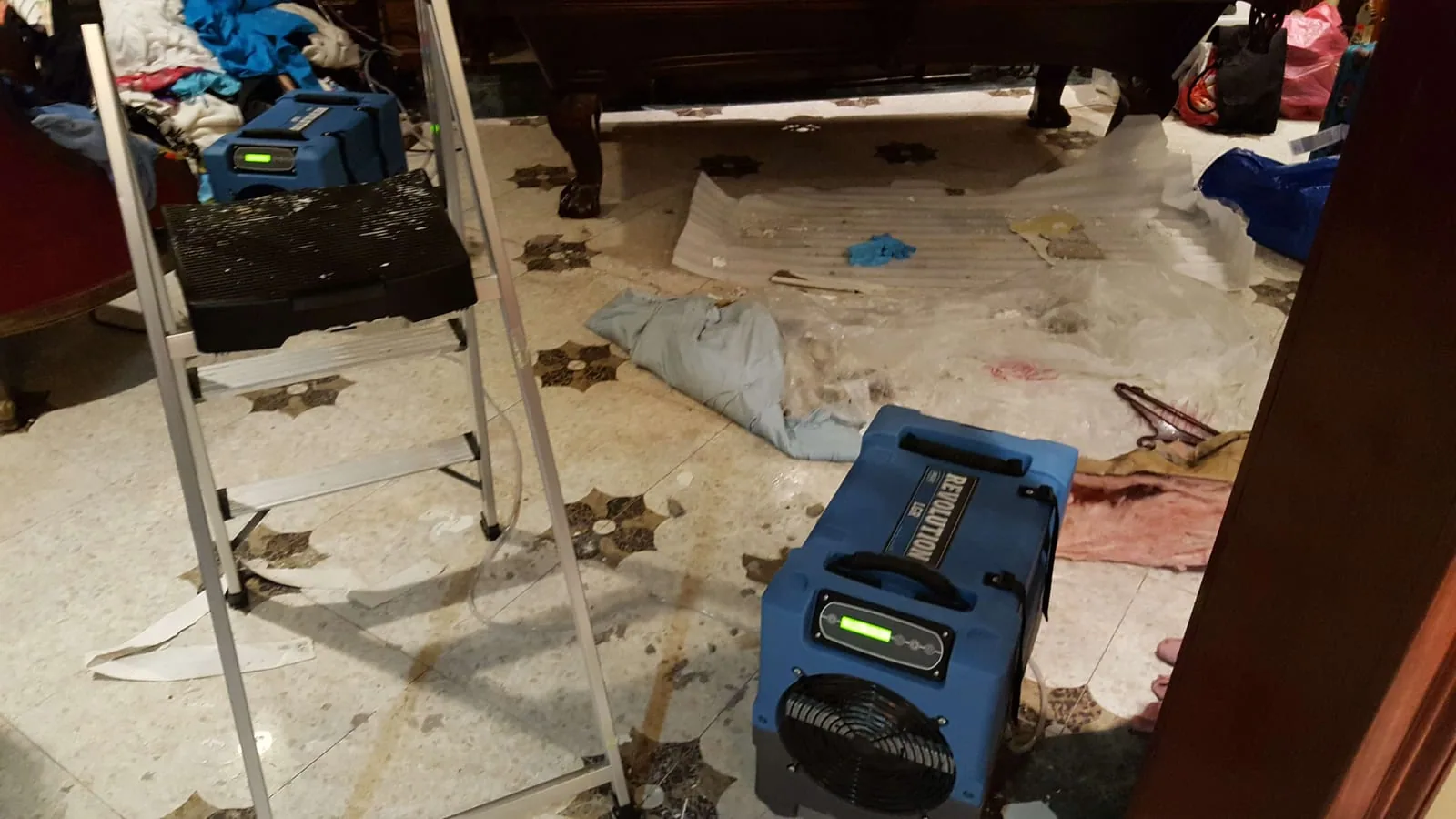
Our Emergency Water Removal Process
Emergency Call
Call our 24/7 line — crew dispatched immediately.
60-Min Arrival
We arrive, assess, and brief you on the plan.
Mitigation
Stop damage from spreading — fast.
Full Restoration
Certified restoration to pre-loss condition.
Emergency Water Removal in Fairfield County, CT & Westchester County, NY
Emergency water removal is the first hour of every water damage restoration job. Standing water on a finished basement floor, sewage backup in a Greenwich Tudor, sprinkler discharge across a Westport office — whatever the source, the response is the same: arrive within 60 minutes, extract the standing water, document the loss, and begin structural drying before mold gets a foothold. Every hour of delay during this phase compounds the scope of the eventual claim.
911 Storm dispatches truck-mounted and portable extraction equipment from our Greenwich, CT headquarters at 12 Livingston Pl C, 24 hours a day, seven days a week, across every town in Fairfield County and Westchester County. Our crews are IICRC S500 certified and equipped with truck-mounted extractors capable of moving 500+ gallons per minute, specialty hardwood drying mats for solid wood floors, FLIR thermal imaging cameras for hidden moisture mapping, and EPA-registered antimicrobial chemistry for Category 2 and Category 3 losses.
What "60-minute response" actually means on the ground
From our Greenwich HQ, typical on-site arrival times are 15-25 minutes for Greenwich and Old Greenwich, 20-30 minutes for Stamford and Cos Cob, 30-45 minutes for Darien and Westport, 30-50 minutes for Norwalk and New Canaan, and 45-60 minutes for the rest of Fairfield County. Westchester County arrival is generally 30-60 minutes depending on traffic. During major weather events (nor'easter, hurricane, regional flood), response times extend because crews are running back-to-back jobs — calling early during a regional event puts you higher in the queue.
On arrival the lead technician confirms the water source is controlled (homeowner has shut the main, or we shut it if needed), photo-documents the loss for the insurance claim, and deploys extraction. Most standing water on a residential loss is removed within the first 90 minutes after arrival. Hidden moisture inside walls, under flooring, and in the spaces between joists is then mapped with FLIR thermal imaging and pin-type moisture meters — the part of the job that distinguishes IICRC-compliant water mitigation from "someone showed up with a wet-vac."
Equipment we bring to every emergency call
Truck-mounted extractors (500+ gallons-per-minute capacity for standing water), portable LGR (Low Grain Refrigerant) dehumidifiers for closed-space drying down to 40°F, axial air movers (typically 10-20 deployed on a residential loss), specialty hardwood drying mats that pull moisture from solid wood floors without demolition, FLIR thermal imaging cameras, calibrated pin and pinless moisture meters, PM2.5 / PM10 air quality monitors, HEPA air scrubbers for Category 2 and Category 3 work, EPA-registered antimicrobial chemistry, and full PPE for biohazard scenarios.
The equipment matters because IICRC S500 specifies minimum drying capacity per affected cubic foot of space. Bringing the right gear in the first hour means we hit S500 drying targets in days, not weeks — which keeps the insurance claim inside water-loss coverage rather than tripping the mold sublimit.
When to call us before anything else
Standing water of any depth in a finished space (basement, ground floor, etc.). Active leak you cannot stop yourself. Water flowing from a ceiling, indicating a leak above. Sewage backup or any sign of contaminated water. Burst pipe or sudden appliance failure where the water source cannot be quickly isolated. After a fire department call where suppression water is present. Any time you smell musty odor and find unexplained moisture.
Do not wait to file an insurance claim before calling. Most carriers explicitly want you to start mitigation immediately — failure to mitigate (allowing the damage to worsen) can void coverage on the additional damage that delay causes. Call us, then call the carrier. We coordinate with your adjuster throughout the job.
Related Water Damage Services
Emergency Water Removal Near You
Covered loss? We bill your insurance carrier directly — and our CT insurance claim guide walks the whole process. Estimate your scope with the cost calculator.
How Long Does Emergency Water Removal Take?
Every job is different, but here's a realistic timeline for most emergency water removal projects.
Emergency Call
0 minCall our 24/7 dispatch — crew assigned immediately.
On-Site Arrival
~60 minIICRC-certified crew arrives, assesses, and presents plan.
Water Extraction
Day 1 (1-4 hrs)Truck-mounted extractors remove standing water, 500+ GPM.
Structural Drying
Day 2-7Air movers + LGR dehumidifiers, daily moisture verification.
Clearance + Rebuild
Day 7-14+Thermally verified dryness, then drywall, flooring, finish.
Timelines vary with scope, insurance adjuster response, and hidden damage discovered during work. Your detailed timeline is given after the on-site assessment.
Common Questions
Emergency Water Removal FAQ
How quickly can 911 Storm extract standing water from my basement?
Most standing water on a typical residential loss is removed within 60-90 minutes after our crew arrives on site. We bring truck-mounted extractors capable of 500+ gallons per minute, so even a deeply flooded finished basement is dewatered fast. Hidden moisture mapping and structural drying takes additional days, but the visible water clears quickly.
Do I need to call my insurance company before I call you?
Either order works. For active water flow that needs to be stopped/extracted immediately, call us first — the carrier's claims line often has wait times and delay multiplies damage. For non-emergency discovered damage, calling the carrier first to open a claim and get a claim number is fine. We coordinate with your adjuster either way and bill the carrier directly.
What's the difference between a wet-vac and professional water extraction?
A consumer wet-vac removes a few gallons of surface water — useful for a small leak caught immediately. Professional truck-mounted extractors move hundreds of gallons per minute and pull water deep into porous materials (carpet pad, drywall, framing). More importantly, IICRC S500 mitigation includes documented moisture mapping, structured drying, and verification — none of which a wet-vac provides. Insurance carriers generally do not accept DIY wet-vac cleanup as S500-compliant mitigation.
Will you extract sewage and Category 3 black water?
Yes. Sewage backup, river flooding, and toilet overflow are Category 3 losses requiring full PPE (Tyvek suits, full-face respirators), specialty pump-out (no walking through the water), demolition of porous materials per IICRC S500, EPA-registered antimicrobial treatment, and biohazard disposal of contaminated materials. Different protocol from clean-water extraction, much higher scope and cost, but routine work for us.
Can you extract water if I haven't shut the main valve?
Source control is the first step — we cannot effectively extract water that is still actively flowing. On arrival we either confirm the homeowner shut the main, or we shut it ourselves at the street if accessible, or we coordinate with the water utility / plumber for emergency shutoff. Once flow is stopped, extraction begins within minutes.
Damage Doesn't Wait — Neither Do We
60-minute response. Free estimate. We handle your insurance claim.
IICRC Certified • Licensed & Insured • All Major Insurance Carriers