For most homeowners, a flooded basement is a once-in-a-lifetime event — terrifying, expensive, and confusing. Knowing what to expect helps. This article walks through one of our recent Greenwich, CT projects in photos, from the 4am emergency call to handing back the keys six days later.
Hour 0: The Emergency Call
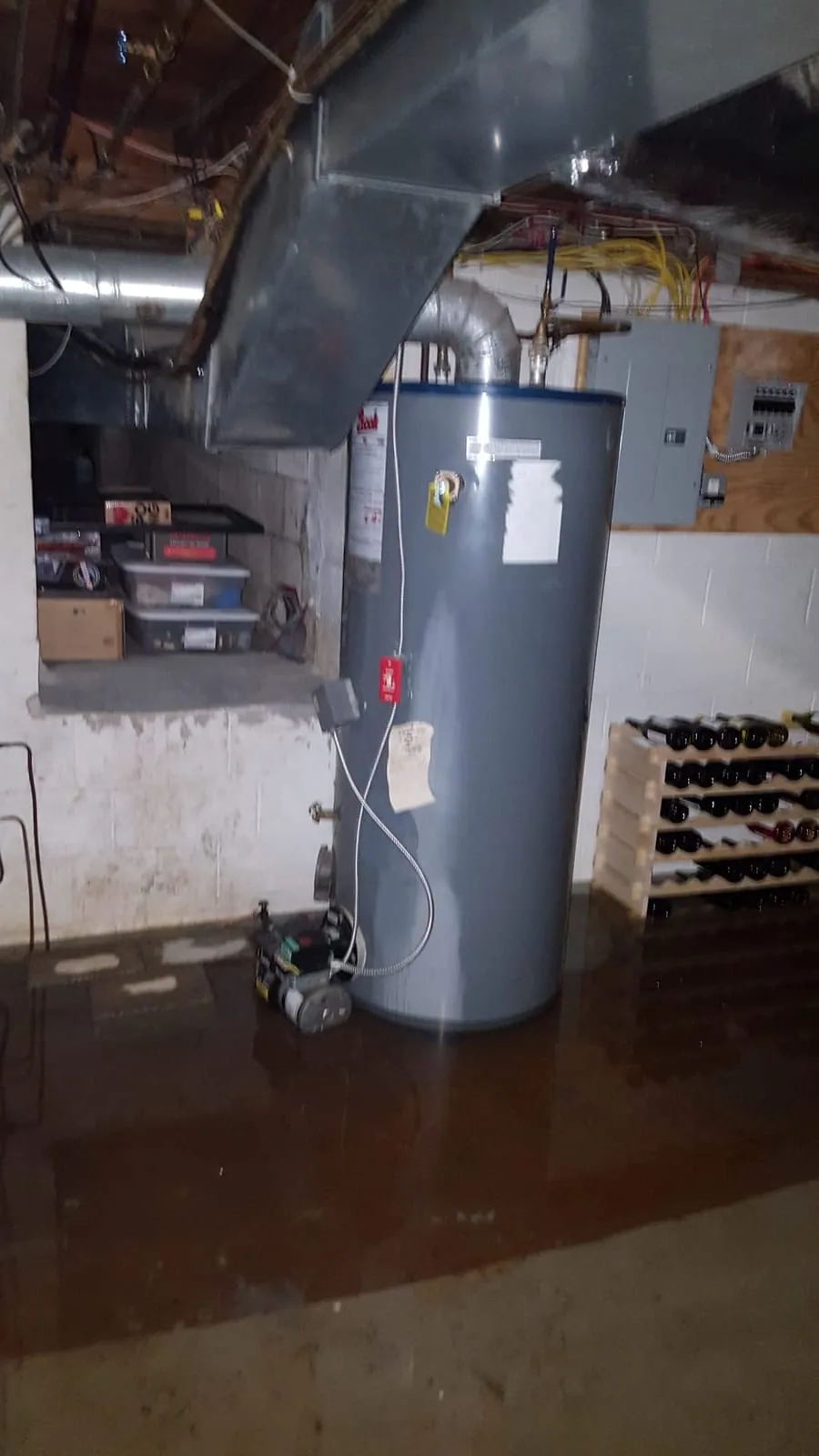
The Greenwich homeowner woke at 4:17am to the sound of running water in the basement. Their primary sump pump had failed overnight during a storm. By the time they reached the basement, 3 inches of water covered the finished area.
They called our 24/7 line. Crew was assigned within 90 seconds. Truck departed within 4 minutes.
Hour 1: Arrival and Assessment
We arrived at 5:04am — 47 minutes after the initial call. First steps before any extraction:
- Source verification (was the pump still off? was the discharge clear?)
- Safety check (electrical, gas)
- Initial moisture mapping with FLIR thermal imaging
- Photo documentation for the insurance claim
- IICRC water category determination (Category 1 — clean groundwater)
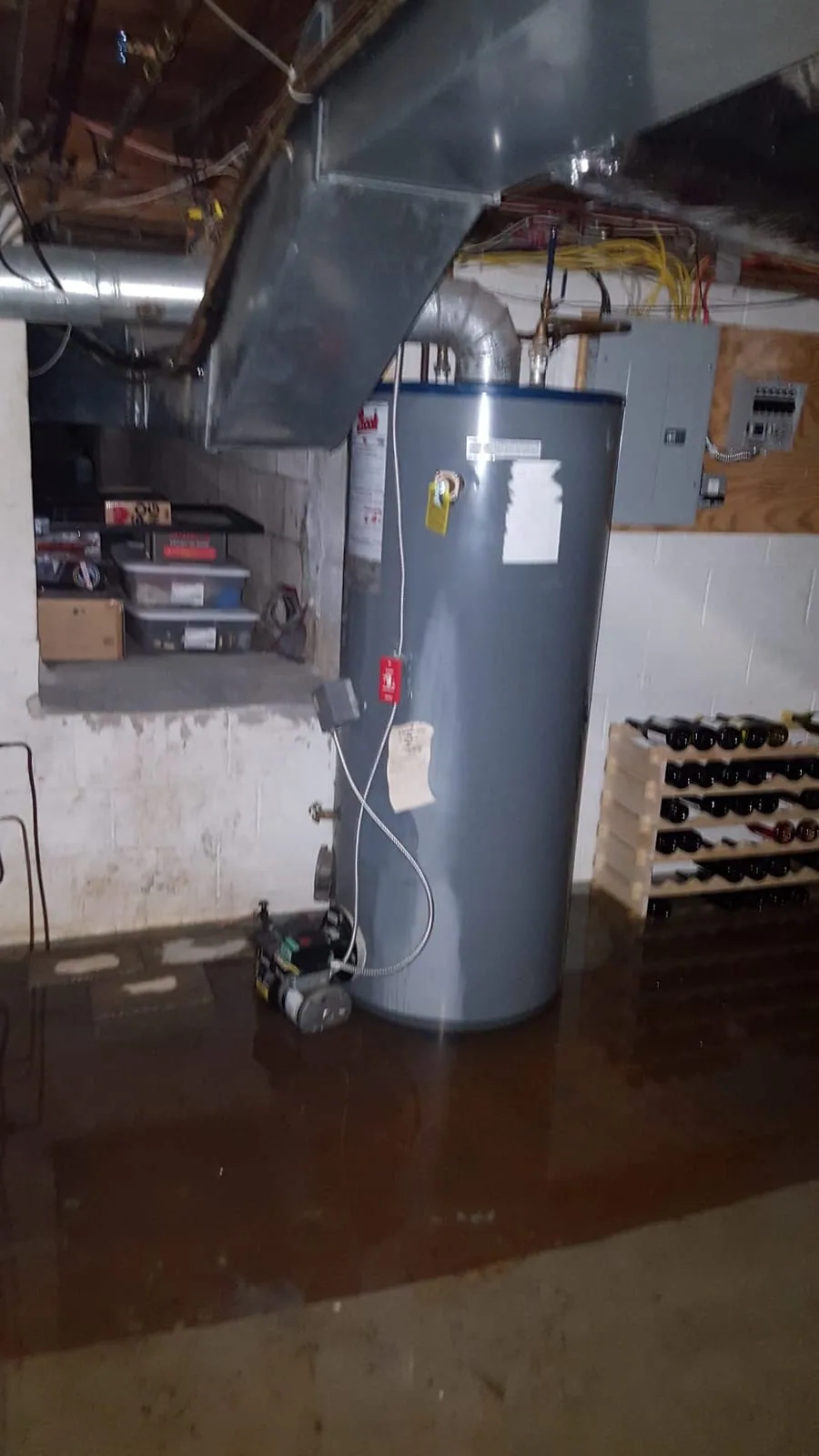
Hours 1-4: Water Extraction
Two truck-mounted extractors deployed simultaneously. Combined extraction rate: 500+ gallons per minute. The visible standing water was gone in 90 minutes.
Meanwhile a second crew member started moving undamaged contents to dry upper floors and beginning content pack-out for items requiring off-site cleaning.
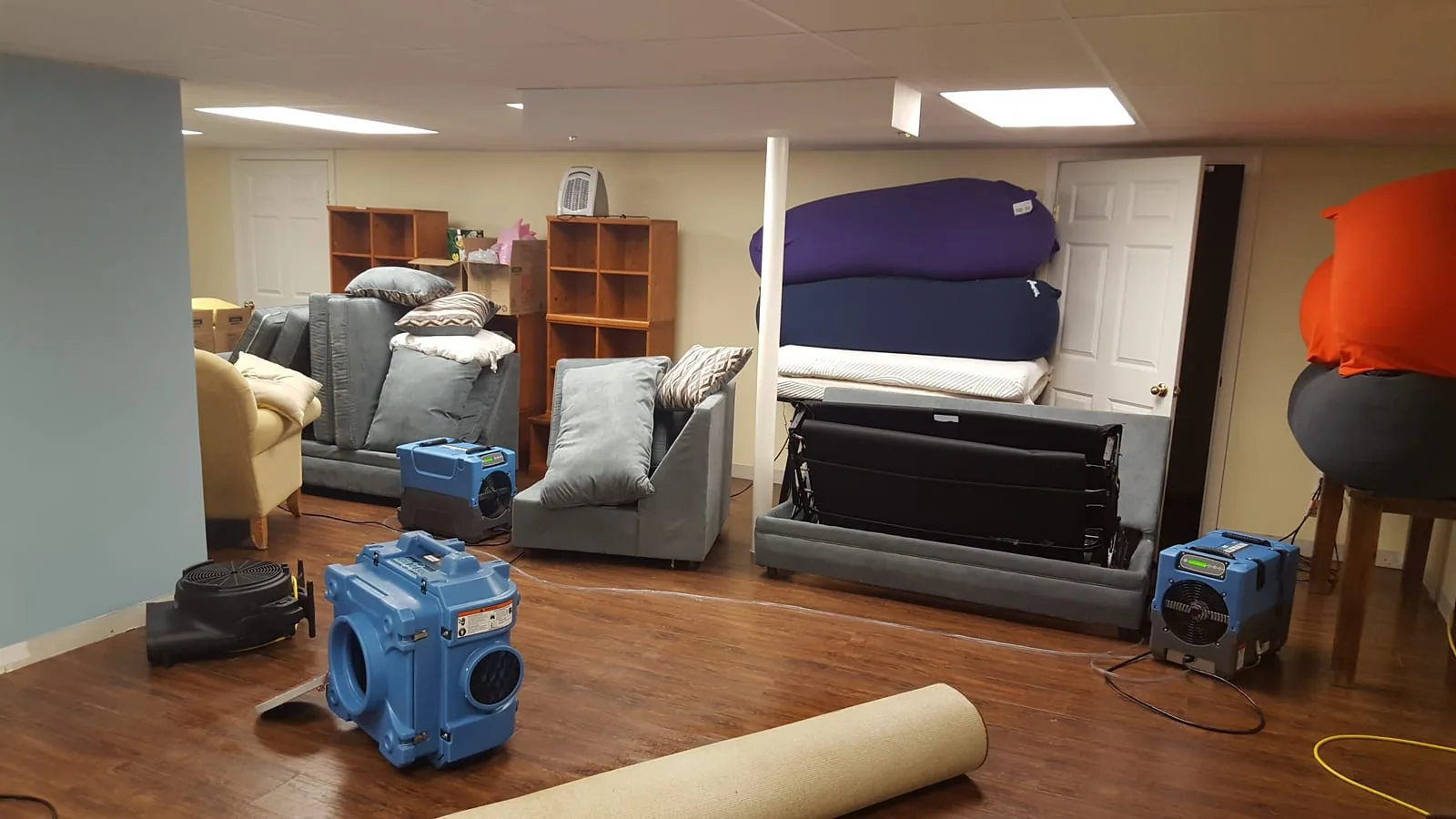
Hours 4-12: Equipment Setup
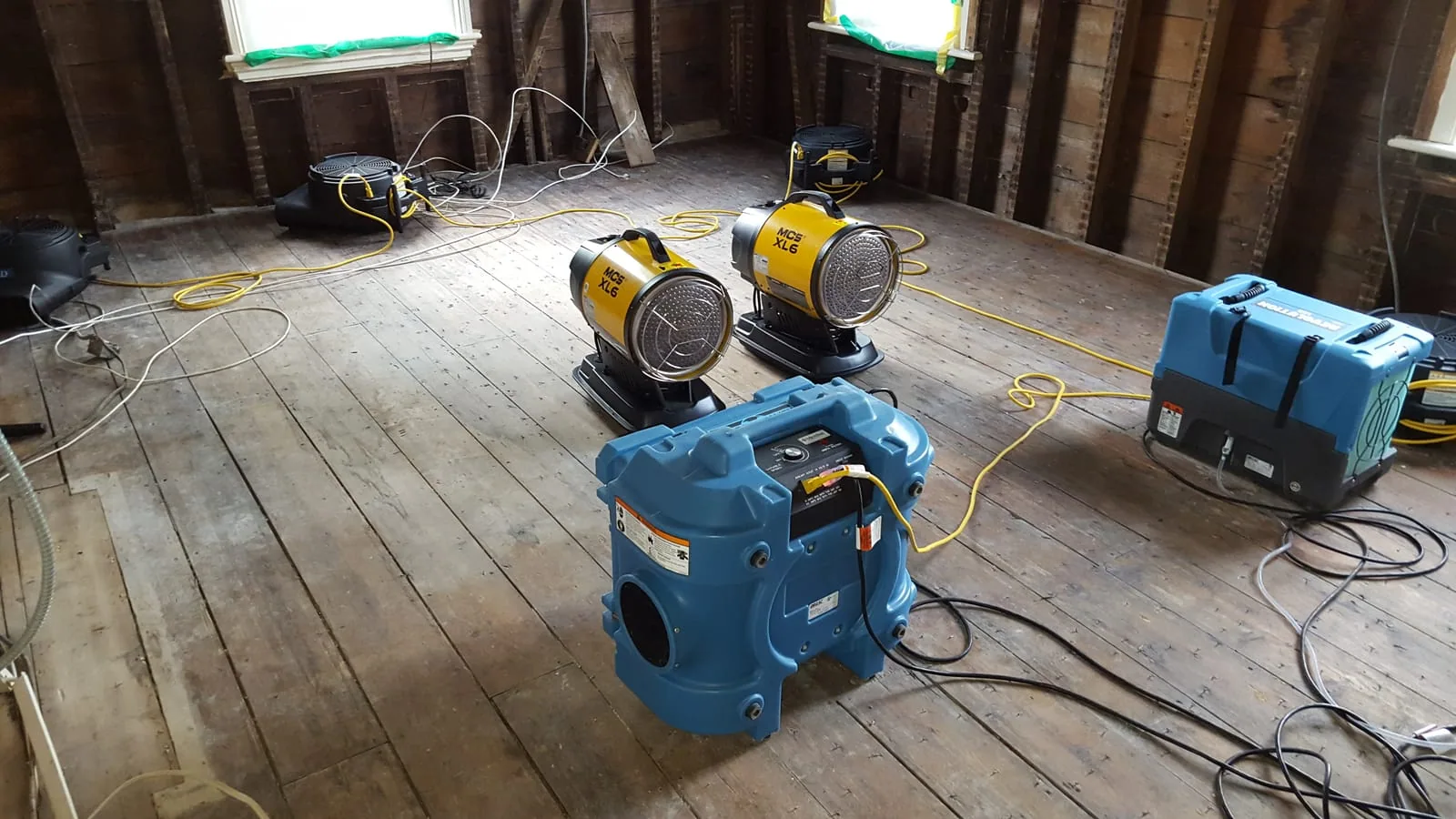
Once standing water was gone, the real drying began. We deployed:
- 4 LGR (Low-Grain Refrigerant) dehumidifiers
- 12 axial air movers
- 1 desiccant dehumidifier (for cooler basement temps)
- HEPA air scrubbers (precaution against mold growth)
Equipment placement followed psychrometric calculations — not guesswork. We measured cubic footage, water load, and ambient conditions, then sized equipment to drying targets.
Days 2-5: Structural Drying
Equipment ran continuously. Twice-daily measurements at 14 marked test points tracked drying progress.
Day 1 readings: most points at 35-45% MC. Day 2: 25-32% MC (good progress). Day 3: 18-25% MC. Day 4: 12-16% MC (approaching dry). Day 5: 8-12% MC at all points (target hit).
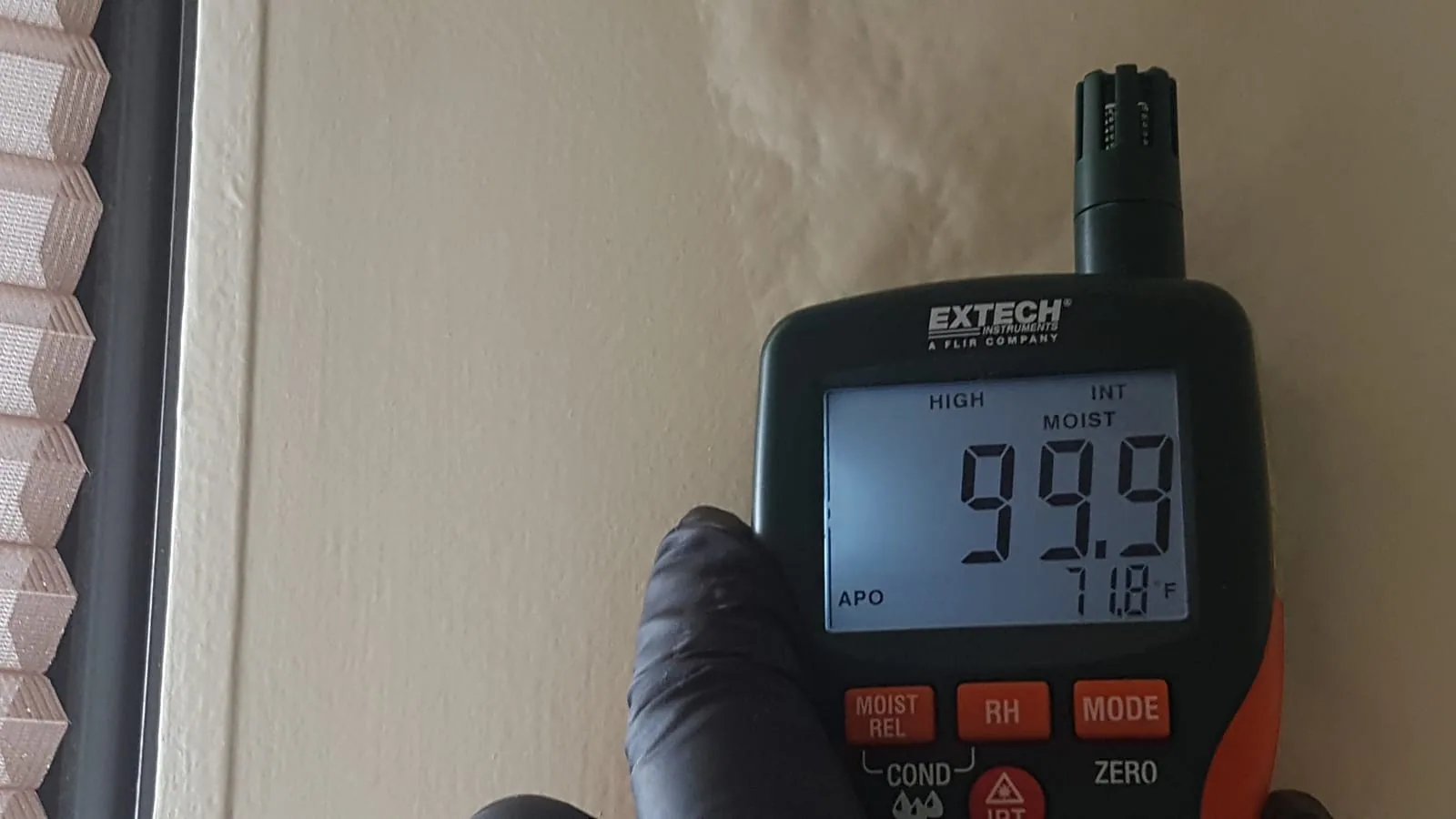
Day 6: Clearance + Restoration
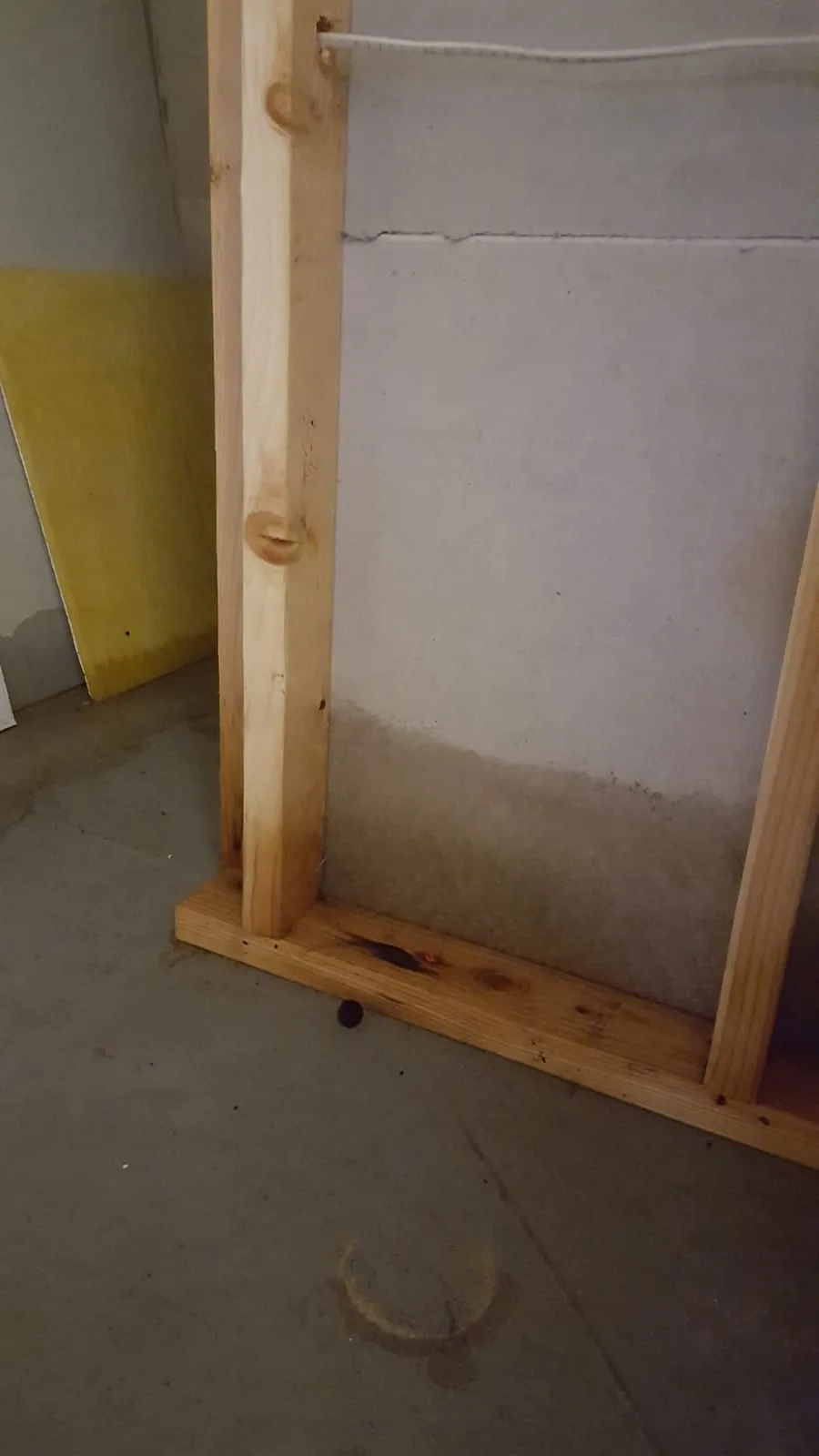
Final moisture verification at all test points: every reading at or below pre-loss baseline. Equipment removed.
Minor restoration: baseboard reattached, paint touched up where moisture had affected the finish. Total demolition was avoided thanks to fast response.
We also installed a battery-backup sump pump system to prevent recurrence.
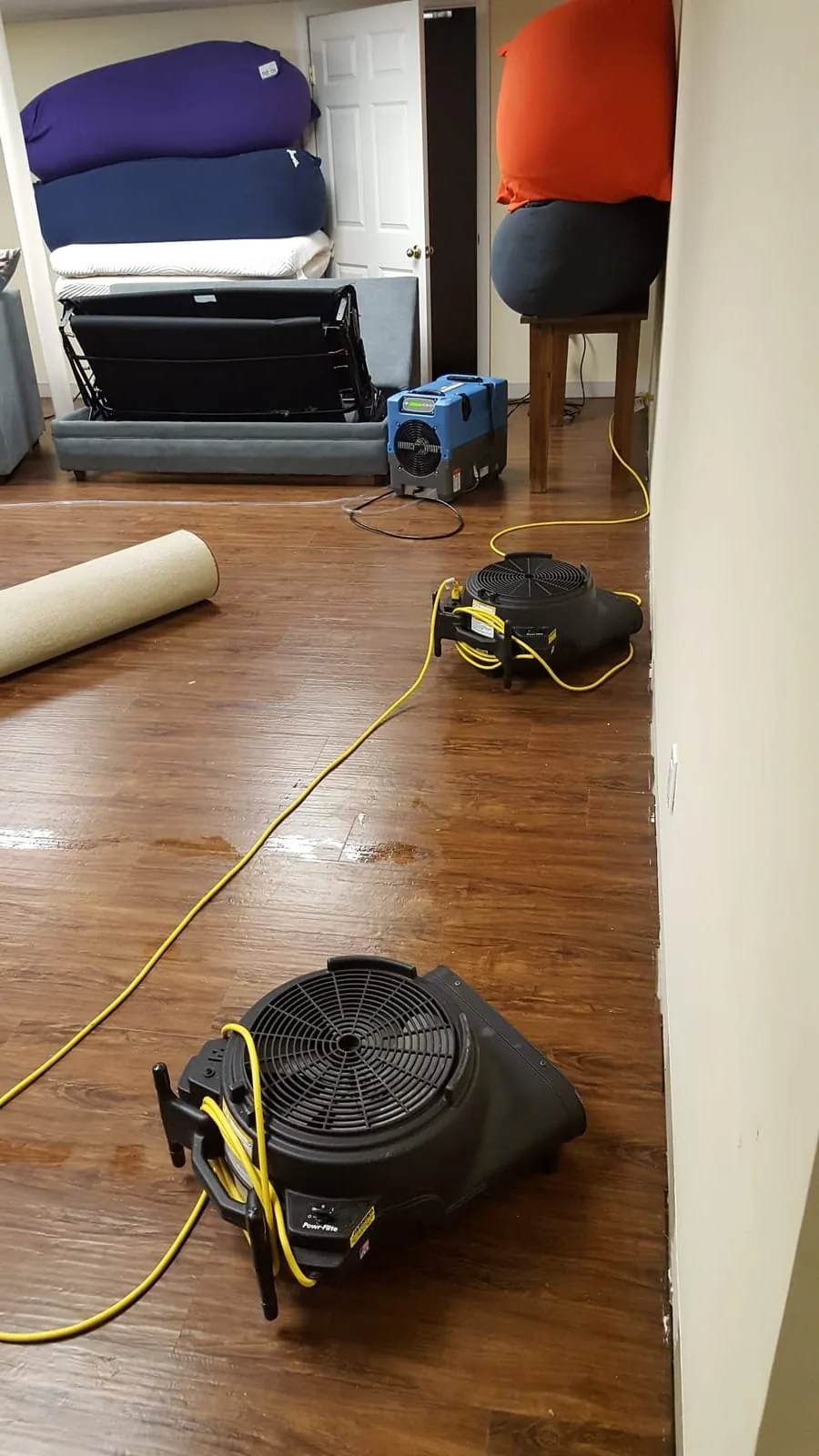
Six days from emergency call to keys-back. $8,400 total scope, billed direct to Chubb, homeowner paid only their $1,000 deductible. Battery backup pump installed to prevent the next event. This is what a properly run water damage emergency looks like. Call us the moment yours starts.
Frequently Asked Questions
What if the basement is still actively flooding?+
Call us immediately even before the water stops. We'll arrive while it's still happening if necessary, and start prep while you address the source (or we'll coordinate with a plumber).
How much furniture do I need to move out?+
Usually we move it to dry upper floors as part of the job. Our crews are trained for content protection. For valuable items requiring off-site cleaning, we coordinate pack-out.
Does the equipment have to run 24/7?+
Yes — dehumidifiers and air movers run continuously until drying targets are hit. Stopping equipment overnight extends the timeline by days and risks mold.
Will my insurance cover all of this?+
If the cause was sudden and accidental (sump pump failure, burst pipe), typically yes. We work directly with your carrier — see our full [insurance claims guide](/water-damage-insurance-claims-guide-ct-ny/) for details.
Related Services
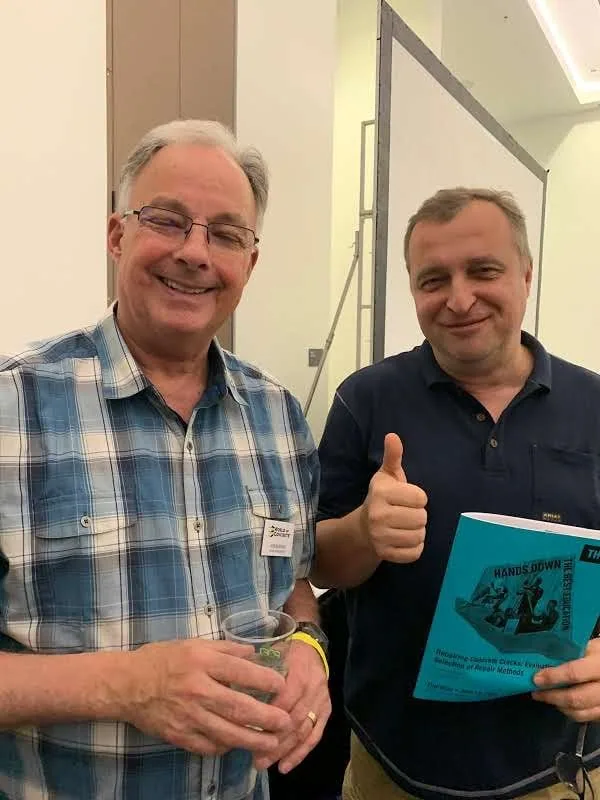
Raf Volkov
Raf has personally supervised more than 100 restoration projects across Fairfield County, CT and Westchester County, NY since 2003. He holds IICRC Water Damage Restoration (2016), IICRC Fire & Smoke Restoration (2016), Goldmorr AIM Mycotoxin Remediation, EZ Breathe Installer, and Stego Vapor Barrier / ASTM E1643 certifications — attending manufacturer trainings every year. Every protocol on this site is built on standards he's trained and re-trained in.