
Standing Water on Your Basement Floor
Standing water on your basement floor is a clock-running emergency. Mold begins growing within 24-48 hours, hardwood floors warp in 6, and the water itself may be Category 3 biohazard depending on the source.
Common Signs
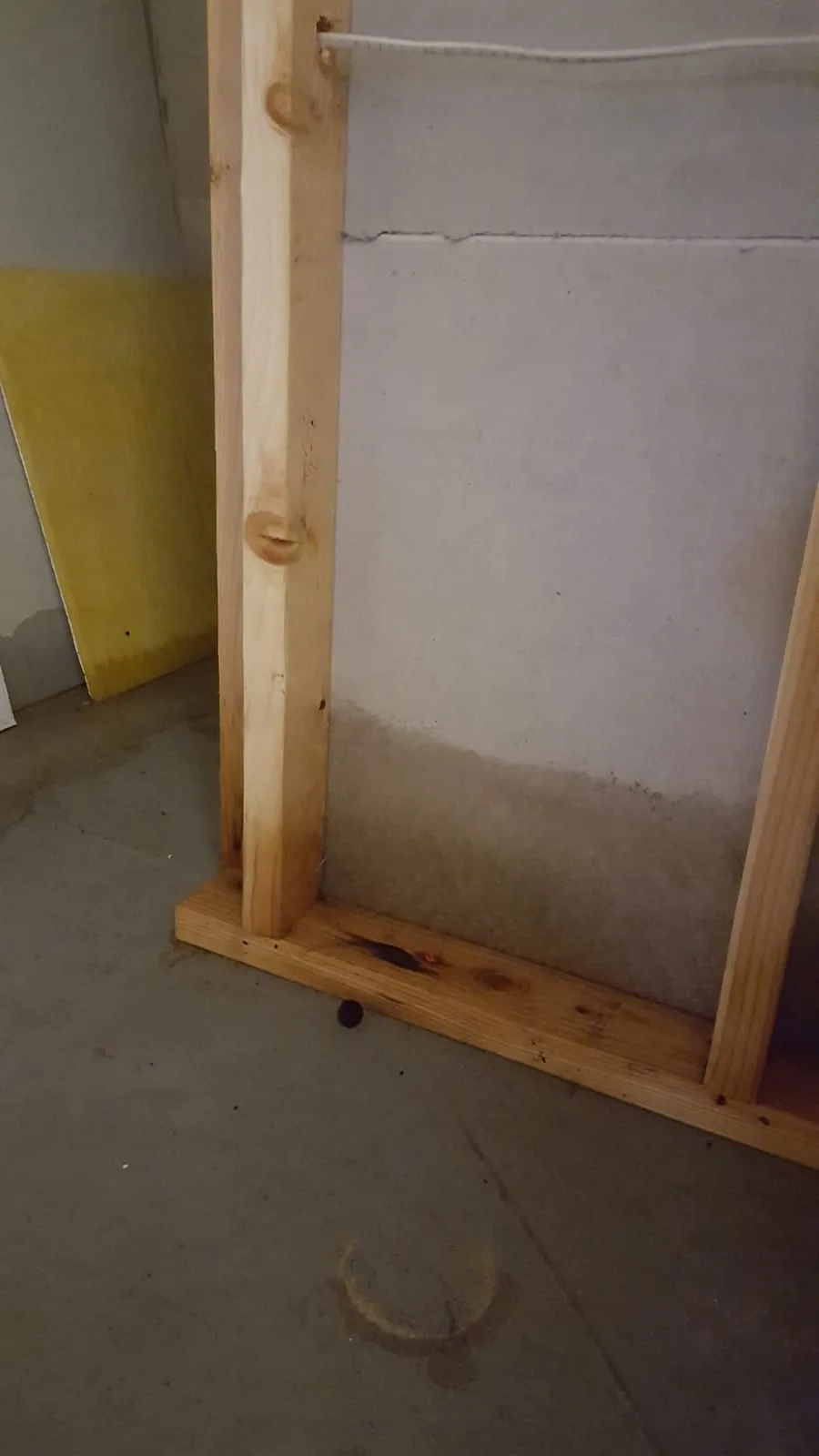
- Visible standing water across the basement floor (any depth)
- Wet stains on baseboards, drywall, and stored items
- Possibly a musty smell developing within hours
- Sometimes water visibly entering from a crack, drain, or wall seam
- In severe cases, water rising rather than draining
Most Likely Causes
In order of how often we see them on real jobs.
Sump pump failure
Most common cause we see. A failed pump (mechanical failure, power outage, or jammed float switch) means groundwater accumulates instead of being pumped out.
Burst pipe or supply line failure
A failed copper or PEX line above the basement releases hundreds of gallons per hour until the main is shut off.
Sewer backup
When municipal sewers surcharge during heavy rain, water can back up through basement drains. This is Category 3 black water requiring biohazard remediation.
Foundation water intrusion
Heavy rain or snowmelt overwhelms exterior drainage, forcing groundwater through foundation cracks or block joints.
Standing water in a basement triggers parallel risks: structural saturation of drywall and framing, electrical hazard around outlets and appliances, mold growth within 24-48 hours, and potential biohazard if the source is sewage. Response time correlates directly with total restoration cost.
How We Fix It
Safety assessment + source verification
On arrival we confirm electrical safety, identify the water source, and determine IICRC water category (1 clean, 2 gray, 3 black).
Industrial extraction
Truck-mounted extractors remove 500+ gallons per minute. Standing water gone within the first 1-2 hours of arrival.
Moisture mapping + content protection
FLIR thermal imaging and moisture meters identify every wet area. Contents protected or packed out.
Structural drying
LGR dehumidifiers + air movers sized to cubic footage. Daily moisture verification until materials hit IICRC clearance targets.
Antimicrobial + reconstruction
Antimicrobial treatment, then drywall and trim restoration. Insurance billed direct.
Frequently Asked Questions
How quickly do I need to act?+
Within the first hour for any standing water. Mold begins growing at 24-48 hours, drywall delaminates at 30-40% MC moisture content, and Category 1 clean water degrades to Category 2 within 48 hours.
Can I just shop-vac it myself?+
Small clean-water spills under a few square feet — yes. Anything more than that needs professional extraction with industrial pumps. Shop vacs are too slow and a safety risk near electricity.
Will my insurance cover it?+
Sudden and accidental causes (burst pipe, sump pump failure) — typically yes. Gradual seepage, ground flooding, or sewer backup without endorsement — typically no. Call us and we'll review your specific policy.
Is the water safe to walk through?+
Only if you've confirmed (1) power is off in affected area, (2) source isn't sewage, and (3) it's not actively rising. When in doubt, stay out and call us.
Want a free on-site diagnosis?
We come look, tell you what's actually causing it, and only fix what needs fixing. No high-pressure sales.
IICRC Certified • Licensed & Insured • All Major Insurance Carriers