
Sewage Backup in Your Basement
Sewage backup is not a regular water emergency. It's IICRC Category 3 black water — a biohazard requiring full protective equipment, demolition of porous materials, and EPA-registered disinfectant treatment. DIY cleanup is dangerous.
Common Signs
- Discolored water (often brown or gray) coming up through basement drains
- Possibly visible solids or sewage odor
- Standing water in basement floor drains, around toilets, or in laundry sinks
- Strong sewer or rotten smell
- Often happens during heavy rain when municipal sewers surcharge
Most Likely Causes
In order of how often we see them on real jobs.
Municipal sewer surcharge during heavy rain
When rainwater overwhelms municipal sewer capacity, the system backs up — pushing sewage back into the lowest connected drain points in your home.
Main sewer line clog or blockage
Tree roots, grease, or debris block your home's sewer line. Wastewater backs up at the lowest fixture.
Sump pump failure during sewage discharge
If your sump pumps to a sewer/storm system, a failed sump can result in backflow.
No backwater valve installed
Homes without backwater valves on the main sewer line have no protection against municipal surcharge events.
Sewage contains E. coli, Salmonella, Hepatitis A, and parasites. Skin contact, inhalation of aerosols, or ingestion can cause serious illness. Improperly cleaned sewage events leave residual pathogens that affect the property for years.
How We Fix It
Full PPE protocols + evacuation
Tyvek suits, full-face respirators, double gloves. Occupants relocated. HVAC shut down to prevent aerosol spread.
Specialized extraction (no walking through)
Pump-out only with sealed disposal. No standard wet-vac equipment.
Demolition of all affected porous materials
Carpet, pad, drywall to 2+ feet above the water line, base trim, lower cabinetry, insulation. All go to sealed biohazard disposal.
EPA-registered disinfectant + structural treatment
Complete chemical disinfection of remaining framing, concrete, and surfaces.
Negative air pressure + clearance testing
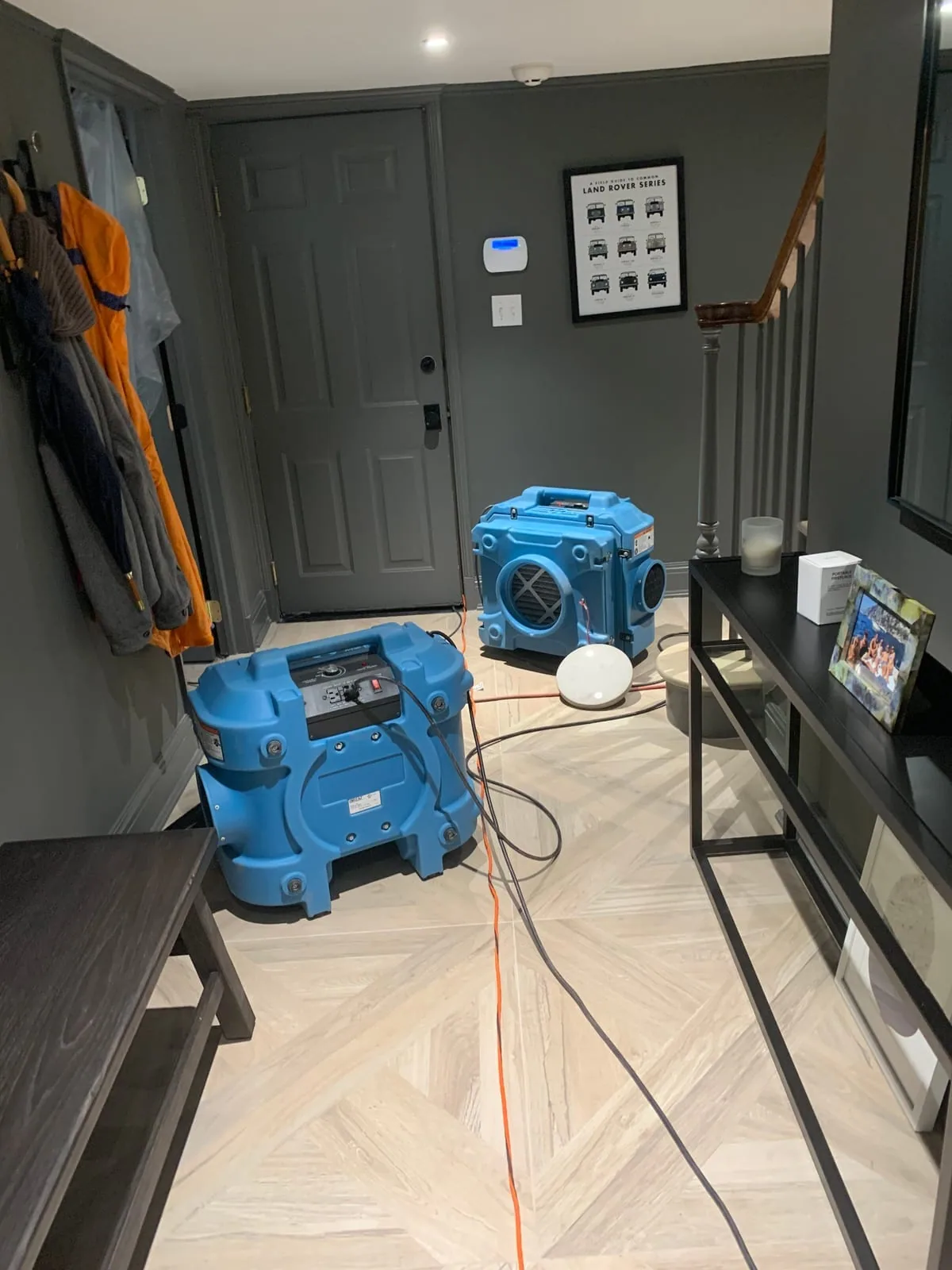
HEPA scrubbers run continuously. Post-treatment microbial testing confirms safety before reconstruction.
Frequently Asked Questions
Can I clean up sewage myself?+
Strongly discouraged. Without proper PPE you risk pathogen exposure. Without proper extraction equipment, you'll spread contamination. Without proper disinfection, residual pathogens remain.
Why isn't this covered by my homeowners insurance?+
Standard HO-3 policies specifically exclude sewer/drain backup. You need a Water Backup endorsement (typically $40-$250/year). Most homeowners don't have it and discover this after the fact.
Can drywall be saved if it was only briefly contaminated?+
Per IICRC S500 standard — no. Category 3 water contamination of porous materials requires removal regardless of contact duration. Wood framing can be saved with proper disinfection.
How long is the contamination zone unsafe?+
Until full remediation is complete and post-treatment testing passes — typically 7-14 days. Occupants should stay out of the area entirely during this period.
Want a free on-site diagnosis?
We come look, tell you what's actually causing it, and only fix what needs fixing. No high-pressure sales.
IICRC Certified • Licensed & Insured • All Major Insurance Carriers