It's one of the most common questions our sewage cleanup crews hear on job sites: "My insurance will cover this, right?" Usually the answer is "only if you added the endorsement." Most Fairfield and Westchester homeowners don't — and find out after the fact.
Why Standard Homeowners Excludes Sewer Backup
Standard HO-3 policies cover water damage from "sudden and accidental" sources like burst pipes and appliance failures. They specifically exclude water backing up through sewer, drain, or sump systems. The logic: sewer backup is common enough that carriers classify it as a separate risk requiring its own coverage.
What the Endorsement Covers
The Water Backup and Sump Overflow endorsement typically covers:
- Sewer line backup into your home (toilets, floor drains, bathtubs)
- Sump pump failure during electrical outage or mechanical breakdown
- Drain backup from municipal surcharge during heavy rain
What it doesn't cover:
- Flooding from outside (needs separate NFIP flood insurance)
- Gradual seepage
- Damage to the sewer line itself (plumbing issue)
Coverage Amounts to Consider
Typical endorsement options: $5K, $10K, $25K, or $50K. If you ever need to use it, our Connecticut water damage insurance claim guide walks the filing process step by step. For context:
- A minor 2-3 inch backup: $3K-$8K to clean up
- Moderate finished basement backup: $15K-$30K
- Major flooded finished basement: $50K+
Most homeowners' $5K-$10K endorsements are dramatically under-scoped for finished basements. Upgrade to $25K or $50K if you have finished living space below grade.
What Category 3 Biohazard Cleanup Involves
Sewer backup is IICRC Category 3 "black water" — biohazard requiring specialized remediation:
- Full PPE (Tyvek suits, respirators, face shields)
- Removal of all porous materials touched by the water (carpet, pad, drywall to 2+ feet above water line)
- EPA-registered disinfectant treatment
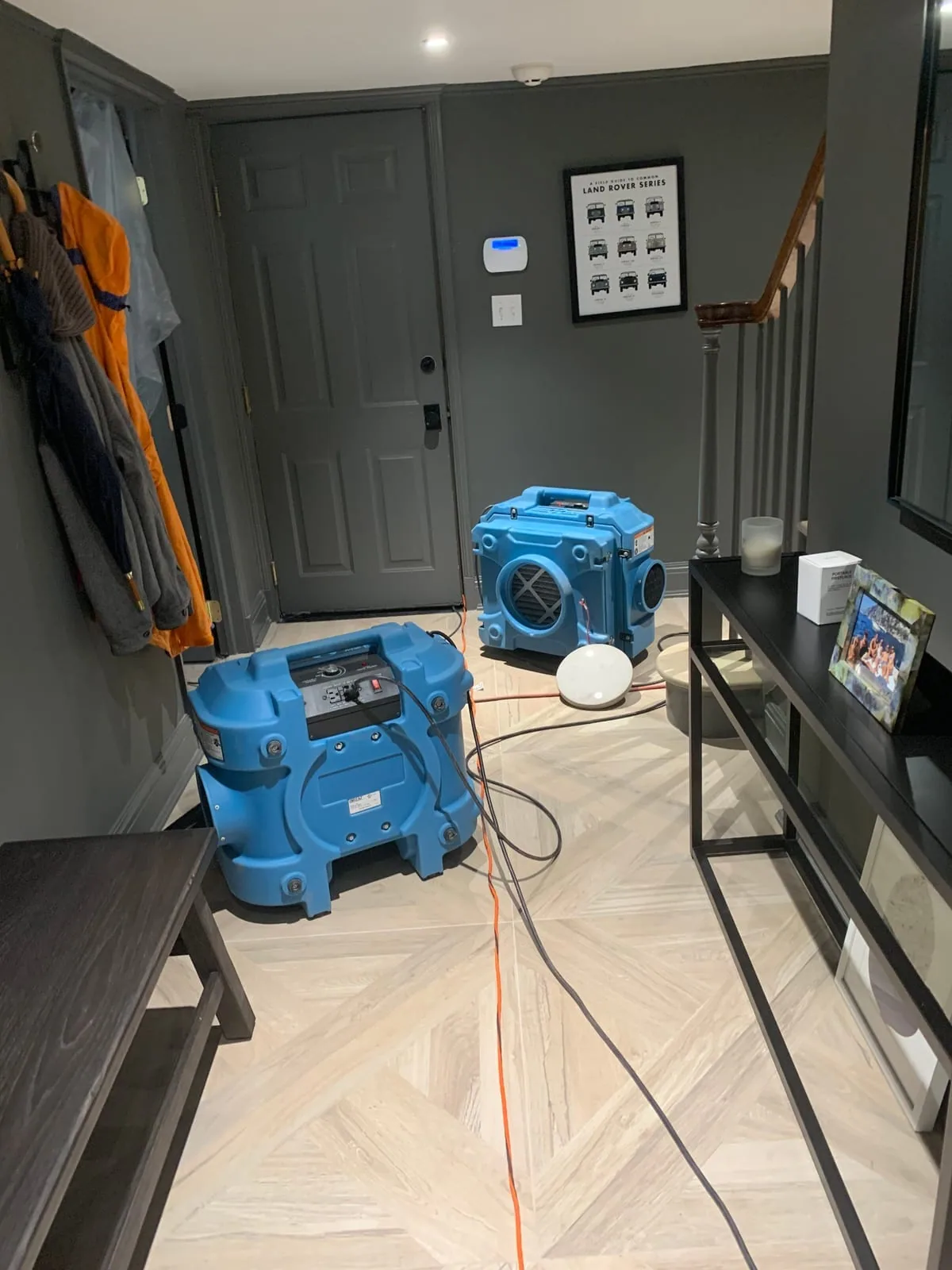
- HEPA air filtration during work
- Post-treatment microbial testing
This is why costs run high. It's not a mop-and-bucket situation.
Additional Protection: The Backwater Valve
A backwater valve installed on your main sewer line prevents backup during municipal surcharge events. Cost: $500-$2,000 installed. Some insurance carriers offer premium discounts for backwater valve installation, which can pay the installation cost back within a few years.
If you live in Fairfield or Westchester, call your insurance agent today and ask three questions: (1) Do I have a Water Backup endorsement? (2) What's my coverage limit? (3) Is my finished basement adequately covered? If you've had a backup recently, call 911 Storm — we handle Category 3 biohazard cleanup across all major insurance carriers.
Frequently Asked Questions
Does the endorsement cover mold that results from backup?+
Usually yes — mold resulting from a covered sewer backup is covered up to the endorsement's cap. Mold from other causes may not be. Check your specific policy.
How do I add this coverage?+
Call your insurance agent. The endorsement is added mid-term (immediately) or at renewal. Most carriers require the home to have been claim-free for 3-5 years.
Do I need a backwater valve AND the endorsement?+
Both are smart. The valve prevents most backups. The endorsement covers you if the valve fails or is overwhelmed. Belt-and-suspenders protection costs little.
What's the difference between sewer backup and flood insurance?+
Sewer backup covers water coming UP through drains inside your home. Flood insurance covers water coming IN from outside (rising groundwater, storm surge). You typically need both for full protection.
Related Services
Raf Volkov
Raf has personally supervised more than 100 restoration projects across Fairfield County, CT and Westchester County, NY since 2003. He holds IICRC Water Damage Restoration (2016), IICRC Fire & Smoke Restoration (2016), Goldmorr AIM Mycotoxin Remediation, EZ Breathe Installer, and Stego Vapor Barrier / ASTM E1643 certifications — attending manufacturer trainings every year. Every protocol on this site is built on standards he's trained and re-trained in.