When a Greenwich homeowner called us last month about a single small ceiling stain, the conventional approach would have been to cut a hole, look around, cut another hole, repeat. Instead we ran a FLIR thermal imaging camera across the ceiling and walls in 90 seconds — and saw a 6-foot wet patch the homeowner had no idea existed.
How Thermal Imaging Detects Hidden Water
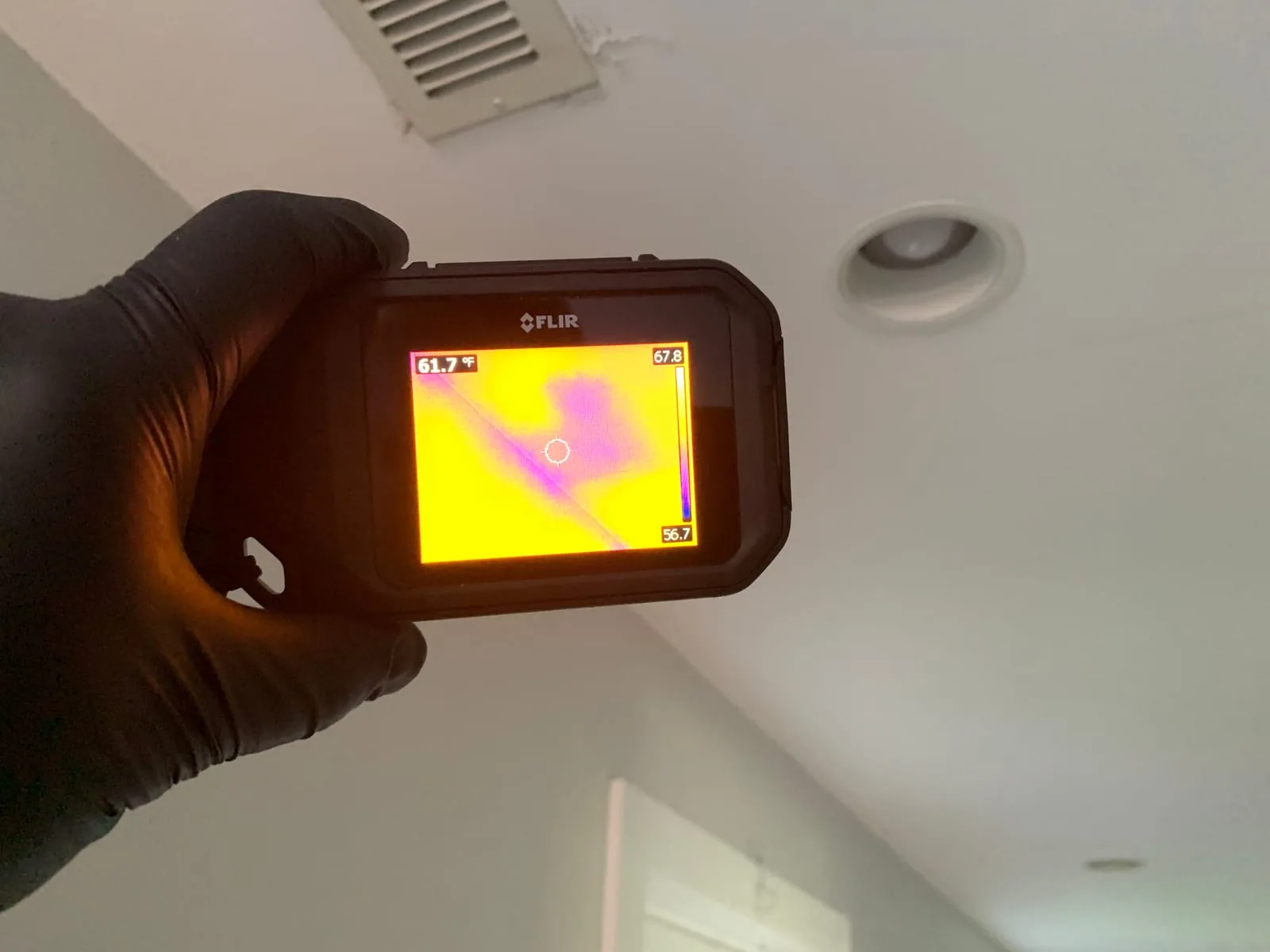
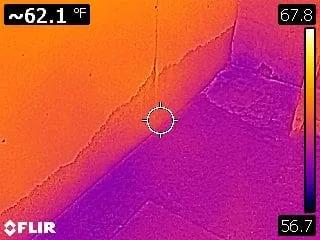
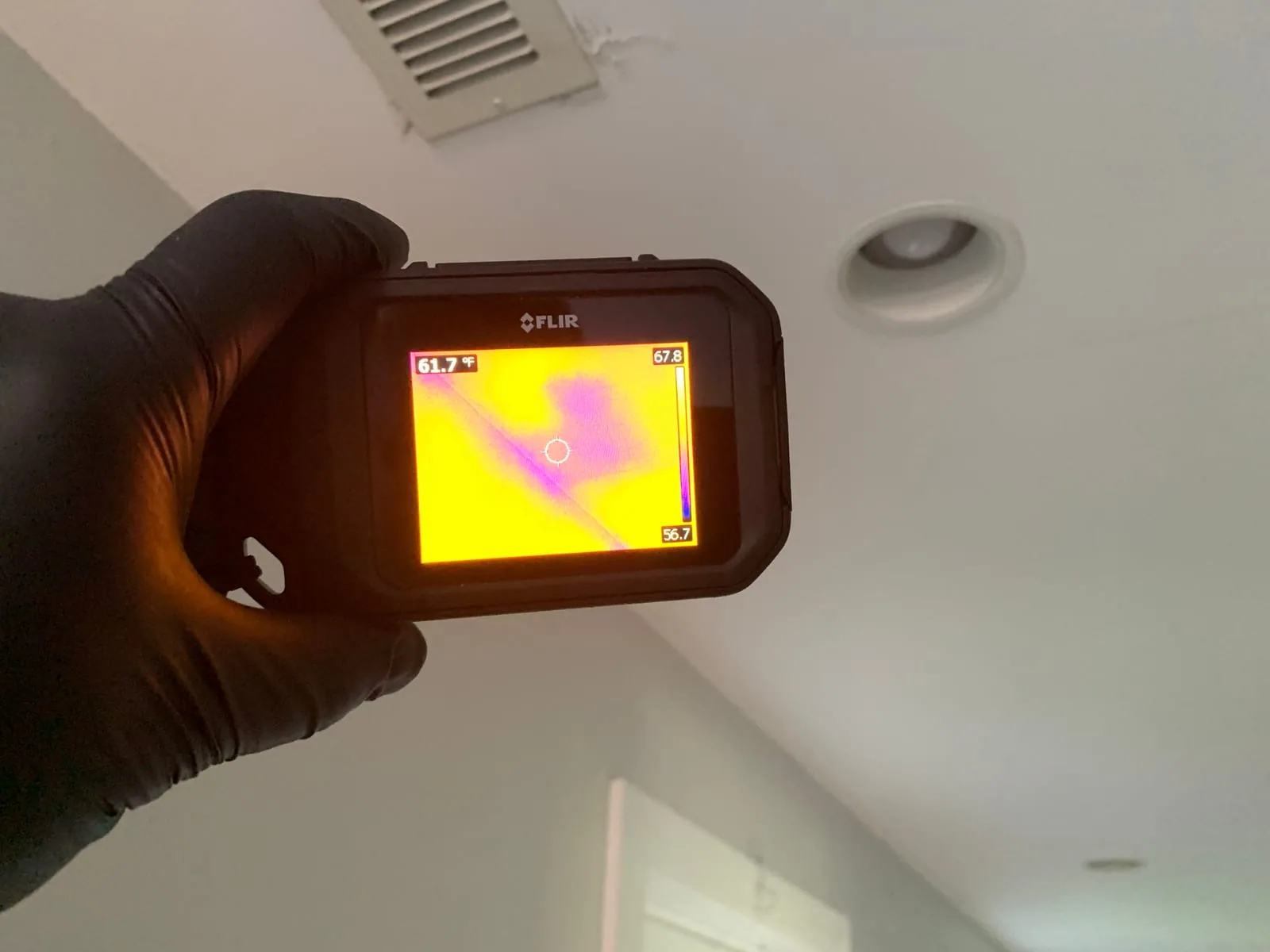
Wet materials evaporate moisture, which cools their surface relative to surrounding dry materials. The temperature difference is small (often just 1-3°F) but a thermal camera detects it instantly. What looks like a uniformly painted wall to your eye shows up as a cool blue patch on the thermal display — that's the water.
Thermal imaging is sensitive enough to find moisture behind drywall, under flooring, inside ceiling cavities, and along baseboard joints. We use it on every water-damage assessment.
Why It Beats Drilling and Guessing
Without thermal imaging, technicians have two options: cut holes and look (destructive, often misses areas) or wait until visible damage develops (by which point mold has likely started). Thermal imaging eliminates both problems.
A full thermal scan of a typical room takes 3-5 minutes. We map the entire wet zone before touching anything. Demolition then targets only the affected materials — saving thousands in unnecessary scope.
Real Example: 6-Foot Hidden Water Path
On the Greenwich job mentioned above, a small ceiling stain looked like a one-square-foot problem. Thermal imaging revealed water had migrated down inside the wall cavity, across the joist bay, and into the adjacent room's ceiling — a continuous 6-foot wet path the homeowner couldn't see.
Without the thermal scan we would have repaired the stain and missed 90% of the damage. The homeowner would have called us back in two months for mold remediation at three times the cost.
Thermal + Moisture Meters = Complete Picture
Thermal imaging shows where water is. Moisture meters quantify how much. We always pair them.
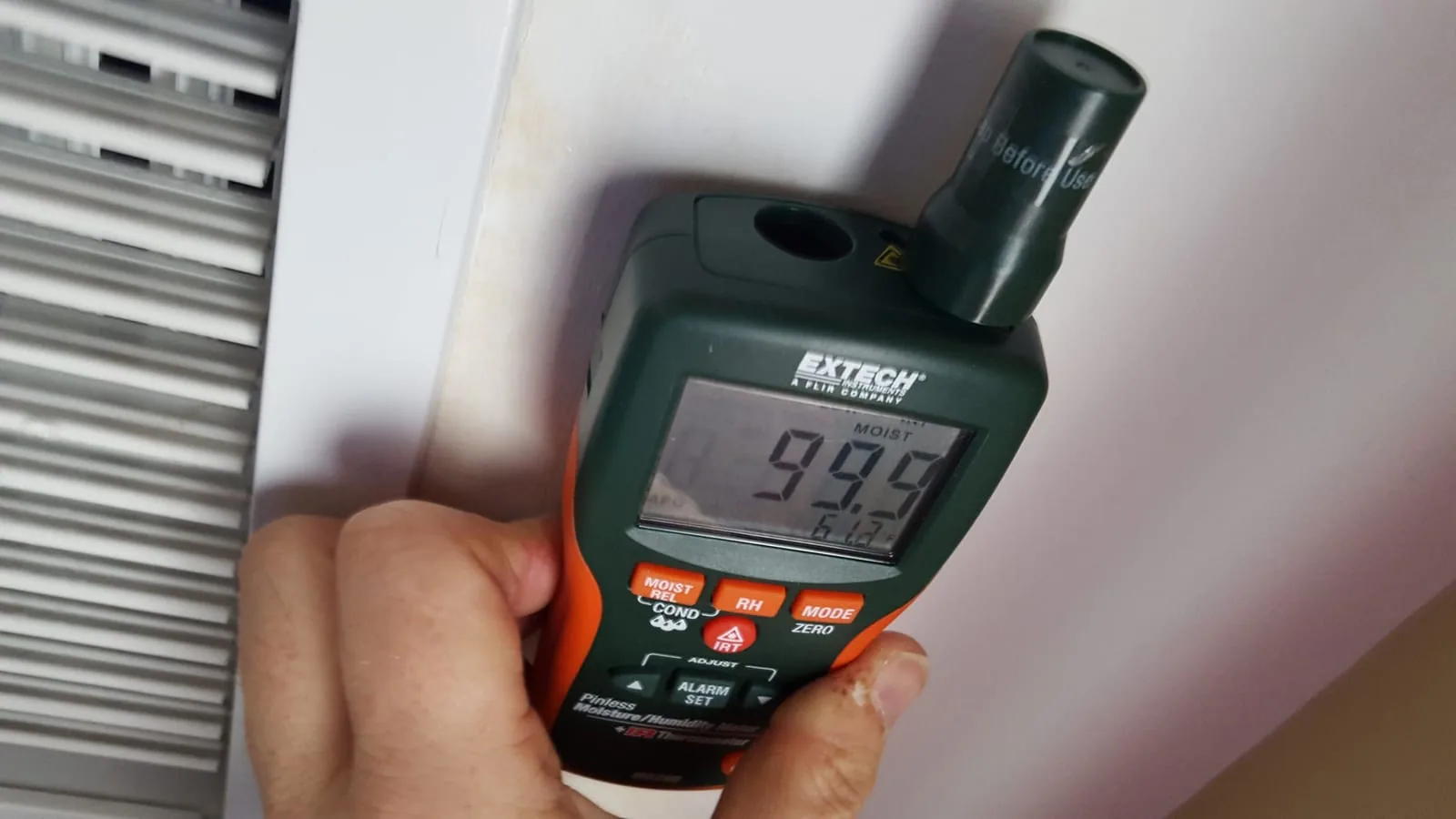
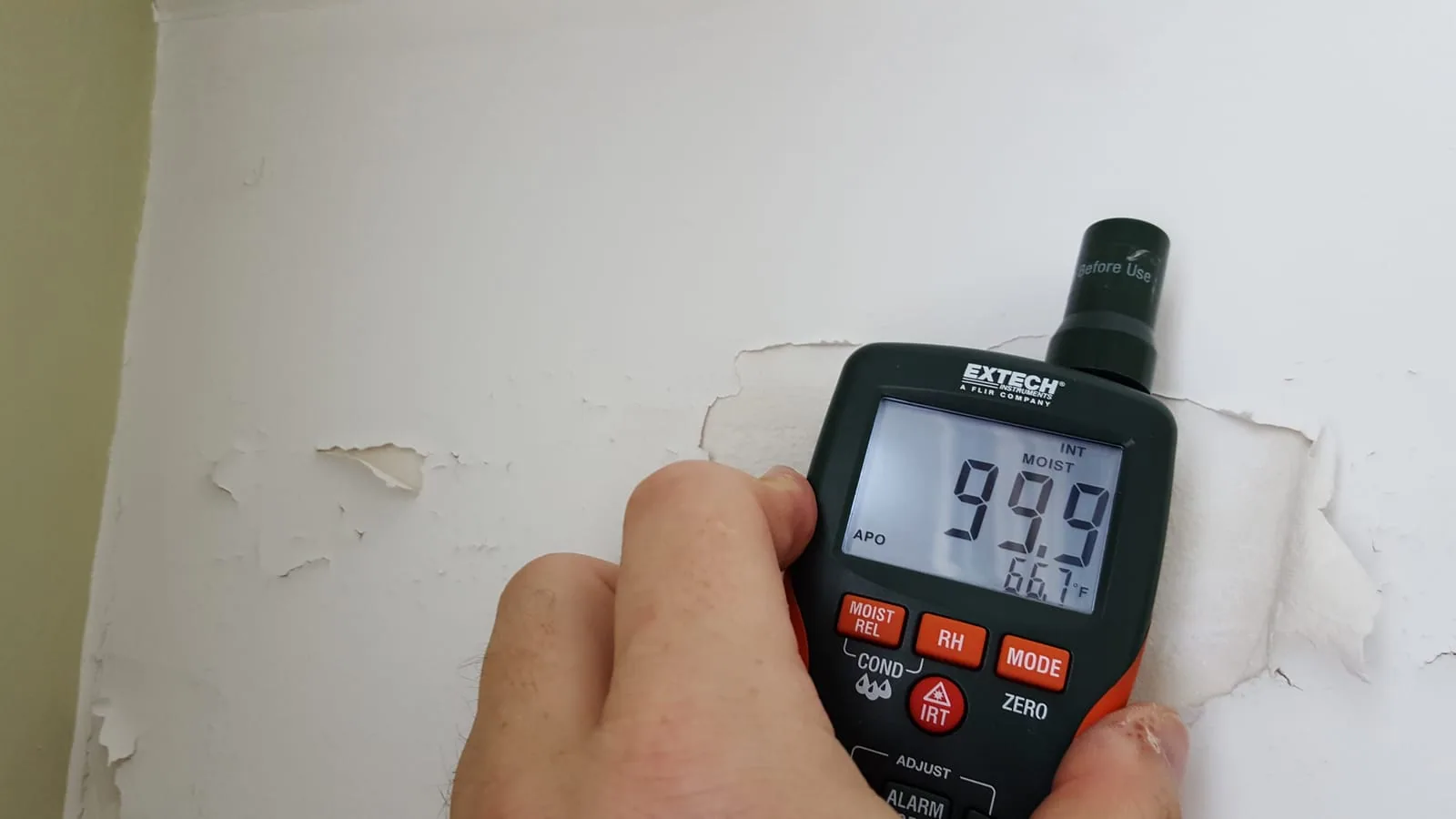
FLIR identifies the wet zone in 30 seconds. Then a pinless moisture meter gives us a percentage reading at every test point — telling us whether the material is at 20% MC (drying nicely) or 99% MC (saturated and at imminent risk of mold growth).
Limitations of Thermal Imaging
Thermal cameras don't see through walls — they see surface temperature differences caused by what's behind the wall. If a wall is so well-insulated that the wet area inside doesn't affect the surface temperature, the camera won't detect it. That's rare in residential settings but possible in modern commercial buildings with thick spray-foam insulation.
Thermal imaging also can't tell you the species of water (clean vs. gray vs. black water) or whether mold has started. Those require sampling.
If you suspect water damage in your Greenwich, Stamford, or anywhere across our service area, our IICRC-certified crews bring FLIR thermal imaging to every assessment — at no additional charge. Call 911 Storm for a free on-site scan.
Frequently Asked Questions
Can I use a cheap thermal camera myself?+
Cheap thermal cameras (under $200) lack the temperature resolution to detect small moisture differentials. Professional FLIR units (E-series and above) detect differences of 0.05°F. Cheaper units may show false negatives — making them worse than not using one at all.
How long does a thermal scan take?+
5-15 minutes for a typical residential room. We can scan an entire average-sized home in under an hour.
Does thermal imaging work through paint?+
Yes — paint doesn't significantly affect surface temperature. Wallpaper and thick paneling can mask thermal signatures, but surface readings still indicate moisture in most cases.
Will it find every type of leak?+
It finds active and recent leaks where wet materials are still cooling. It can't find sealed-up old damage where everything has dried out (though that doesn't usually require restoration).
Related Services
Raf Volkov
Raf has personally supervised more than 100 restoration projects across Fairfield County, CT and Westchester County, NY since 2003. He holds IICRC Water Damage Restoration (2016), IICRC Fire & Smoke Restoration (2016), Goldmorr AIM Mycotoxin Remediation, EZ Breathe Installer, and Stego Vapor Barrier / ASTM E1643 certifications — attending manufacturer trainings every year. Every protocol on this site is built on standards he's trained and re-trained in.