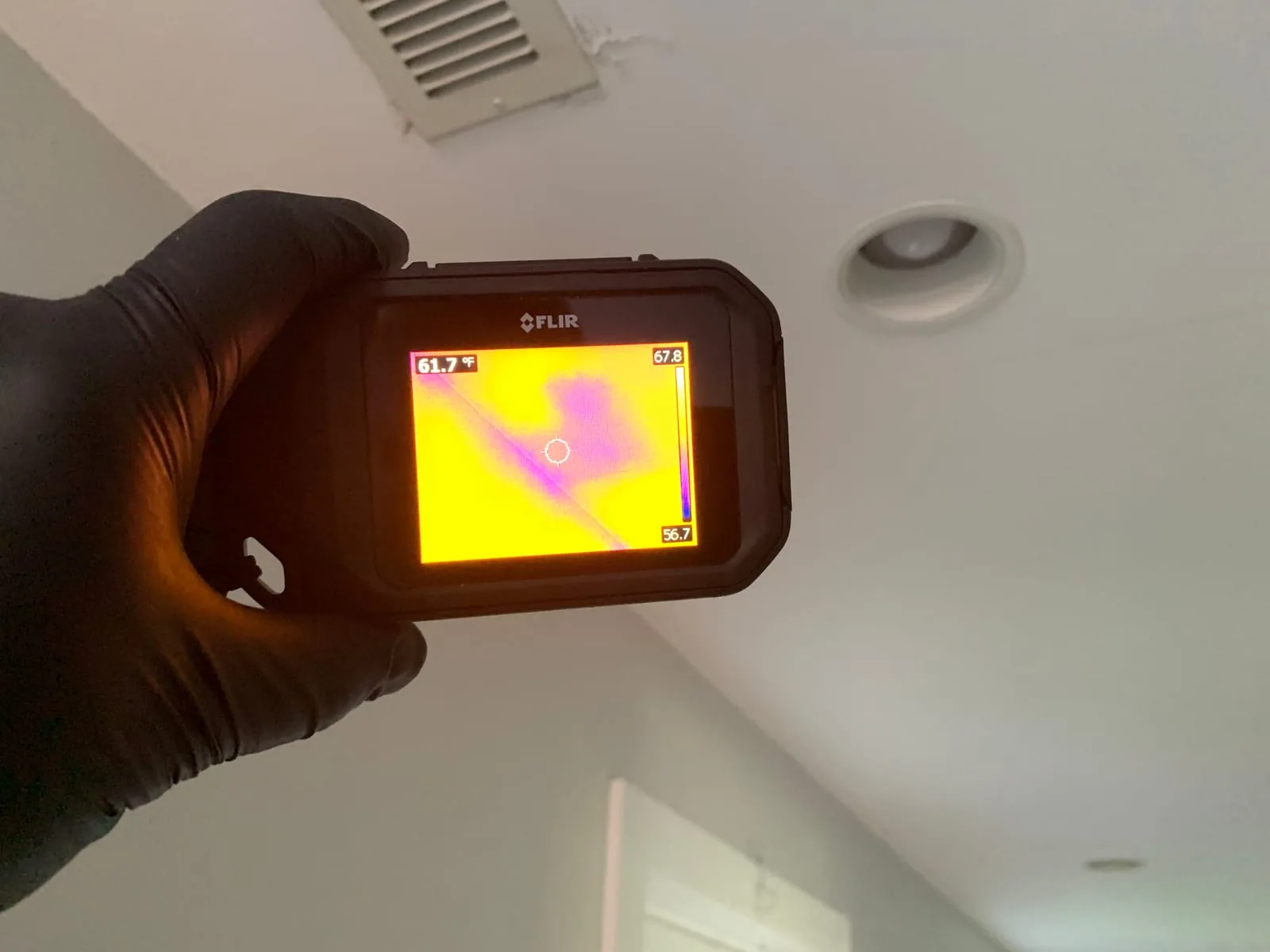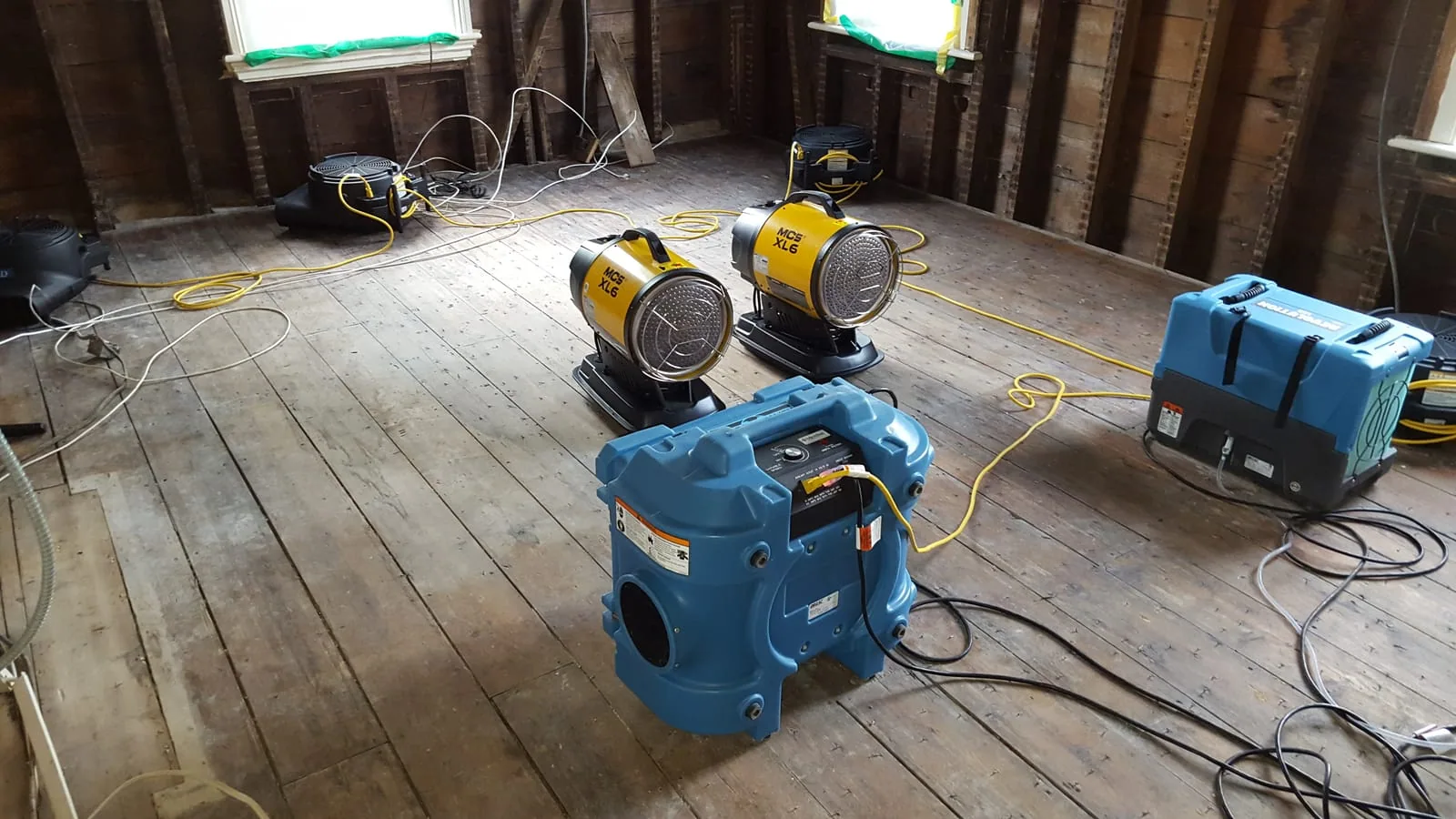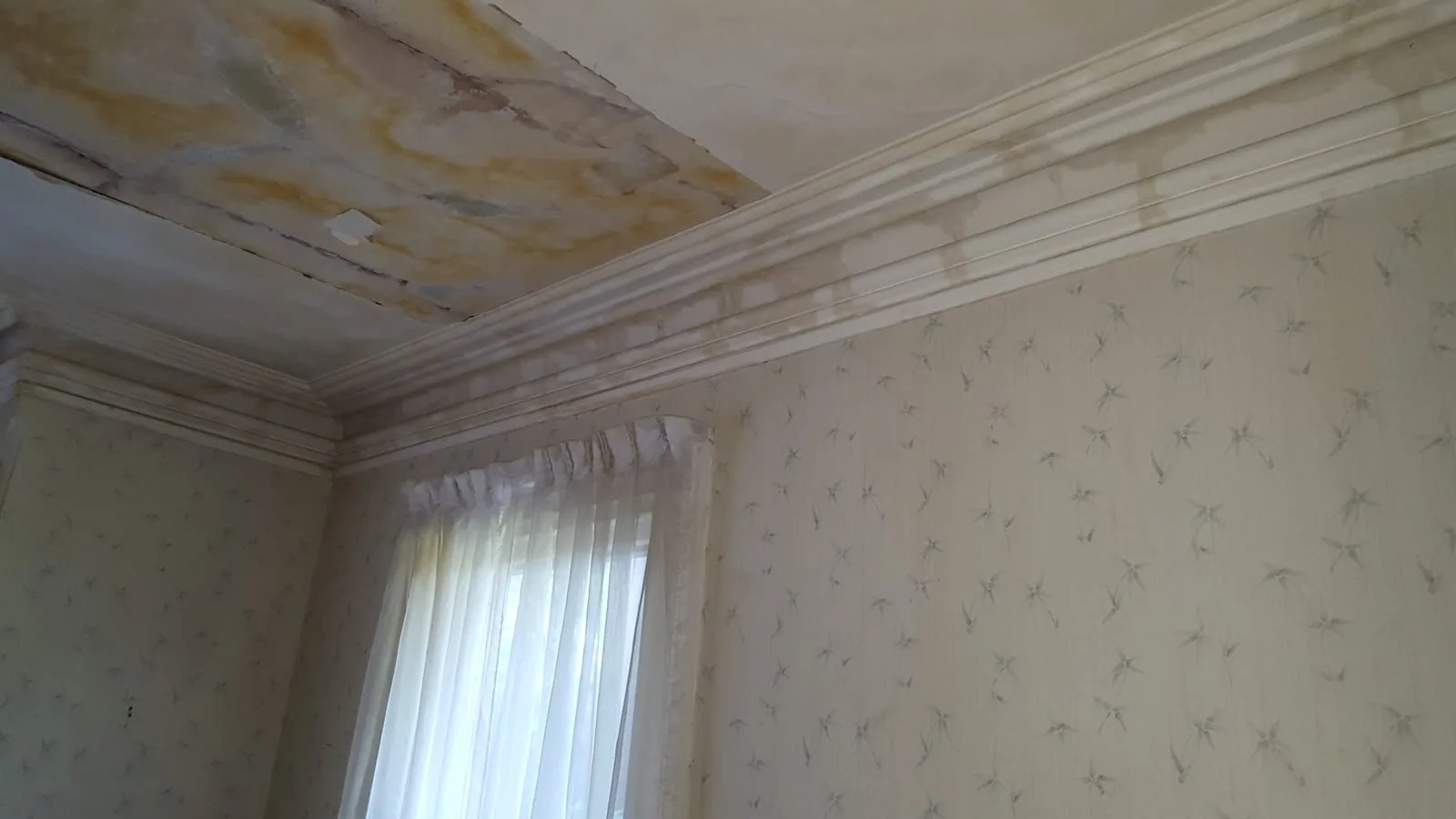
When a 911 Storm crew arrives at your property, the first tool out of the truck is usually a moisture meter. The second is a FLIR thermal camera. Together they tell us exactly what's wet and how wet it is — driving every decision about extraction, drying, and demolition.
What Moisture Meter Numbers Actually Mean
Moisture meters express moisture content as a percentage of the material's dry weight (true MC) or as a relative reading (REL). For most building materials:
- 5-12% MC: normal dry condition (drywall, framing in equilibrium with indoor humidity)
- 12-15% MC: slightly elevated, monitor
- 15-25% MC: damp, active intervention needed
- 25-40% MC: wet, immediate drying required
- 40-99% MC: saturated, often unsalvageable for porous materials
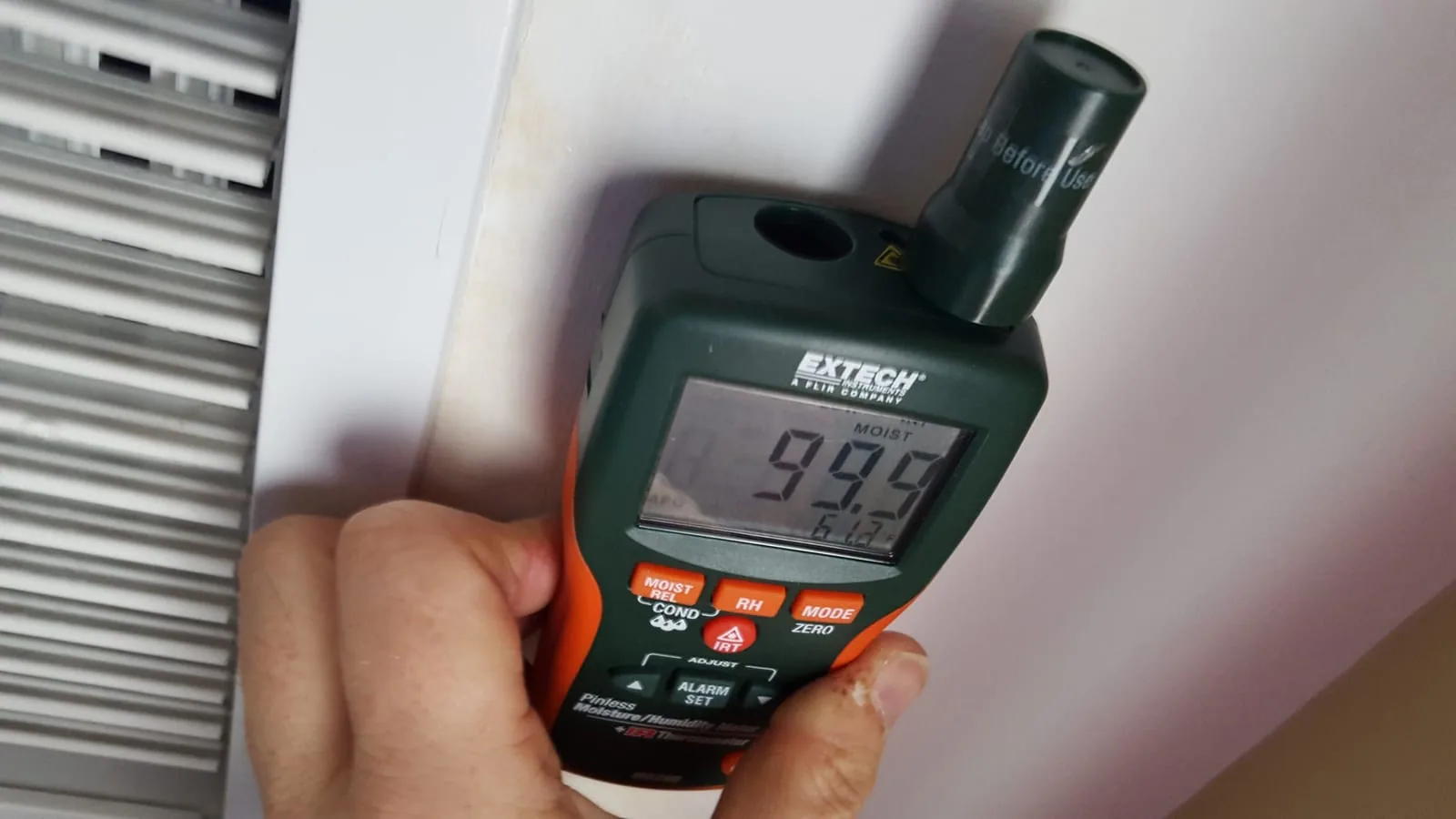
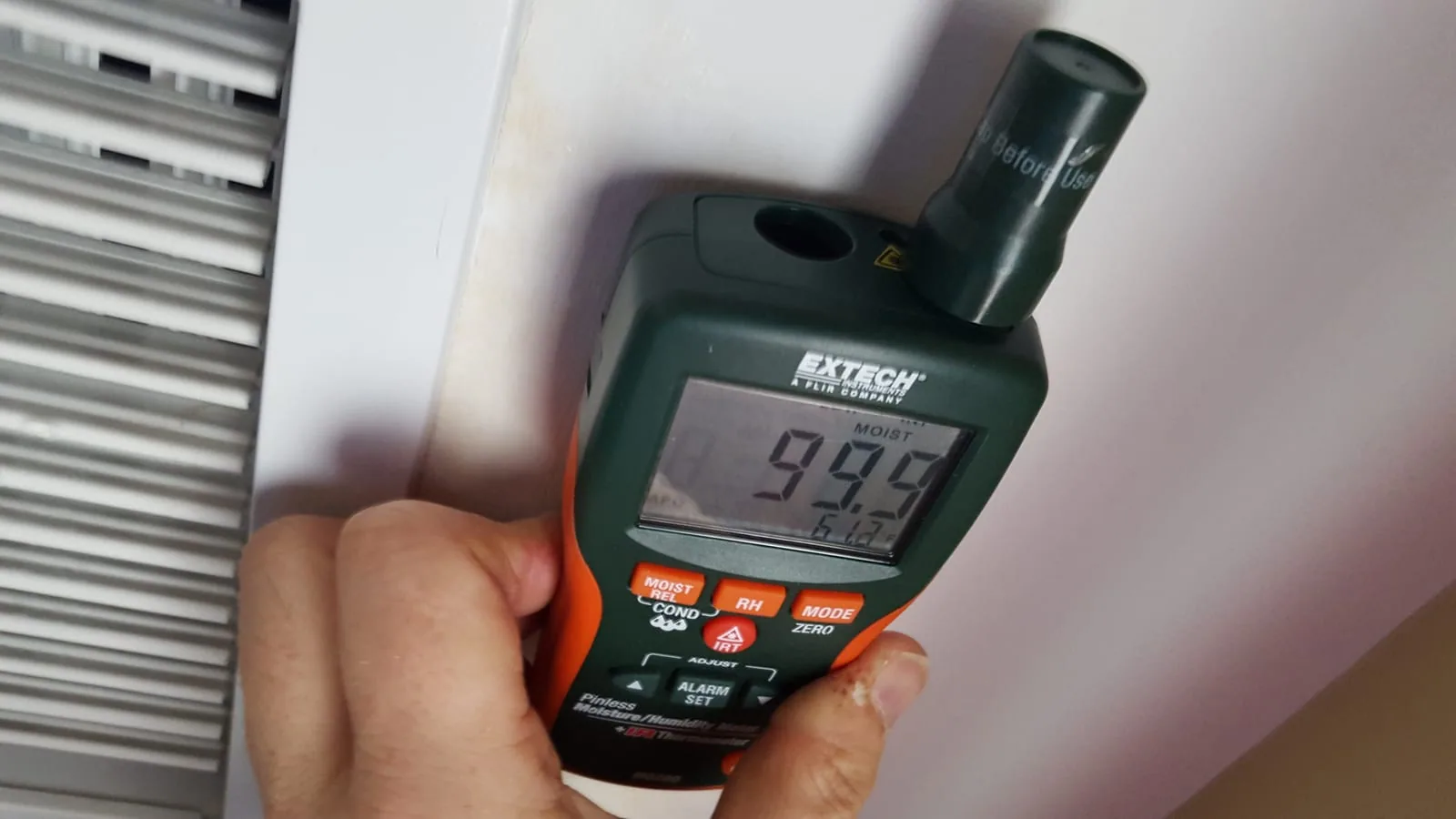
The 99% reading shown above isn't unusual — it's what we see when water has actively pooled or migrated into a sensitive area like an HVAC vent.
Pinless vs. Pin-Type Meters
Two types of meters, two different uses:
Pinless meters use electromagnetic waves to scan moisture below the surface — non-invasive, fast, perfect for mapping wet areas. You can scan an entire wall in 30 seconds.
Pin-type meters drive two metal pins into the material and measure electrical resistance. More accurate at specific points, but they leave small holes. We use them to verify drying progress at controlled test points.
Most professional restoration uses both: pinless for mapping, pin-type for verification.
Why a 99% Reading Doesn't Mean 'Just Dry Longer'
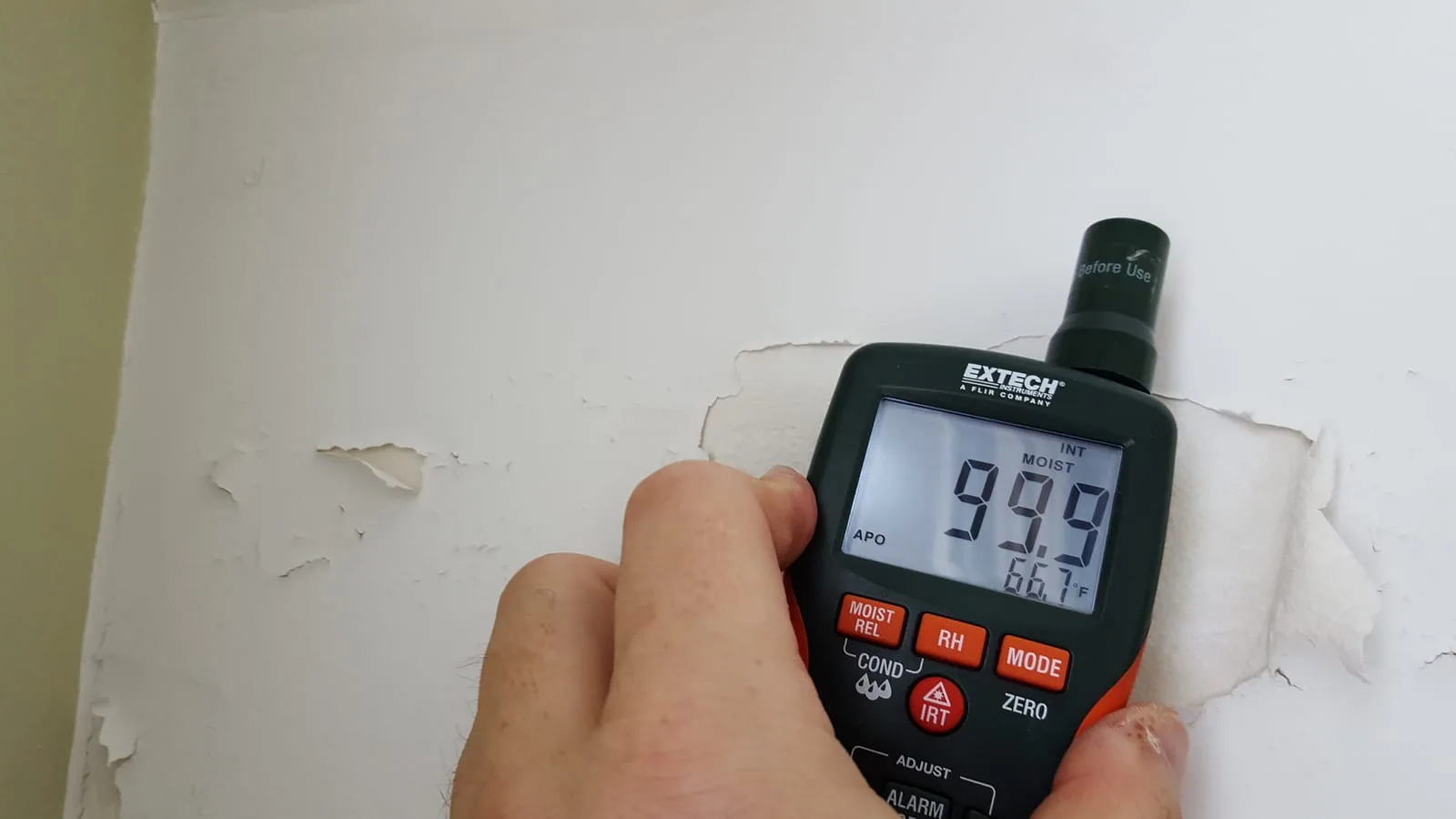
When materials hit 99% MC, drying alone often isn't enough. Drywall paper face delaminates at 30-40% MC. Wood framing rots at sustained 28-30% MC. Insulation loses thermal value permanently above 50% MC.
A 99% reading on most porous building materials means we're past the salvageable threshold. Demolition and replacement is faster, cheaper, and more reliable than trying to dry materials beyond saving.
How We Use Daily Readings During Drying
Once we deploy structural drying equipment, we take meter readings at 12-15 marked test points every 24 hours. Goals:
- Confirm equipment is removing moisture (readings should drop 2-5% MC per day)
- Identify areas not drying (may need additional equipment)
- Determine when drying is complete (target: pre-loss equilibrium MC)
Without daily measurements, drying becomes guessing — and guessing leaves hidden moisture that triggers mold growth.
Insurance Documentation
Insurance adjusters trust documented moisture readings. Every job we run includes:
- Initial moisture mapping (all wet areas, all test points, % readings)
- Daily progress logs
- Final clearance readings (proof drying is complete)
These reports satisfy insurance carrier requirements and become the basis for the Xactimate scope we negotiate with adjusters.
Moisture meters are the difference between scientific restoration and educated guessing. Every 911 Storm crew carries them, uses them on every job, and documents readings for your insurance claim. Call us for a free on-site moisture assessment in Greenwich, Stamford, or anywhere across our service area.
Frequently Asked Questions
Can I buy a moisture meter for my home?+
Yes — basic pin-type meters cost $30-$80 and are useful for spot-checking suspect areas. Professional pinless units are $400-$1,500. For diagnosing real water damage, a professional should always verify your readings.
What's a normal moisture reading for a dry basement?+
Concrete: 4-8% MC. Drywall: 5-12% MC. Wood framing: 9-15% MC. Anything significantly above these in a basement indicates moisture issues.
How long should it take to dry water-damaged drywall?+
Typically 3-5 days with proper LGR dehumidifiers and air movers. If readings aren't dropping after 48 hours, you have hidden water sources or insufficient equipment.
Do I need to remove drywall if it shows 30% MC?+
Not necessarily. Drywall can often be saved if dried within 48 hours. Above 40% MC or sustained moisture beyond 72 hours typically requires removal.
Related Services
Raf Volkov
Raf has personally supervised more than 100 restoration projects across Fairfield County, CT and Westchester County, NY since 2003. He holds IICRC Water Damage Restoration (2016), IICRC Fire & Smoke Restoration (2016), Goldmorr AIM Mycotoxin Remediation, EZ Breathe Installer, and Stego Vapor Barrier / ASTM E1643 certifications — attending manufacturer trainings every year. Every protocol on this site is built on standards he's trained and re-trained in.