
Most homeowners blame paint failure on "bad paint" or "poor prep work." In our experience, 9 times out of 10 the real cause is moisture trying to escape from behind the wall. Here's how to read the warning signs and find the hidden leak.
Why Moisture Causes Paint to Fail
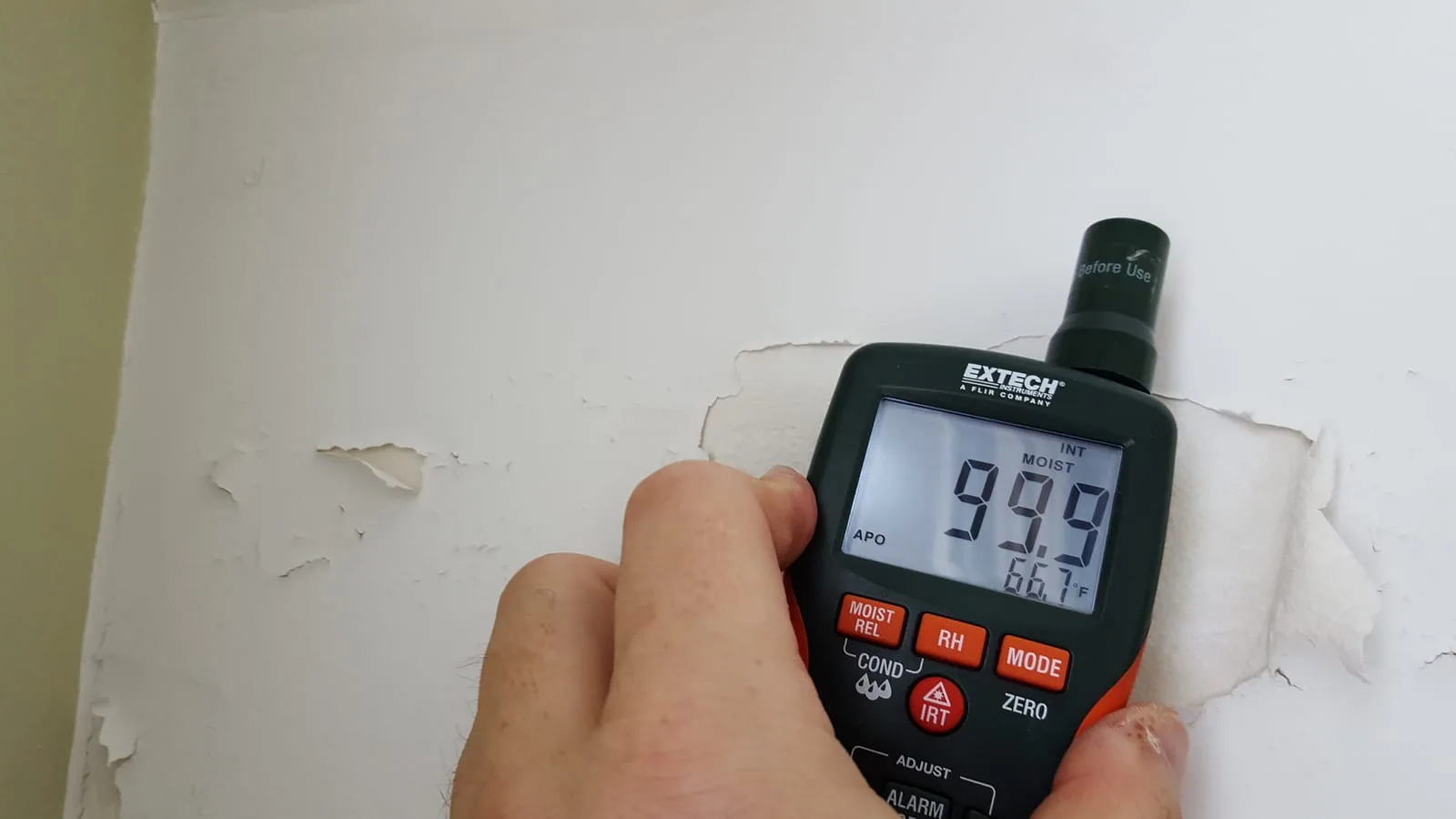
Paint adheres to its substrate (drywall, plaster, wood) through chemical bonds and physical grip. Moisture interferes with both:
- Water vapor migrates through the substrate to the back of the paint film
- Pressure builds, eventually breaking adhesion
- The paint bubbles, then cracks, then peels
- Mineral deposits from the water leave stains visible on the surface
This happens whether the moisture comes from a slow plumbing leak, a roof leak, foundation infiltration, or even just chronic high humidity.
Pattern Reading: What the Failure Tells You
The shape and location of paint failure points to the source:
- Pinpoint blisters in a small cluster: usually a localized leak directly behind the wall (pipe, fixture)
- Linear or vertical streaking: water tracking down from above (roof leak, ice dam, upstairs spill)
- Patch failure along the bottom of an exterior wall: foundation moisture rising via capillary action
- Ceiling failure spreading outward from one point: leak directly above (often plumbing or roof)
- Failure concentrated near windows: window seal failure or condensation
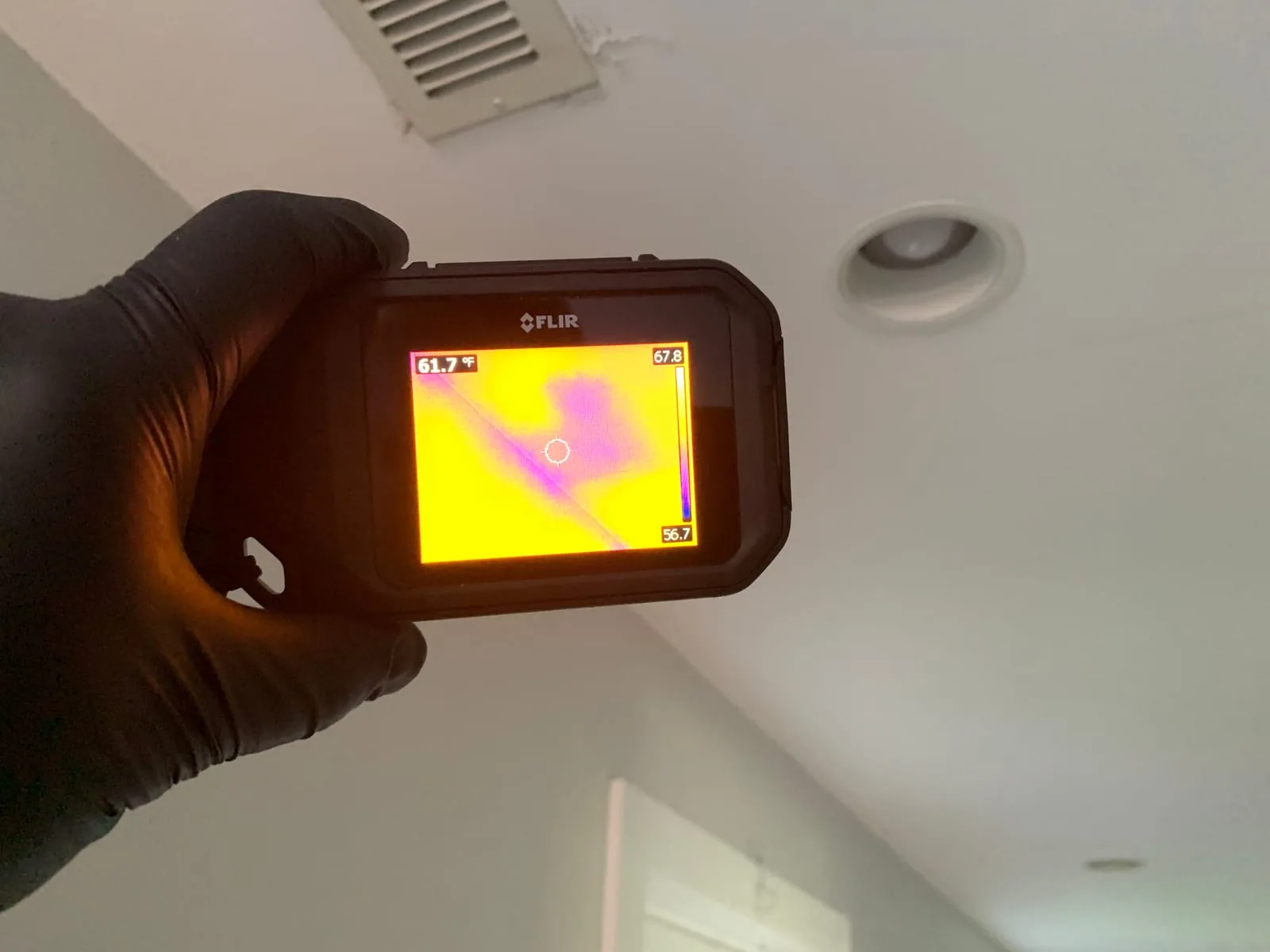
Professional thermal imaging confirms the source quickly.
What Lives Behind the Paint
The paint failure you see is the symptom. Behind it (in roughly 70% of cases we investigate) is one or more of:
- Saturated drywall (15-40% MC versus normal 5-12%)
- Wet insulation (loses thermal value, often unsalvageable)
- Mold colonies on the back of drywall (often invisible until removal)
- Wet wood framing (rotting at sustained 28%+ MC)
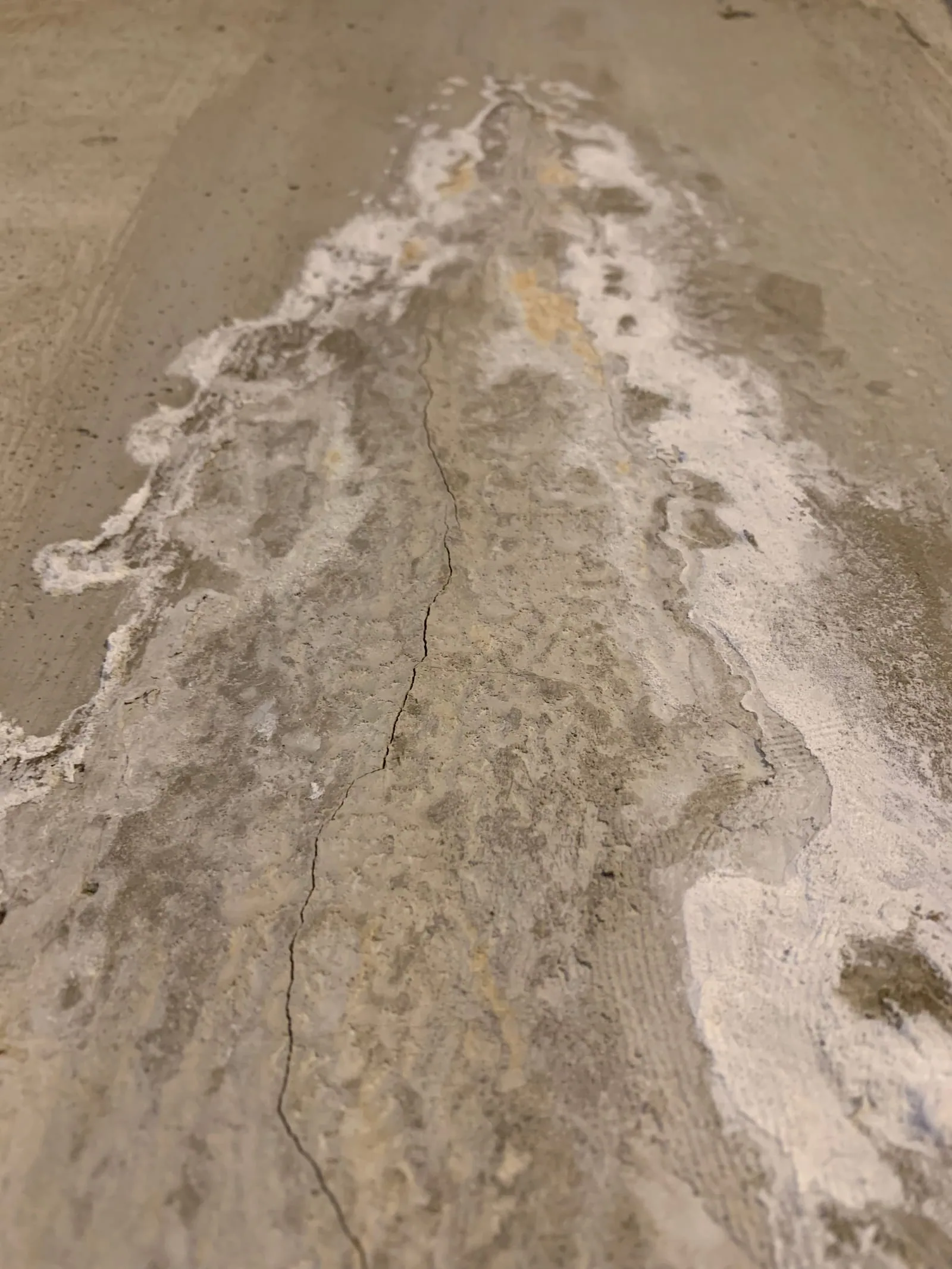
- Mineral deposits (efflorescence on masonry)
Why Repainting Without Investigation Is Expensive
We've inherited dozens of jobs where the homeowner repainted (sometimes multiple times) over peeling areas. The result is always the same: failure recurs in months, mold grows behind the new paint, and what was a $1,500 water damage diagnosis becomes a $10,000-$20,000 mold remediation.
The right sequence is always: investigate → fix source → dry → test for mold → repair substrate → repaint. Skipping any step risks recurrence.
When to Call a Professional
DIY assessment makes sense for very localized failure (less than a few square feet) where the source is obvious. For anything else, call us:
- Failure covering more than 5-10 square feet
- Multiple unrelated areas failing simultaneously
- Recurring failure after previous repaint
- Any musty smell accompanying the failure
- Visible mold spotting
- Ceiling failure of any size
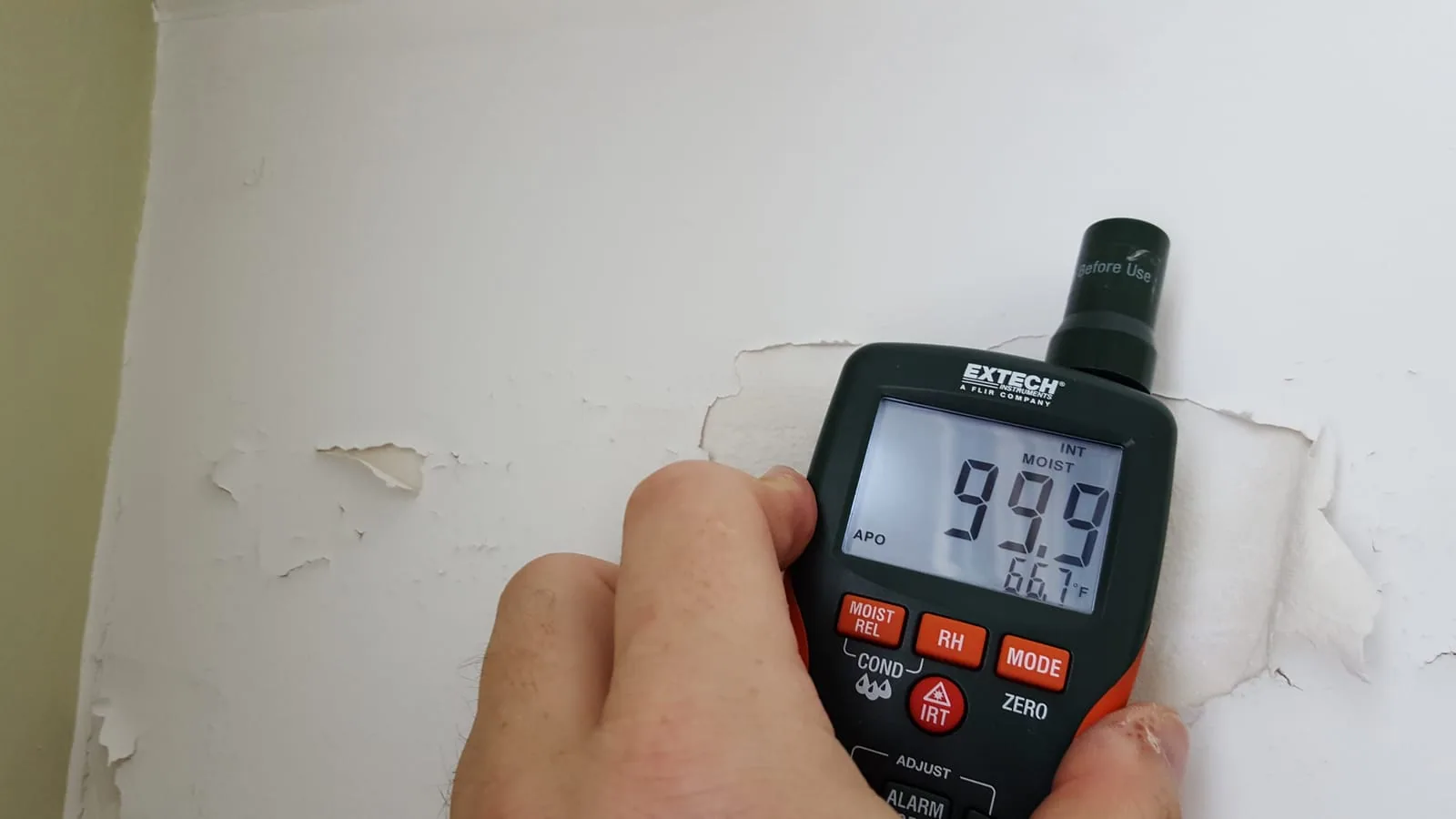
Our free assessment uses FLIR thermal imaging and moisture meters to identify the source and the full extent of damage in 30 minutes.
Peeling paint is your house telling you something is wrong behind the wall. Listen to it early, and the fix is usually small. Ignore it, and you're funding the next mold remediation. Call 911 Storm for a free assessment in Greenwich, Stamford, or anywhere across our service area.
Frequently Asked Questions
Could it just be old paint that's failing?+
Possible — but old paint typically fails uniformly across a surface, not in localized patterns. If your failure is patchy or expanding, suspect moisture.
How can I check for moisture before calling?+
A $30 pin-type moisture meter from a hardware store can give you a basic indication. Readings above 15% on drywall warrant professional investigation.
Can high humidity alone cause paint failure?+
Yes — chronic indoor humidity above 60% can cause paint problems even without an active leak. Bathrooms and kitchens are most susceptible. Solution: better ventilation.
Do I need to remove all the failing paint before repainting?+
Yes — and you need to address the moisture source first. Sand, prime with a stain-blocker after the area is dry, then repaint. Otherwise the failure will return.
Related Services
Raf Volkov
Raf has personally supervised more than 100 restoration projects across Fairfield County, CT and Westchester County, NY since 2003. He holds IICRC Water Damage Restoration (2016), IICRC Fire & Smoke Restoration (2016), Goldmorr AIM Mycotoxin Remediation, EZ Breathe Installer, and Stego Vapor Barrier / ASTM E1643 certifications — attending manufacturer trainings every year. Every protocol on this site is built on standards he's trained and re-trained in.