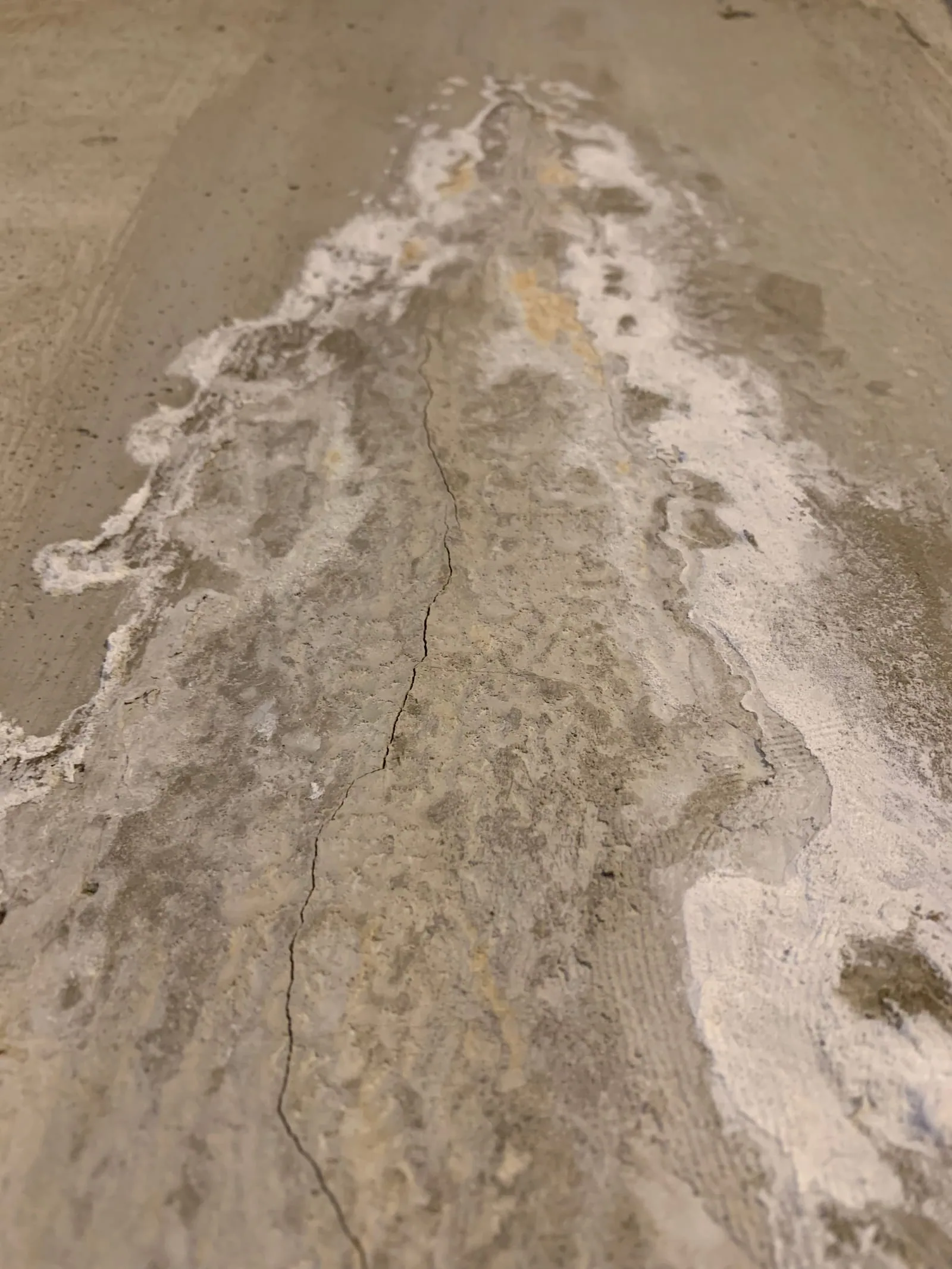

Walk into a basement with a chalky white powder forming on the foundation walls and most homeowners assume it's old paint or dust. It isn't. It's efflorescence — and it's one of the most reliable visual signs that water is actively moving through your foundation.
What Efflorescence Actually Is
Efflorescence is the deposition of soluble mineral salts on the surface of concrete, brick, or block walls. Water dissolves these minerals as it passes through the wall material, then evaporates at the surface — leaving the salts behind as visible white or grayish powder.
The pattern is almost always concentrated where water has been moving most actively: along the bottom 2-3 feet of foundation walls, around control joints, near exterior wall penetrations, or in horizontal bands marking historical water lines.
Why It Matters (Even If There's No Flooding)
Efflorescence proves water is moving through your wall — even if you've never seen visible flooding. That means:
- Your basement is losing energy efficiency (wet walls conduct heat poorly)
- Hidden mold may be growing on the warm side of the wall (drywall, paint, framing)
- Long-term, the freeze-thaw cycle can crack foundation materials
- Property value is affected at sale (efflorescence is a known red flag)
Common Causes
Most efflorescence we see in Fairfield County and Westchester County basements traces back to:
- Poor exterior grading (water flowing toward foundation)
- Detached or clogged downspouts depositing water at the foundation
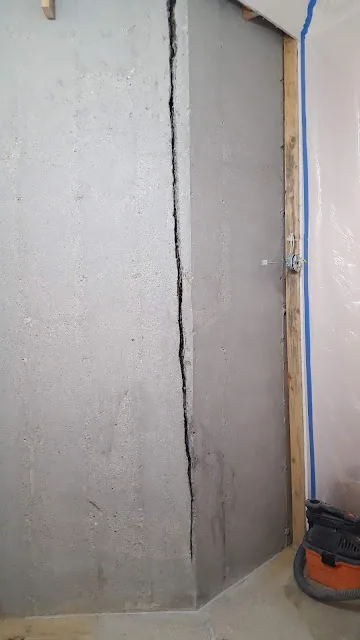
- Foundation cracks (often invisible from inside)
- Landscaping mulch or planters retaining moisture against the wall
- Failed exterior waterproofing
- High water table (less common, but real in some Hudson River–adjacent locations)
Why Just Cleaning It Off Doesn't Work
Efflorescence wipes off easily with a stiff brush and water — but if the underlying moisture source isn't addressed, it returns within weeks. We see homeowners spend years cleaning the same walls because they never fixed the cause.
Proper remediation requires:
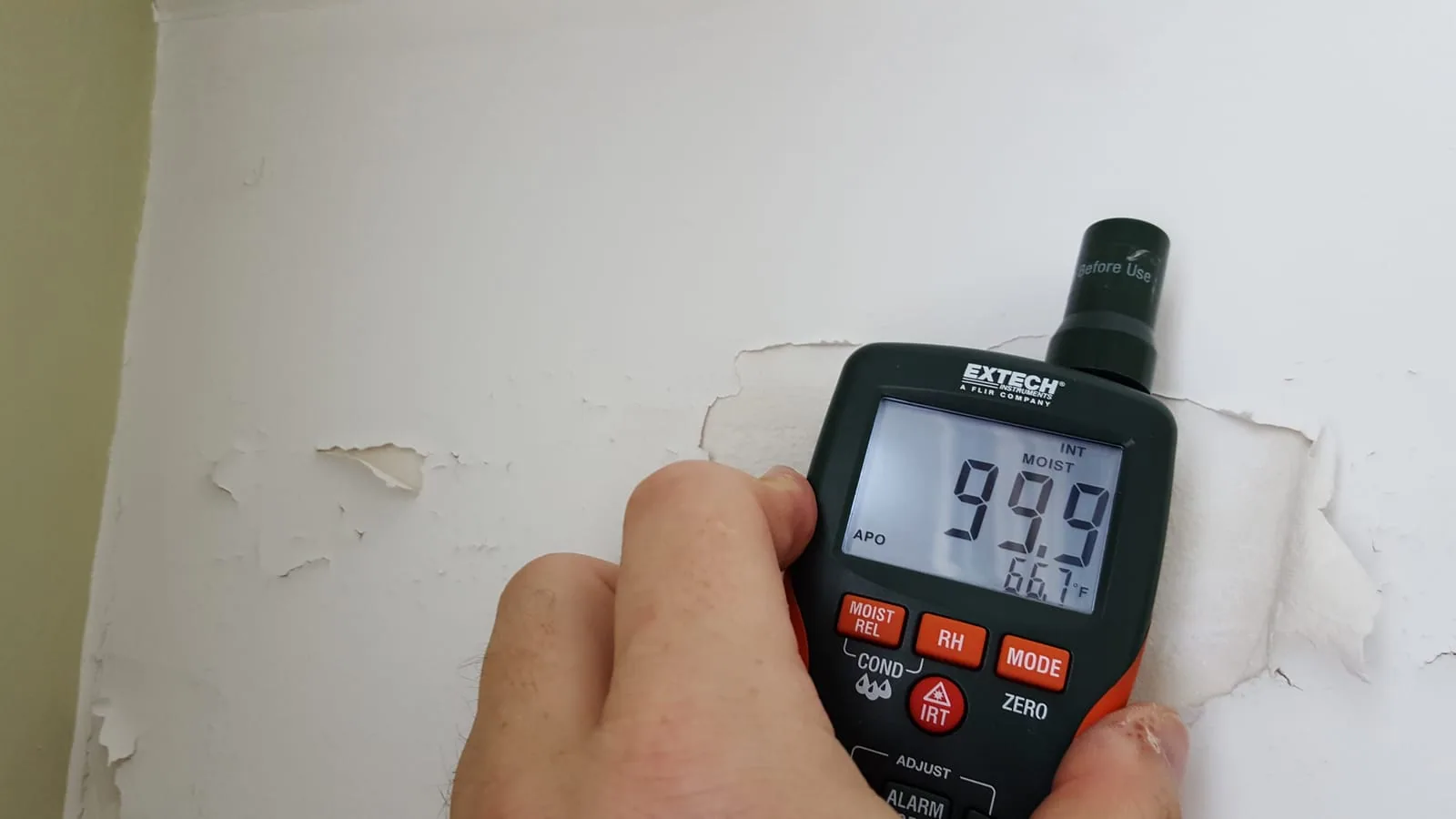
- 1Identifying the moisture source (we use thermal imaging and pinless meters)
- 2Addressing the source (grading, gutters, crack repair, waterproofing)
- 3Drying the affected materials
- 4Cleaning the visible efflorescence and applying antimicrobial treatment
- 5Testing for hidden mold before any cosmetic restoration
When to Call a Professional
Call us if:
- Efflorescence covers more than a few square feet
- It's accompanied by musty smell, peeling paint, or visible mold
- It returns after cleaning
- You're seeing it in a finished basement
- You haven't been able to identify the moisture source
Our water damage assessment includes thermal imaging, moisture mapping, and a written diagnosis with photos — typically free of charge for properties in our service area.
Efflorescence is a warning, not a final problem. Address it within the first season you see it, and the damage stays small. Ignore it for a year or more, and you're often looking at significant mold remediation on top of the original water issue. Call 911 Storm for a free Greenwich, Stamford, or Westchester assessment.
Frequently Asked Questions
Is efflorescence dangerous to touch?+
Not directly — it's just mineral salt residue. But the underlying water infiltration that caused it can lead to mold, which IS hazardous to health.
Can paint over efflorescence work?+
No. Painting over wet, salt-deposited walls causes the paint to fail within weeks (peeling, bubbling). Address the moisture source first, dry the wall, treat for salts, then paint with a moisture-resistant coating.
Does efflorescence affect home value?+
Yes — home inspectors flag it consistently as a sign of moisture issues. It can scare buyers off or trigger demands for waterproofing concessions.
Do I need to replace affected walls?+
Usually not. Once the moisture source is addressed and walls are dried, efflorescence can be removed and walls restored. Replacement is only required if structural damage or extensive [mold contamination](/black-mold-identification-and-health-risks/) is present.
Related Services
Raf Volkov
Raf has personally supervised more than 100 restoration projects across Fairfield County, CT and Westchester County, NY since 2003. He holds IICRC Water Damage Restoration (2016), IICRC Fire & Smoke Restoration (2016), Goldmorr AIM Mycotoxin Remediation, EZ Breathe Installer, and Stego Vapor Barrier / ASTM E1643 certifications — attending manufacturer trainings every year. Every protocol on this site is built on standards he's trained and re-trained in.