
Mold on Bathroom Ceiling or Walls
Mold on a bathroom ceiling or wall is one of the most common mold complaints we get. 80% of the time it's surface mildew from poor ventilation. The other 20% is real mold from a hidden leak — and looks similar.
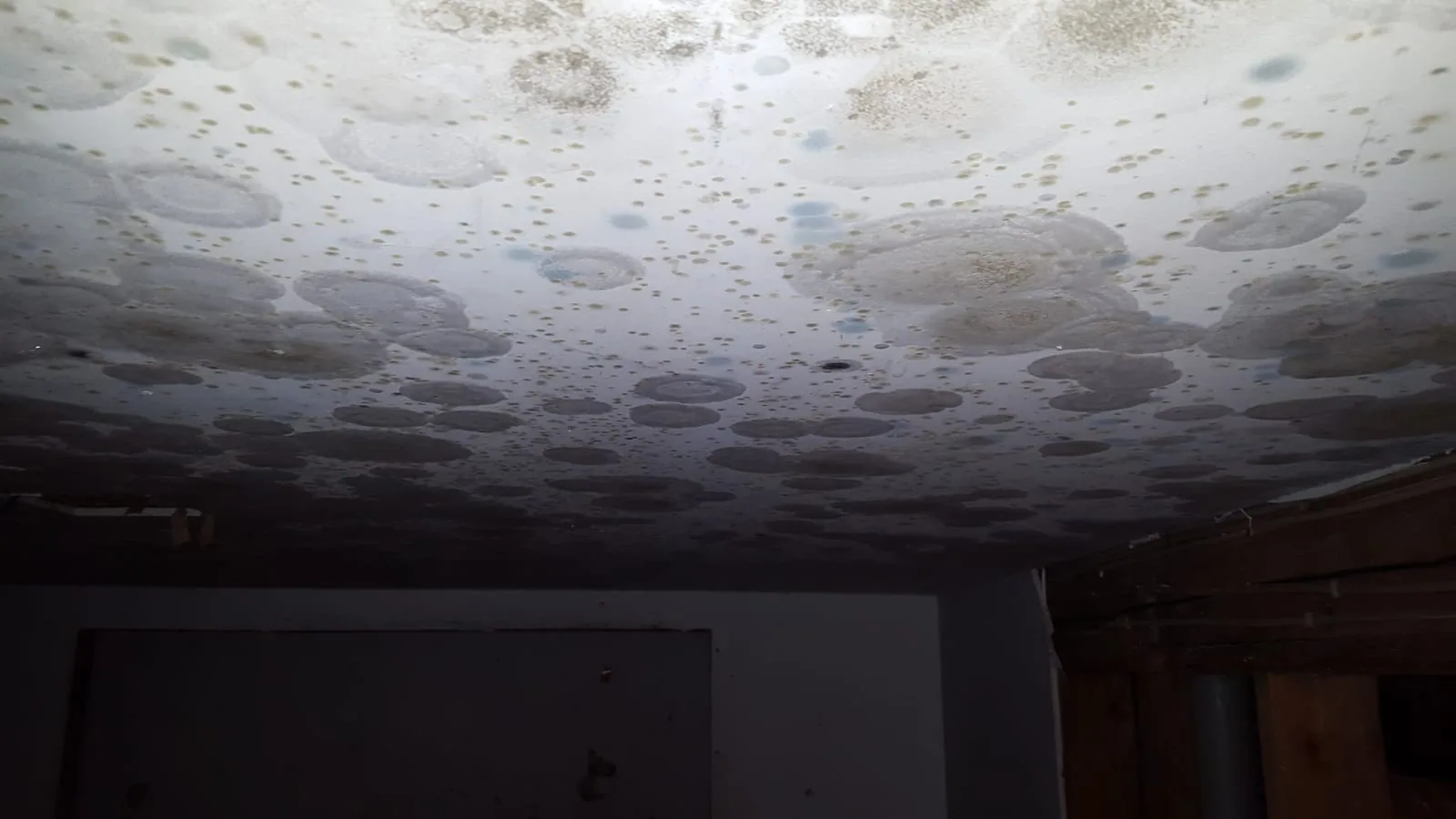
Common Signs
- Black or dark green spots or patches, usually starting in corners
- Often above showers, around tubs, or at the ceiling-wall joint
- May feel slightly fuzzy or sticky when touched
- Sometimes accompanied by peeling paint or bubbling drywall
- In bad cases, also visible inside vanities and under sinks
Most Likely Causes
In order of how often we see them on real jobs.
Inadequate ventilation (most common)
Bathroom exhaust fan is missing, broken, or undersized. Shower steam condenses on cold ceiling/walls and feeds surface mildew growth.
Hidden plumbing or roof leak
Mold spots in unusual locations (not directly above the shower) often indicate a hidden leak inside the ceiling or wall cavity.
Bathroom on north-facing exterior wall
Cold winter walls + warm shower air = condensation along entire wall surface, supporting growth across larger areas.
Aging caulk and grout failure
Failed caulk around tub or shower lets water past into the wall cavity, growing mold behind the visible surface.
Surface mildew is mostly cosmetic and a health irritant. Real mold from a hidden leak is more serious — it may indicate structural moisture damage and Stachybotrys or other dangerous species behind the drywall.
How We Fix It
Determine: surface mildew or real mold?
Moisture meter readings on adjacent drywall + thermal imaging tell us if there's a hidden water source. Surface mildew = no hidden moisture. Real mold = wet wall cavity.
Surface mildew remediation
If just surface: clean with antimicrobial, address ventilation (fan upgrade, EZ Breathe), repaint with mold-resistant primer.
Hidden mold remediation
If wet cavity: IICRC S520 containment, drywall removal, source repair, antimicrobial framing treatment, then rebuild.
Long-term ventilation upgrade
Most bathrooms benefit from a humidistat-controlled fan that runs until humidity drops, preventing recurrence.
Frequently Asked Questions
Can I clean bathroom mold with bleach?+
On non-porous surfaces (tile, glass) yes. On drywall, grout, or caulk — bleach disinfects the surface but doesn't kill mold roots in porous material. The mold returns within weeks.
How do I know if it's behind the drywall?+
Press gently on the affected area. If the drywall feels soft, mushy, or punky — there's wet material behind it. Solid drywall with surface mildew is the easier case.
Is bathroom mold dangerous to my health?+
Surface mildew is mostly irritating (allergies, congestion). Real mold from a hidden leak can be Stachybotrys or other toxic species — much more serious.
Should I have an air quality test?+
For surface mildew: usually no. For mold of unknown extent, or if family members have symptoms: yes, an air quality test is the objective answer.
Want a free on-site diagnosis?
We come look, tell you what's actually causing it, and only fix what needs fixing. No high-pressure sales.
IICRC Certified • Licensed & Insured • All Major Insurance Carriers