
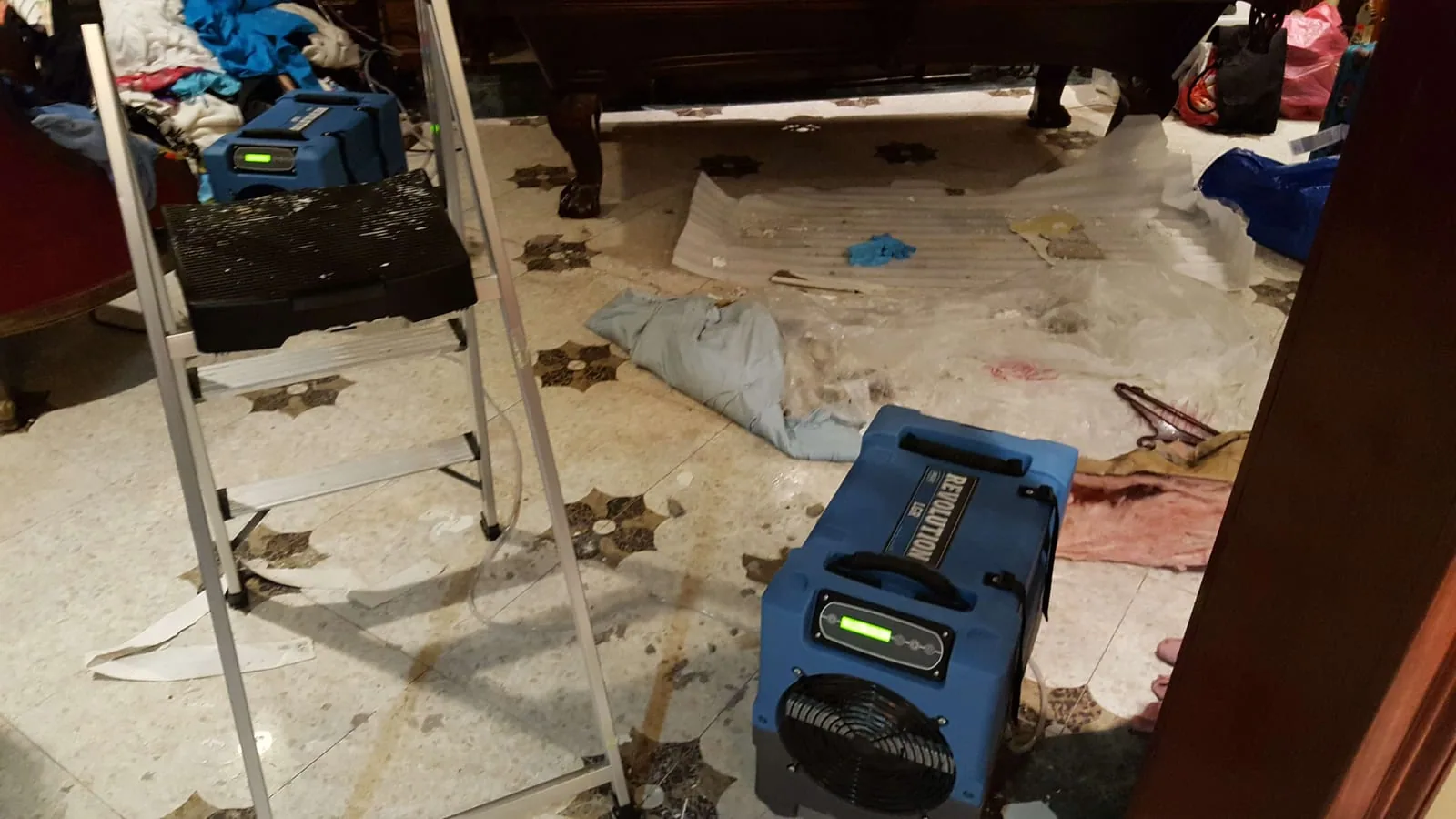
What S520 actually covers
S520 is the Standard and Reference Guide for Professional Mold Remediation, published by the IICRC. The current version (S520-2024) is approximately 300 pages and is the industry's reference document for any mold work above small-area limits.
It covers five major areas: (1) initial assessment — when remediation is needed vs. when source control alone is enough, (2) containment — physical barriers and negative air pressure to prevent spore spread, (3) removal — how to take out contaminated materials safely, (4) cleaning and decontamination — including antimicrobial chemistry, and (5) post-remediation verification — confirming the work is complete.
Two key principles run through S520: "source removal beats source treatment" (remove the moldy material, don't just spray it), and "contain the area, control the airflow" (work in negative pressure containment so spores don't spread to the rest of the home).
Containment levels — the most important S520 concept
S520 defines three containment levels based on the size of the affected area:
Level 1 — Limited containment (10 sq ft or less, e.g. a small section under a sink). Plastic sheeting around the work zone, dust suppression, debris bagged for removal. No HEPA scrubber strictly required at this scale.
Level 2 — Full containment (10-100 sq ft, e.g. a bathroom or single basement wall). Floor-to-ceiling poly sheeting with zippered access. HEPA air scrubber maintaining negative air pressure (air flows INTO the containment, not out). HVAC sealed off. Crew in N-95 respirators minimum.
Level 3 — Major containment (100+ sq ft, or any visible Stachybotrys or other primary toxin-producing molds). Double-layer poly with airlock entry. Multiple HEPA scrubbers. Crew in full PPE (Tyvek suits, full-face P100 respirators). Decontamination chamber for exit. This is what serious mold work looks like.
If a contractor proposes "mold remediation" without describing the containment level they'll use, they're not actually working to S520. The containment is half the work.
Demolition vs. cleaning — what gets thrown out
S520 distinguishes between porous, semi-porous, and non-porous materials — and the demolition decisions follow from that classification.
Porous materials (drywall paper, carpet, carpet pad, ceiling tiles, insulation, particleboard, soft furniture) that have visible mold growth are typically removed and disposed of. You cannot reliably clean mold out of porous material — the hyphae penetrate the structure. S520 calls this "source removal."
Semi-porous materials (wood framing, hardwood floors, plaster walls) can often be HEPA-vacuumed, abrasively cleaned, and treated with antimicrobial — but only after the surface mold growth is mechanically removed. Encapsulant coatings (after cleaning) seal residual contamination.
Non-porous materials (metal studs, sealed concrete, glass, ceramic tile) can be cleaned in place with HEPA vacuuming + antimicrobial wipe.
If a contractor proposes encapsulating mold on drywall without removing it, that's not S520-compliant. The standard calls source removal of porous materials the primary method. Encapsulation is a supplemental treatment for materials that can't be removed (structural framing), not a shortcut to avoid demolition.
Antimicrobials — what gets used and why
S520 requires EPA-registered antimicrobial products for mold-affected surfaces. Common categories used in professional remediation:
Quaternary ammonium compounds ("quats") — broad-spectrum disinfectants, low toxicity to humans, residual antimicrobial activity. Most common general-purpose mold cleaner.
Hydrogen peroxide-based — oxidizes mold and stain compounds, leaves no chemical residue, decomposes to water + oxygen. Used when residue-free cleaning matters (e.g. food prep areas).
Botanical / thymol-based — derived from thyme oil, EPA-registered, gentler for occupied homes during remediation. Used for sensitive populations.
Goldmorr AIM (which we're certified in) — a specialty multi-stage system designed to neutralize mycotoxins, not just kill visible mold. Used on chronic exposure cases where standard cleaning leaves residual toxin burden.
The product matters less than the application protocol. S520 requires documentation: which product was applied, where, dwell time, and by whom. Without that record, the application is unverifiable.
Post-remediation verification — the only real proof
S520 strongly recommends Post-Remediation Verification (PRV) — third-party clearance testing performed by an independent industrial hygienist or mold inspector before the containment comes down.
PRV typically includes: visual inspection (no visible mold or moisture), moisture readings (all materials back to baseline MC), and air sampling (indoor spore counts compared to outdoor baseline — should be lower indoors).
S520 doesn't legally mandate PRV in most jurisdictions, but professional remediation work isn't really verifiable without it. Insurance carriers paying serious mold claims (Chubb, PURE, AIG Private Client) frequently require PRV results before they'll close the claim. If your contractor refuses to participate in PRV testing or wants to dismantle containment first, that's a red flag.